
Ancient Chinese Version Of Quipu -Tradition Of Tying Knots Dates Back To Antiquity
A. Sutherland - AncientPages.com - The use of the “quipu” for accounting purposes has been predominantly attributed to the Inca culture of Peru; however, documented evidence shows that early Hawaiians and ancient Chinese used it much earlier.
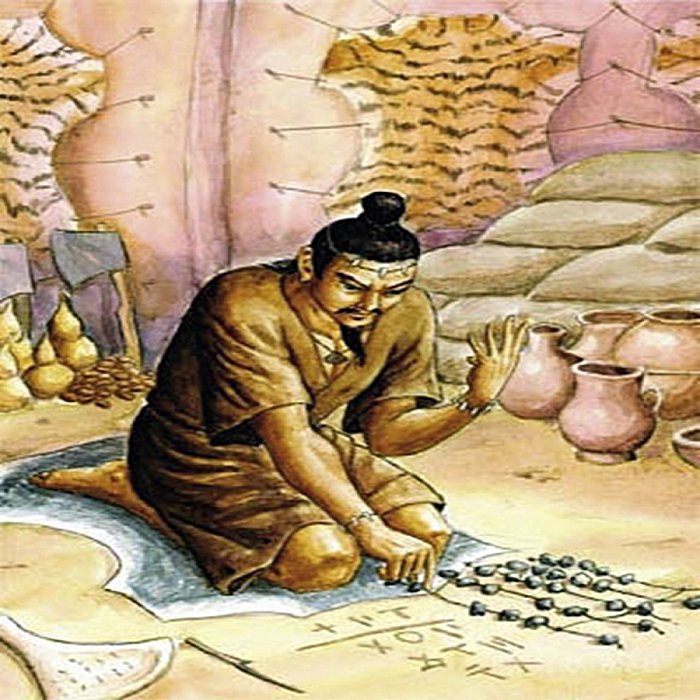
Ancient Chinese tying of knots. Image via China Today
Today we describe, Chinese knots (the art of tying knots), which has its roots in antiquity. It is a decorative handicraft art that was first popularized in the Tang and Song Dynasty (960-1279 CE) and continued to flourish and reached zenith of its popularity during the Qing dynasty (1644–1911) of China.
History Of Chinese Knots
Knotting continued to flourish up until about the end of imperial China, but during the period from 1912 to the end of the Chinese Cultural Revolution in 1976, the art of knotting was almost lost in China.
Only few examples of prehistoric Chinese knotting exist today and they are recognized on bronze vessels dated to Warring States period (481–221 BC); two other rare examples are Buddhist carvings of the Northern Dynasties period (317–581) and knotting depicted on silk paintings from the Western Han period (206 BC–6 CE).
Except for archaeological findings, important philosophical works mention the use of knotted string records in China. In antiquity knotted cords served for the administration of affairs, and much later, they were replaced by writing.
According to the historical literature of "Book of Changes", and the "Annotations of The Book of Changes" by Zheng Xuan, (127–200), an influential Chinese commentator and Confucian scholar near the end of the Han Dynasty, knots were used to confirm the legal meaning of contract and agreement.
In the writings of Confucius (551-479 BC), it says that “the men of antiquity used knotted cords to convey their orders; those who succeeded them substituted signs or figures for these cords.”

Chinese Knots
Before the accession of the Emperor Fo-hi (3300 BC) it is said that the Chinese were not acquainted with writing and used quipos…”
Many Craftsmen, Sophisticated Techniques And Elaborate Patterns
The knot techniques evolved systematically over the millennia-long period of time and became extremely sophisticated containing intricate patterns.
In the dynastic periods, many craftsmen were stationed in the court and outside the court to create cords and knots in order to meet the increasing demand for them at various places of the court. Cord, knot and tassels were first made separately and combined later.
Features Of Chinese Knots
All Chinese knots are symmetrical, right, left, and up and down. They are also three-dimensional and consist of two layers of cord, with an empty space in between
Interestingly, they are made with one single string!
See also:
Secrets Of Quipu – One Of The Most Mysterious Phenomena That Existed In Odd Number Of Dimensions
I Ching – The Book of Changes – World’s Oldest Book Of Wisdom Used To Predict Future Events
Master Kong Confucius: Great Philosopher And ‘Teacher Of All Teachers’ Ahead Of His Time
All knots in this country are divided in two groups: auspicious – for use in temples or by monks who want to ward off the evil powers or turn misfortune into good fortune; and dressing knots patterns , used as bracelets and necklaces or other pieces of knot jewelry.
Symbolic Meaning Of Knot In Chinese Culture
Already in prehistoric times, Chinese knots were a symbol of harmony, strength, unity and love.
Many popular Chinese phrases contain the Chinse character for knot, which is “jie he” (come together); “jie hun” (get married); “jie fa fu qui” (husband and wife by first marriage) and many more.
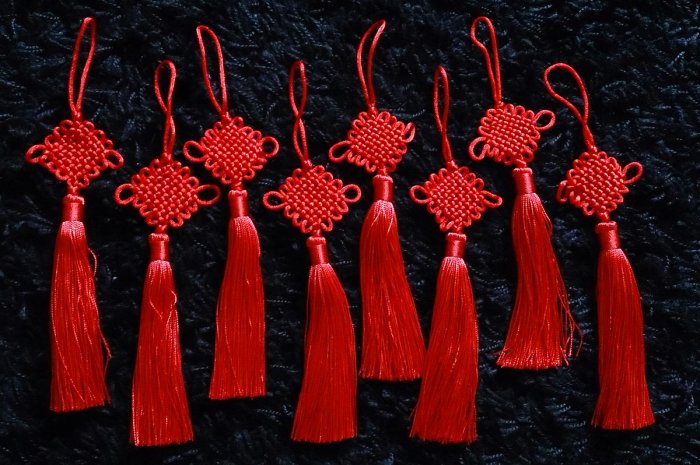 Eight examples of one traditional Chinese knot. Image credit: Wikipedia
In the distant past, people made knots with rope to record important events.
In ancient Chinese tradition, “rope” is almost the same as god in Chinese, therefore, it was widely worshiped and during the Tang and Song dynasties, rope-made knots became important ornaments tied to clothes with knotted strings. These ornaments had even their special names with deeper meaning.
The traditional color of knots is red, because this color means “luck” in China.
The art of tying knots spread to neighboring countries, such as Korea, Japan and Hong Kong.
Written by – A. Sutherland AncientPages.com Staff Writer
Copyright © AncientPages.com All rights reserved. This material may not be published, broadcast, rewritten or redistributed in whole or part without the express written permission of AncientPages.com
Expand for referencesLydia Chen - The Complete Book of Chinese Knotting: A Compendium of Techniques and Variations
Prehistoric America - AvMarquis de Nadaillac,Jean-François-Albert du
More From Ancient Pages
-
 Ancient DNA From Medieval Germany Reveals The True Story Of Ashkenazi Jews
-
 Ghostly Appearance Of Weird Ancient City Suspended In The Sky Witnessed By Many People
-
 On This Day In History: Hubble Space Telescope Was Launched – On April 24, 1990
-
 Evidence Of Cosmic Catastrophe 12,800 Years Ago – Earth Collided With Fragments Of A Comet
-
 Mysterious Ancient Mass Grave With Roman Skeletons Baffles Archaeologists
-
 Hidden Text Of Medical Book By Doctor Galen Read For The First Time In 1000 Years
-
 Unknown Ancient Settlement Overlapping The Old City Of Nakhon Ratchasima Discovered
-
 New Massive Duck-Billed Dinosaur Species Identified
-
 Prehistoric Dispilio: Accurately Dating Ancient Site To 5259 BC Using Cosmic Rays
-
 Peculiar Artifact Discovered In Tomb Of The Warrior Queen Fu Hao
-
 Function Of “Chopping Tools” Found At Prehistoric Site Of Revadim Israel – Studied
-
 Cambridge Supports Nigeria’s Claim For Return Of Benin Artefacts From University Collections
-
 2000-Year-Old Antikythera Mechanism – Experts Recreate A Mechanical Cosmos For The World’s First Computer
-
 Scientists Suggest Neanderthals And Modern Humans Should Be Classified As Separate Species
-
 Oldest Evidence Of Mysterious Humans On ‘Hobbit’s’ Island Neighbor – Found
-
 Intriguing Ptolemaic And Roman Treasures Unearthed In Al Bahnasa, Egypt
-
 Vijayanagara – ‘City Of Devas – Shining Ones’ – Place Where Mythology And History Coexist
-
 One Of A Kind Viking Age Hammer Of Thor Discovered In Ysby, Sweden
-
 World’s Oldest Narrative Art Depicts An ‘Unusual And Unique’ Scene – 11,000-Year-Old Carving Investigated
-
 Archaeological Finds Shed New Light On The Paleo Diet Habits Of Ancient Hunter-Gatherers

