
Mystery Of The Black Irish People: Who Were They?
Ellen Lloyd - AncientPages.com - You might have heard the term "Black Irish" before, but who were these people? Where did they live and come from?
The term "Black Irish" is generally used for people of Irish origin with dark features, black hair, darker skin, and dark eyes. Interestingly, the term is rarely referred to in Ireland but has circulated among Irish emigrants and their descendants for centuries.
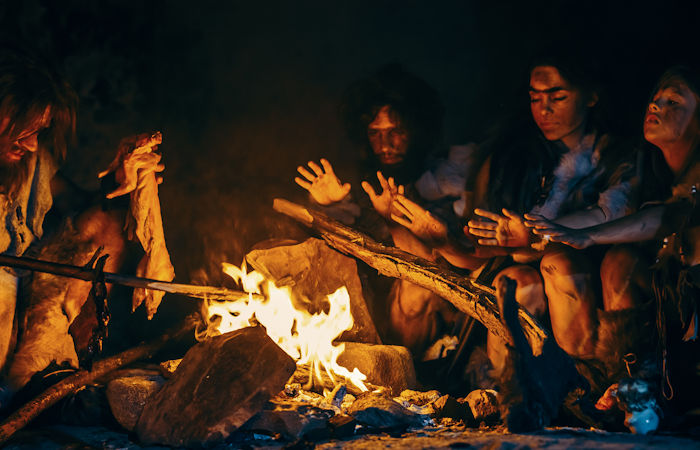
Credit: Adobe Stock - Gorodenkoff
Ireland has been subject to numerous invasions from several different countries throughout history. The Celts arrived on the island about the year 500 B.C. The Vikings arrived in Ireland as early as 795 A.D. and funded the Norse Kingdom of Dublin in 839 A.D.
The Kingdom of Dublin ended in 1171 when the Normans arrived. The Normans faced these Hiberno-Norse kingdoms in Ireland, and gradually, society began to evolve into what is now known as Norman Ireland.
It is very likely the Vikings would have stayed in Ireland much longer if it hadn't been for the famous Irish hero Brian Boru who dared to chase off the Vikings, often called dark invaders or black foreigners. The Gaelic word for foreigner is "gall," and for black (or dark) is "dubh."
Many invaders' families took Gaelic names that utilized these two descriptive words. The term' Doyle' is in Irish "O'Dubhghaill," which means "dark foreigner, " revealing their heritage as an invading force with dark intentions.
In 1588, members of the Spanish army were shipwrecked on the coast of Ireland. If they had stayed on the island and created families, their genes could have been spread throughout the generations.
However, most historians believe that most of these Spanish soldiers were handed over to the British authorities and executed, so it's unlikely that any who survived could've impacted the country's gene pool.
During the Great Famine of 1845 to 1849, hundreds of thousands of Irish peasants emigrated to America. They were labeled "black" because they escaped this new kind of black death. After the famine, many Irish reached America, Canada, Australia, and beyond.
The relationship between Ireland and Britain was weak during the 1800s, which resulted in mistrust. The British government did not offer enough assistance to help solve the problems.
The British may have used 'Black' as a derogatory term.
It is challenging to determine when the term "Black Irish" was first used, but several historical events in Ireland contributed to the word's birth. As we have seen, there are numerous theories about how the term originated.
The theory that the "Black Irish" are descendants of any small foreign group that integrated with the Irish and survived is unlikely. It seems more likely that "Black Irish" is a descriptive term rather than an inherited characteristic applied to various categories of Irish people over the centuries.
Written by Ellen Lloyd – AncientPages.com
Updated on march 23, 2024
Copyright © AncientPages.com All rights reserved. This material may not be published, broadcast, rewritten or redistributed in whole or part without the express written permission of AncientPages.com
Expand for referencesReferences:
More From Ancient Pages
-
 Disappearance Of Mastodons Still Threatens South America’s Native Forests
-
 Aboriginal Art And Knowledge Unlocks Mystery Of Fairy Circles
-
 Surprising Discovery – Replica In The Field Museum Is A 3,000-Year-Old Sword
-
 Unexplained Disappearance Of East Balkan Civilizations – Discovery Of Unusual Mini Artifacts – Part 1
-
 Huge Number Of Intact, Painted Coffins In Shafts Of Egypt’s Saqqara Necropolis
-
 Royal Tombs Of Alexander The Great’s Family At Vergina, Greece Finally Identified
-
 2,000-Year-Old Statue Of Priest’s Head Excavated In Laodicea On The Lycus
-
 Fra Mauro Medieval Map: Accurate And Detailed Work Attesting To Advanced Geographic Knowledge Of Contemporary Cartographers
-
 New Chemical Reactions To Generate Building Blocks Of Proteins And DNA – Discovered
-
 What Can Medieval Skeletons Tell Us About Modern Day Pandemics
-
 Beautiful Mosaics In Ancient City Of Germanicia
-
 Remarkable Ancient High-Tech Genetic Disc Could Re-Write Ancient History
-
 Swords And Spears Of The Yotvingians – A Long-Forgotten Ancient Warrior Culture Discovered In Poland
-
 Possible Viking Boat Burials Discovered On The Isle Of Mull
-
 Lake Titicaca Reveals More Ancient Underwater Secrets
-
 Riddle Of The Old ‘Cursed’ Car – Supernatural Forces Or Unusual Coincidences?
-
 Mystery Of The East Asian Lineages In Europe 45,000 Years Ago Solved – Population Hub Out Of Africa Holds The Clues
-
 Mysterious Ancient Mayan ‘Copernicus’ And The Venus Table Of The Dresden Codex: The Hieroglyphs Have Been Misunderstood – Researcher Says
-
 Intriguing Ket People – The Last Nomadic Hunter-Gatherers Of Siberia
-
 Nearly 7,000 Years Ago, Dortmund Airport’s Area Was Inhabited By Early Farming Society For Centuries

