Neanderthals Archive
Archaeology
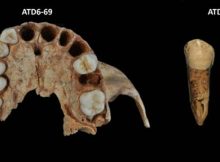
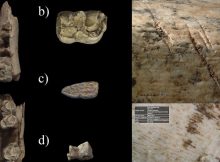
Conny Waters - AncientPages.com - The CENIEH participates in a study in which dental remains of Homo antecessor were analyzed using Micro-Computed Tomography: the results indicate that this
Read More
Featured Stories
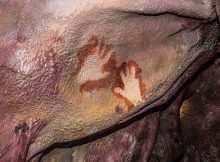
AncientPages.com - One of the most hotly debated questions in the history of Neanderthal research has been whether they created art. In the past few years, the consensus
Read More
Featured Stories
AncientPages.com - Many believe our particularly large brain is what makes us human – but is there more to it? The brain’s shape, as well as the shapes
Read More
Archaeology
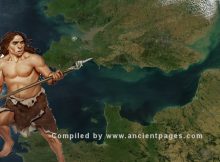
Jan Bartek - AncientPages.com - Submerged below the waves of the English Channel lies an important scientific record of undiscovered Neanderthal artifacts dating back to the last ice
Read More
Featured Stories
AncientPages.com - In evolutionary terms, the human population has rocketed in seconds. The news that it has now reached 8 billion seems inexplicable when you think about our
Read More
Featured Stories
AncientPages.com - Imagine that you have an unhealthy interest in your neighbors' lives. Unable to ask them directly, you rifle through their rubbish bins. You find the bones
Read More
Archaeology
Jan Bartek - AncientPages.com - A new paper proposes that Homo sapiens may have been responsible for the extinction of Neanderthals not by violence, but through sex instead.
Read More
Archaeology
Jan Bartek - AncientPages.com - The first Neanderthal draft genome was published in 2010. Since then, researchers from the Max Planck Institute for Evolutionary Anthropology have sequenced a
Read More
Archaeology
Jan Bartek - AncientPages.com - A new study has, for the first time used zinc isotope analysis to determine the position of Neanderthals in the food chain. The
Read More
Archaeology
Conny Waters - AncientPages.com - Who were the Neanderthals and what caused their demise? For more than 350 000 years, Neanderthals inhabited Europe and Asia until, in a
Read More
Archaeology
AncientPages.com - Neanderthals have served as a reflection of our own humanity since they were first discovered in 1856. What we think we know about them has been shaped
Read More
Archaeology
Conny Waters - AncientPages.com - Neanderthals are the closest relatives to modern humans. Comparisons with them can therefore provide fascinating insights into what makes present-day humans unique, for
Read More
Archaeology
Jan Bartek - AncientPages.com - Neanderthals are our closest extinct relatives and modern humans share 99.7% of their DNA. These intriguing beings were widespread across Europe and Western
Read More
Archaeology
Jan Bartek - AncientPages.com - Using the latest scientific methods, researchers want to solve a great mystery of human evolution: Why are we the only humans left? Two
Read More
Archaeology
Conny Waters - AncientPages.com - Scientists have investigated whether Neanderthals were well adapted to life in the cold or preferred more temperate environmental conditions. Based on investigations in
Read More
Archaeology
Jan Bartek - AncientPages.com - Neandertals disappeared around 40,000 years ago, but many details of their extinction remain unclear. To elucidate the situation, it is useful to explore
Read More
Archaeology
Conny Waters - AncientPages.com - Scientists have discovered surprising evidence modern humans successively inhabited the Mandrin Cave in France within an interval of barely a year. Studies of
Read More
Archaeology
Jan Bartek- AncientPages.com - Examining the spines of Neanderthals, an extinct human relative, may explain back-related ailments experienced by humans today, a team of anthropologists has concluded in
Read More
Archaeology
Conny Waters - AncientPages.com - A well-preserved Palaeolithic site in northern China reveals a new and previously unidentified set of cultural innovations. When did populations of Homo sapiens
Read More
Archaeology
Jan Bartek - AncientPages.com - Very few proteins in the body have a change that makes them unique compared to the corresponding proteins in Neanderthals and apes. Researchers
Read More
Archaeology
Conny Waters - AncientPages.com - Hunter-gathers caused ecosystems to change 125,000 years ago. These are the findings of an interdisciplinary study by archeologists from Leiden University in collaboration
Read More
Archaeology
Conny Waters - AncientPages.com - Neanderthals, our closest relatives, became extinct between 40,000 to 35,000 years ago. Since the discovery of the first Neanderthal fossil 165 years ago,
Read More
Archaeology
Jan Bartek - AncientPages.com - It is still difficult to determine just how advanced the Neanderthals were but our extinct causing were much more sophisticated than previously thought.
Read More
Archaeology
Conny Waters - AncientPages.com -Researchers undertook a zooarchaeological and taphonomic study of the Neanderthal Navalmaíllo Rock Shelter site (Pinilla del Valle, Madrid), some 76,000 years old, whose results
Read More
Archaeology
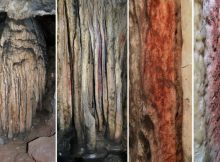
Conny Waters - AncientPages.com - The origin and date of appearance of prehistoric cave art are the subjects of ongoing debate. Spain’s Cueva de Ardales is one point
Read More
Archaeology
Jan Bartek - AncientPages.com - Learning more about the Neanderthals and Denisovans is significant if we want to understand how these extinct species are related to modern humans.
Read More
Archaeology
Jan Bartek - AncientPages.com - It is not the first time scientists say modern humans and Neanderthals are closely related. Only this time, scientists have determined how much
Read More
Archaeology
Jan Bartek - AncientPages.com - A 51,000-year-old bone carving engraved with symbols offers evidence the Neanderthals were not as primitive as previously thought and it is time to
Read More
Archaeology
Conny Waters - AncientPages.com - The Boker Tachtit archaeological excavation site, in Israel’s central Negev desert, holds clues to one of the most important events in human history: the
Read More