
Catequil – Inca God Of Thunder And Lightning Who Predicted The Future And Was Cultural Hero Of Inca People
A. Sutherland - AncientPages.com - Catequil created thunder by striking the clouds with his sacred spear and a mighty club. This Inca deity means even more.
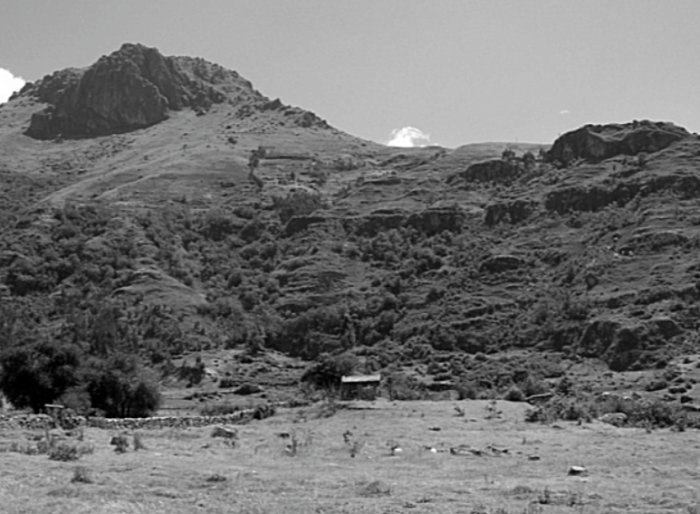
The mountain of Cerro Icchal with the site of Namanchugo in the foreground. Image credit: Jordan Downey – ResearchGate
He was also a weather god and an oracle who foretold the future.
As a cultural hero for the Inca, he was worshiped from Quito to Cuzco. The Inca often carried an idol of Catequil into battle. His cult grew up near the Cerro Ichal Mountain in northwest Peru, probably because hills attract lightning.
Legend has it that Catequil was also responsible for twins born when he turned into a lightning bolt and participated in mortal lovemaking.
The excavations in Namanchugo - located on a small plain facing the mountain of Cerro Icchal - showed how Catequil went from being a small ceremonial center to a prominent and influential religious center.
The place has been identified as the main shrine dedicated to the worship of Catequil and was in use from ca. 400 AD -1555 AD. Early Namanchugo (ca. 400-1200 AD, in its early phase, was a prestigious shrine that drew many pilgrims from a local area. "Ceremonies and ritual feasting took place, and the shrine was largely dominated by non-elites." 1
Catequil represents a very complex god. He was considered the founding ancestor of Huamachuco, the god who led the people from their Pakarina (the place of origin). As the male god who brings the rain, he is also a symbol of fertility. At the same time, it is the hill itself, whose three rocks become Catequil, a ruling deity of the oracle related to the ancestors. Sometimes, Catequil (or Apocatequil) was recognized as two separate gods, or they represented the same.
Therefore, the Inca believed that he was, in fact, Apocatequil in disguise. The myths about Apocatequil are slightly different from those about Catequil. According to beliefs, Apocatequil, the god of lightning, had power over water and rain and served as the chief priest for the lunar deity, Coniraya. To keep Apocatequil content, the Inca built statues of his noble self and placed them upon the mountaintops.
Catequil means so much, but curiously, his face is unknown.
All we know about Catequil originates from ancient beliefs of the Inca, meticulously collected and recorded in the journals of the Spanish Augustinian priests who arrived in Peru in 1551 and later spread to other countries in South America like Ecuador in 1573, and from Ecuador in 1575 to Argentina, Bolivia, Chile, Colombia, Panama, and Venezuela.
Their records say that through the mouths of the priests of Cerro Ichal, Catequil predicted that the last Sapa Inca, Atahualpa, would be defeated, and he also criticized him for killing many people. In another prediction, he predicted the victory of the invading Christian army instead.
However, all accounts seem to agree that Atahualpa, dissatisfied with the prediction, ordered the beheading of the high priest Catequil and the destruction of the cult and the site at Cerro Ichal.
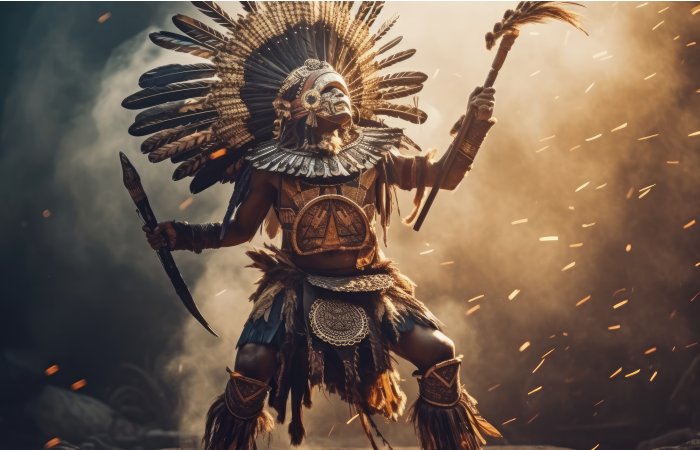
Credit: Adobe Stock - lchumpitaz
Some sources suggest the destruction of Catequil's cult, the killing of the high priest, and the burning of the idol, and others believe that the destruction was not entirely successful.
After Atahualpa's death, the Inca continued to worship the sacred cliff, found some fragments of the idol, and placed it in a new temple or house.
The Canadian archaeologist John R. Topic, Ph.D. from Harvard University, mentions in his works that the Augustinians were eager to "destroy idolatry" and devastated the temple walls, leaving the structure almost unrecognizable. At the same time, these priests worked hard, making several attempts to suppress the cult of Catequil. The shrine of Catequil was finally destroyed, but by the time of the destruction on the eve of the Spanish conquest, his cult was widespread in the north. By 1560, if not before, Catequil had become identified as a cultural hero.
Yet, Atahualpa's and the Augustinians' efforts failed in the mid-16th century.
The cult of Catequil survived and spread to neighboring Ecuador and later to Bolivia, Chile, Colombia, Panama, Venezuela, and Argentina. Catequil represents the complex Inca deity, with several intersecting identities recognized in many places.
He is one of northern Peru's most potent pre-Hispanic deities, whose power over people was overwhelming and reached the people in neighboring countries.
Written by – A. Sutherland AncientPages.com Staff Writer
Copyright © AncientPages.com All rights reserved. This material may not be published, broadcast, rewritten or redistributed in whole or part without the express written permission of AncientPages.com
Expand for referencesReferences:
H. Isbell, H. Silverman, Andean Archaeology
Jordan T. Downey, Catequil's Lithics: Stone Tools from an Andean Complex Society
More From Ancient Pages
-
 Karnak: One Of Largest Temple Complexes In The World And Its Spectacular View
-
 Prehistoric Anomaly On The Tennessee-North Carolina Border Baffles Scientists
-
 Humans Spread The Black Death – Not Rats – Scientists Say
-
 The Lost Prophecy Reveals Chilling Future Events – The Last Words To Mankind?
-
 Timeline Of Greek Dark Ages And Renaissance Is Wrong, New Research Shows
-
 Elongated Skulls: Did Intentional And Intriguing Ancient Tradition Originate In China?
-
 Amakuni – Legendary Japanese Blacksmith And Father Of The Samurai Sword
-
 On This Day In History: 3,106-Carat Diamond Found – On Jan 25, 1905
-
 Oldest-Known Grinding Tool Used 350,000 Years Ago Was Found In Tabun Cave, Israel
-
 Golosov Ravine – Mysterious Time-Warping Mist Causing Unexplained Disappearances And The Ancient Shrine Of God Veles
-
 Ancient Stela Of Piankhi – King Of Napata, Rightful Ruler And Maintainer Of Maat
-
 Unexpected Substance Found In Ancient Maya City May Have Arrived Through Distant Trade
-
 The Iceni’s Queen Boudicca Who Revolted Against Roman Rule
-
 New Reading Of Mesha Stele And Consequences For Biblical History
-
 20 Mummies Discovered In Greco-Roman Tombs In Aswan, Egypt
-
 Brokkr And Eitri – Norse Dwarves Who Fashioned Magical Artifacts For The Gods
-
 How Did A Roman Sarcophagus End Up On A Beach Near Varna In Bulgaria?
-
 Never-Before-Seen Ancient Frescoes Discovered Inside The Dormition Cathedral
-
 Tyrannical Tarquin The Proud: The Seventh And Last King Of Rome Was Banished
-
 What Happened To The Staircase In The Temple Of The Goddess Hathor?

