
Ancient Chinese Tai Chu Calendar Was Defined By Emperor Han Wu
Conny Waters - AncientPages.com - Have you ever wondered what the current Chinese calendar is called?
In ancient China, there were many different calendars. The current Chinese calendar was defined by Emperor Wu of the Han Dynasty in 104 BC. It was called the Tai Chu calendar.
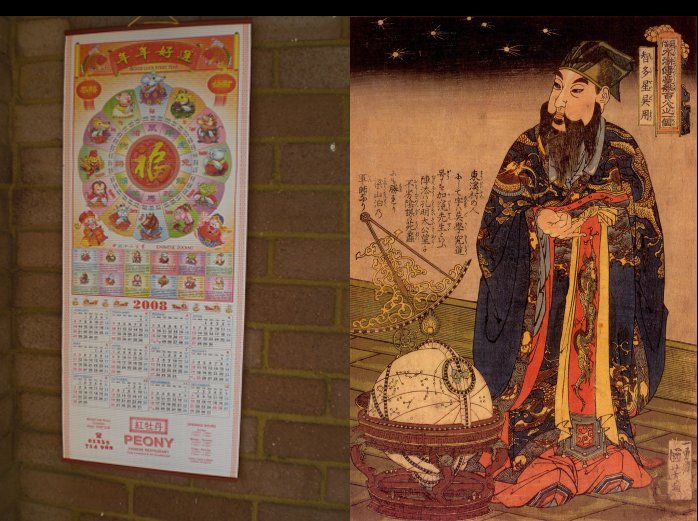
The traditional Chinese calendar is a combination of a solar calendar, based on the “position” of the Sun and the resultant seasonal phenomena, and a lunar calendar that follows the lunar phases.
Like in other ancient cultures, Chinese calendars were used to determine days of festivities or natural events, like solar eclipses, and to prognosticate auspicious or non-auspicious days.
The Chinese calendar cycles through 12 animals: the rat, ox, tiger, rabbit, dragon, snake, horse, sheep, monkey, rooster, dog, and pig. There is also an element associated with each year of the Chinese calendar. These elements are wood, fire, earth, metal, and water.
According to the new calendar, a year had 365.2502 days and a month 29.53086 days. The Tai Chu calendar started the New Year in January rather than October. Besides, the new calendar adopted the 24 solar terms, which were useful for the farming season. Based on the results from celestial measurement and records by court astronomers, the Tai Chu Calendar also worked out the cycle of solar eclipse - 135 months.
The first relatively complete calendar in China, the Tai Chu Calendar was also the most advanced of its kind in the world at its time and was used for a period of 189 years after its inception.
Written by Conny Waters – AncientPages.com Staff Writer
Copyright © AncientPages.com All rights reserved. This material may not be published, broadcast, rewritten or redistributed in whole or part without the express written permission of AncientPages.com
More From Ancient Pages
-
 3,000-Year-Old Fortress Built By The Mysterious Votadini Tribe Discovered On Top Of Arthur’s Seat
-
 ‘Little Caesar’: Forgotten ‘King Of Kings’ Who Died Very Young
-
 Insects Played An Important Role In The Biblical Exodus
-
 4,000-Year-Old Scottish Clava Cairns Were Built To House Dead
-
 Dzibilchaltún: One Of The Most Ancient Mayan Centers In Northwest Yucatan, Mexico
-
 Forbidden Ancient Manuscripts Almost Erased From History – Secret Teachings Of Mysterious Founder – Part 1
-
 Lake Titicaca Reveals More Ancient Underwater Secrets
-
 What Was Humor Like In The 13th Century?
-
 Mysterious Ancient Grave With Unusual Artifacts That Belonged To A Völva – Norse Female Shamans Did Exist
-
 5000-Year-Old Cold Case: Neolithic Fisherman Died By Drowning – Forensic Study Shows
-
 New Reading Of Mesha Stele And Consequences For Biblical History
-
 8,000 Year-Old Human Skeleton Discovered By Cave Divers Near Tulum, Mexico
-
 On This Day In History: Chocolate Was Introduced In Europe – On July 7, 1550
-
 Playing Piece With Runic Inscription Found In Trondheim
-
 Imet: A Long-Forgotten Ancient City In Egypt’s Eastern Nile Delta – Discovered
-
 Fate Of Eminent Pharaoh Hatshepsut’s Statues After She Passed Away – New Study
-
 15,000-Year-Old Shell Beads Found Kebara Cave Are The Oldest Known Use Of Organic Red Pigments
-
 Remains Of Colonnaded Hall Of 26th Dynasty Found At Ancient Buto Temple, Northern Nile Delta
-
 “The Starving Of Saqqara Statue” And Its Undeciphered Inscription Could Pre-Date The Pyramids Of Egypt
-
 Ancient Monastery In The Middle Of ‘Syria’s Stonehenge’ – Underground Caves, Tombs, Stone Circles Older Than Pyramids

