Conny Waters - AncientPages.com - A groundbreaking archaeological discovery in the Sierra Norte of Puebla has rewritten the history of ancient Mesoamerican science. Archaeologists from the National Institute of Anthropology and History (INAH) have officially confirmed that a massive architectural complex at Teteles de Ávila Castillo functioned as a highly sophisticated solar observatory more than 2,500 years ago.
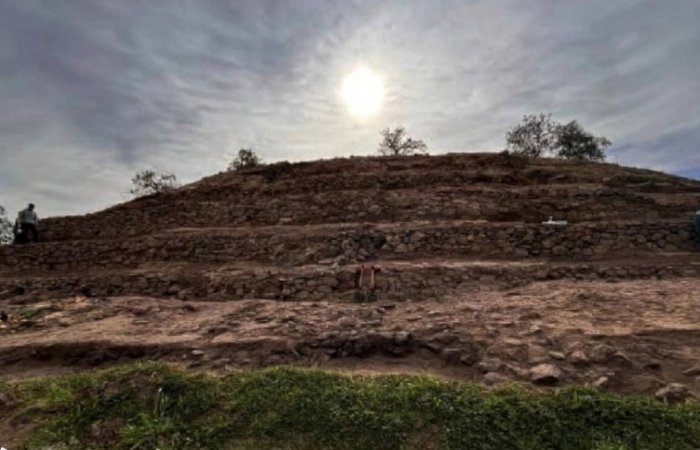
Western structure during the spring equinox. Creidt: Alberto Diez, INAH
The discovery marks a monumental shift in Mesoamerican studies, as the first solar observatory of its kind ever recorded outside the Maya region, and shows that advanced celestial knowledge was far more widespread in early pre-Hispanic history than previously believed.
Discovery Of The Ancient Tetelihtic Complex
The research initiative—spearheaded by INAH and backed by Mexico’s Ministry of Culture—has confirmed that the settlement's original urban layout, known anciently as Tetelihtic, was dictated entirely by the movement of the stars.
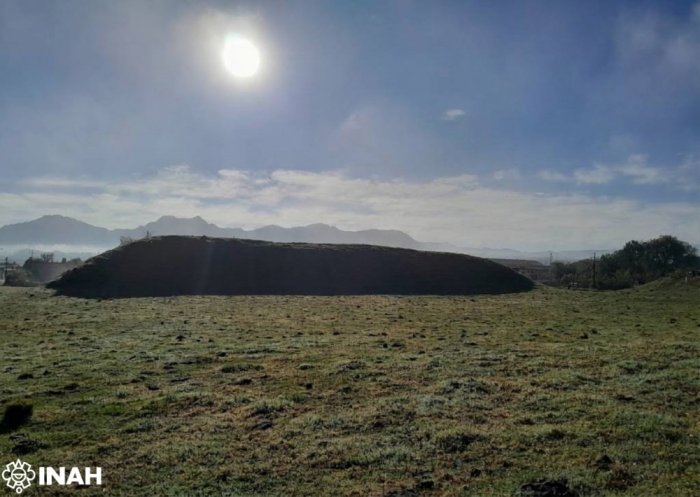
Eastern structure of the astronomical complex marking the spring equinox. Credit: Alberto Diez, INAH
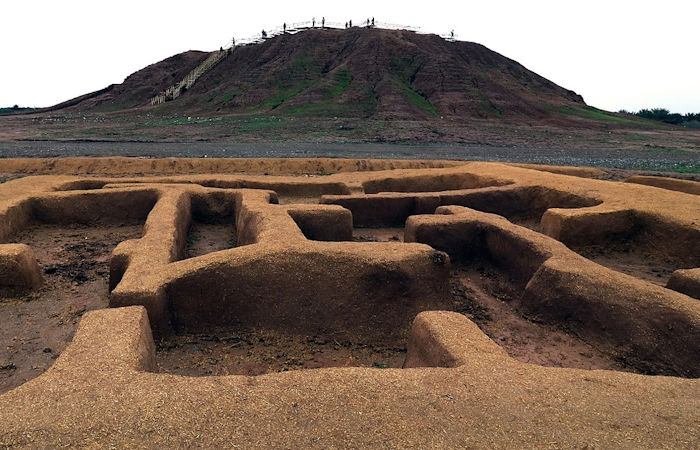
At the center of this discovery is an architectural arrangement known as Group E, located just east of the ceremonial precinct’s Great Plaza. The complex consists of a grand quadrangular courtyard flanked by two massive stone bases. The eastern base features an elongated structure measuring 90 meters from south to north and 40 meters from east to west, while its companion western base measures 46 meters from north to south and 27 meters from east to west.
Mexico's Oldest Recorded Astronomical Site
Remarkably, this layout is architecturally identical to the legendary Maya observatory "Group E" in Uaxactún, Guatemala, but the newly verified observatory at Teteles de Ávila Castillo is twice the size of its Guatemalan counterpart. Dating to the Middle Preclassic period (1000–600 BC), it is Mexico's oldest recorded solar observatory.
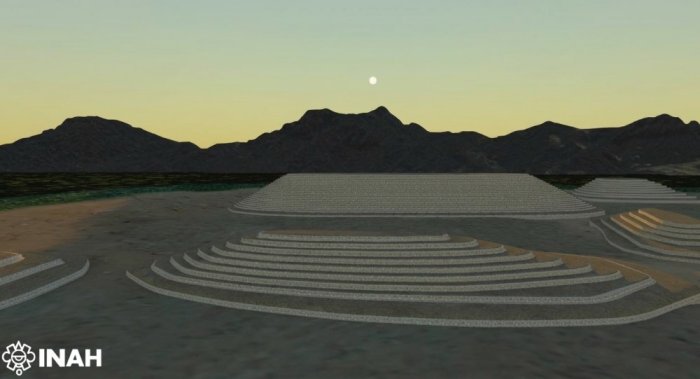
Teteles de Ávila Castillo solar observatory astronomical complex. Credit: Alberto Diez, INAH
Claudia Curiel de Icaza, Secretary of Culture of Mexico, emphasized that the architecture of Teteles de Ávila Castillo tells the story of early societies that developed deep astronomical knowledge and incorporated it directly into the organization of their ceremonial spaces. She noted that recognizing this scientific capacity is fundamental to understanding how advanced science developed across Mesoamerica.
A Custom-Engineered Agricultural Calendar
While structurally similar to Maya models, the Teteles observatory features a fascinating regional twist that sets it apart. In typical Maya setups, the center of the elongated base aligns perfectly with the spring and autumn equinoxes.
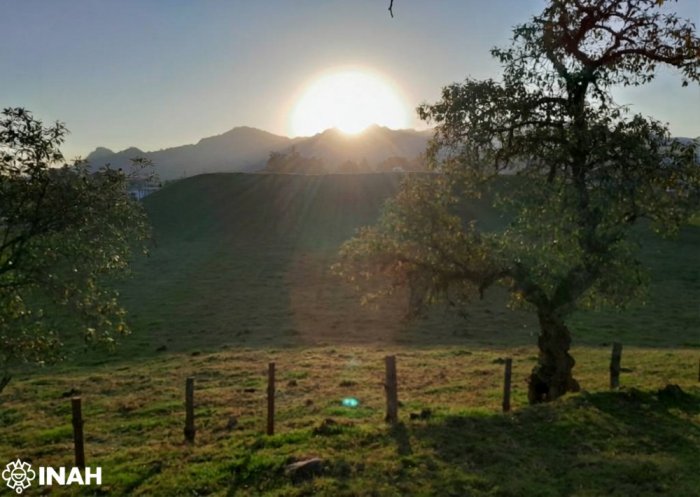
Sunrise as seen from the solar observatory in February. Credit: Alberto Diez, INAH
At Teteles, however, the center does not mark the equinoxes. Instead, the complex was custom-engineered to meet the specific survival and economic needs of its local society by fixing the start of the pre-Hispanic Mesoamerican calendar cycle in February and calculating the critical start of the harvest season in October. Beyond tracking these specific seasonal shifts, the eastern base functioned as a fully operational solar calendar. By standing at the front of the complex at dawn, ancient priests and scientists could follow the sun's exact trajectory as it shifted during the equinoxes and solstices, effectively turning stone architecture into a massive timepiece.
Unearthing Maya And Totonac Cultural Connections
The discovery provides vital new evidence regarding the migration and evolution of Mesoamerica’s earliest cultures. Alberto Diez Barroso Repizo, director of the Teteles de Ávila Castillo Archaeological Project, notes that the observatory strongly corroborates a deeply rooted Mayan ethnolinguistic connection among regional Huastec groups.
This implies a profound Maya influence or presence in the Puebla region a full millennium before our era.
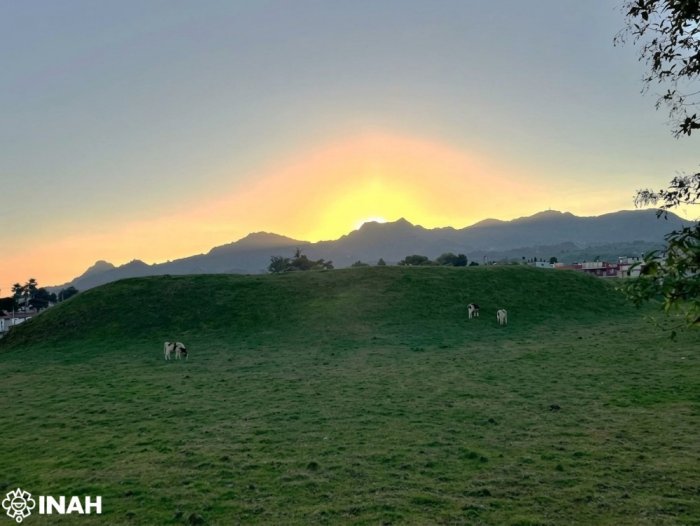
View of the East Structure and the sunrise with the Chignautla mountain range in the background. Credit: Alberto Diez, INAH
The site also holds clues connecting the heavens to local mythology, as the main structure’s orientation aligns with Canopus, the second-brightest star in the night sky.
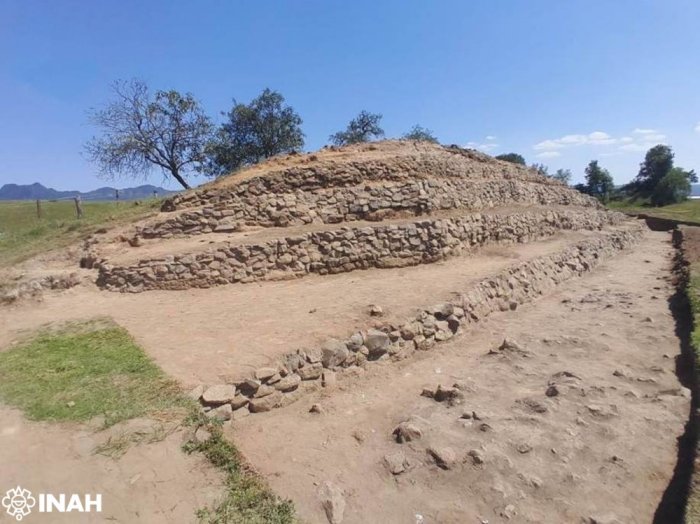
Front view of the western structure of the Astronomical Complex. Credit: Alberto Diez, INAH
Scholars connect this specific alignment to the worship of Nantehuitz, the Nahua goddess known as "our mother of the south". Furthermore, the project’s central hypothesis suggests that Tepeyac may be the cradle of Totonac culture, which later flourished across the northern Gulf Coast and the surrounding mountains.
Rise, Abandonment, And Lasting Legacy
Archaeological data outline a clear timeline for the rise, fall, and lasting legacy of this ancient scientific hub [INAH]. The city thrived as a premier astronomical and ritual capital between 900 BC and 100 AD [INAH]. Around 100 AD, as rival superpowers like Cantona, Cholula, and Teotihuacan emerged, Teteles was partially abandoned.
See also: More Archaeology News
Though the city center grew quiet, local populations continued leaving religious offerings on the periphery between 100 and 600 AD, keeping its sacred memory alive. Finally, a distinct Totonac offering left on an enclosure platform dating from 600 to 900 AD marks the final chapters of the site before complete abandonment, leading researchers to believe that its original inhabitants were the direct ancestors of the Totonac groups that later settled in Yohualichan in Cuetzalan, Puebla, and El Tajín in Veracruz
Source: INAH
Written by Conny Waters - AncientPages.com Staff Writer