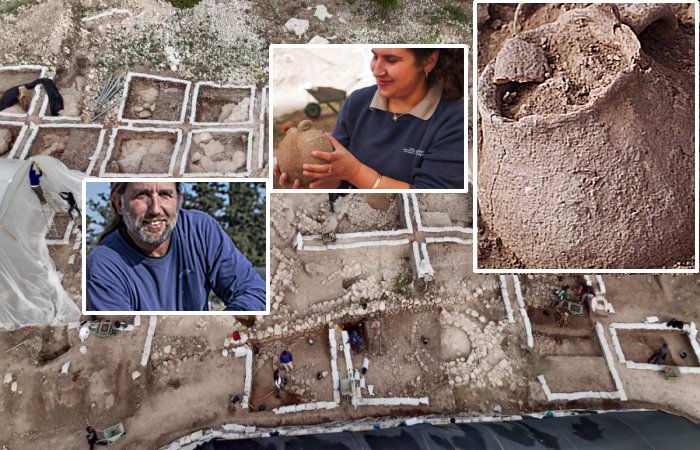
Conny Waters - AncientPages.com - A community-led archaeological project has uncovered the remains of an early medieval monastery in Argyll, western Scotland. Researchers have identified the site as the high-ranking ecclesiastical center of Lios Mòr, previously known only from historical references and local traditions.
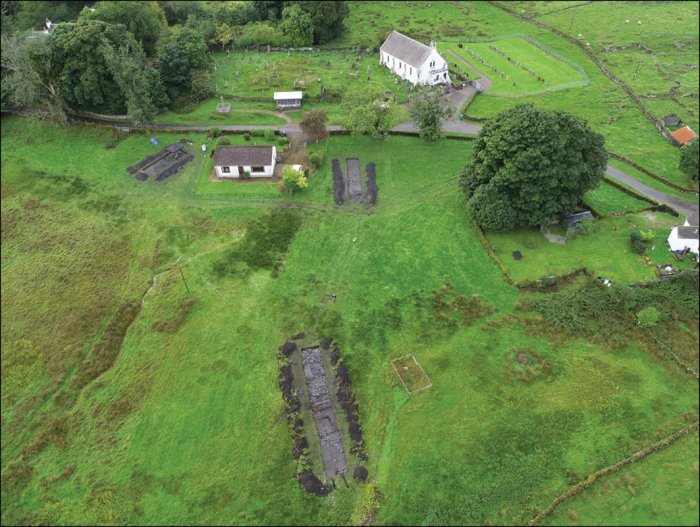
Aerial image of the 2019 excavations at Lios Mòr. Trench 11 containing the oval building and metalworking area is in the foreground. Credit: Antiquity (2026). DOI: 10.15184/aqy.2026.10379
The Christian church played a key role in shaping northwestern Europe during the early medieval period (around A.D. 400 to 1000). It influenced religious and intellectual life and helped form new political powers after the fall of the Roman Empire.
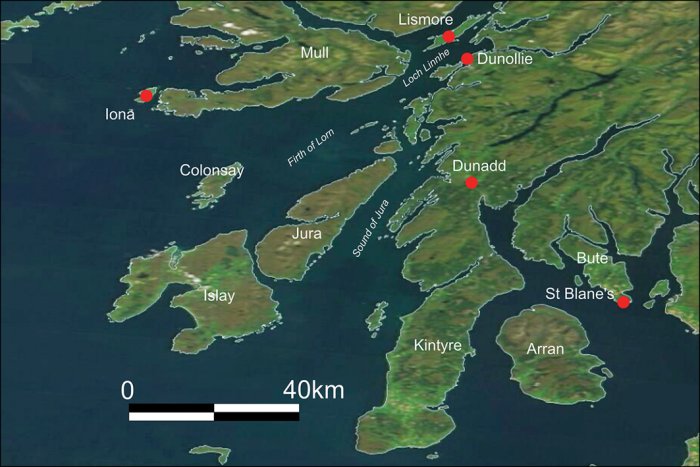
Map showing the maritime geography of Argyll (imagery from the NASA Worldview application (https://worldview.earthdata.nasa.gov/), part of the NASA Earth Science Data and Information System (ESDIS)).
This was also the case in Scotland. Churches like Iona, one of the oldest Christian centers in Western Europe, encouraged monastic growth in the Gaelic-speaking kingdom of Dál Riata. This kingdom covered Argyll, most of the Hebrides, and part of County Antrim in Northern Ireland.
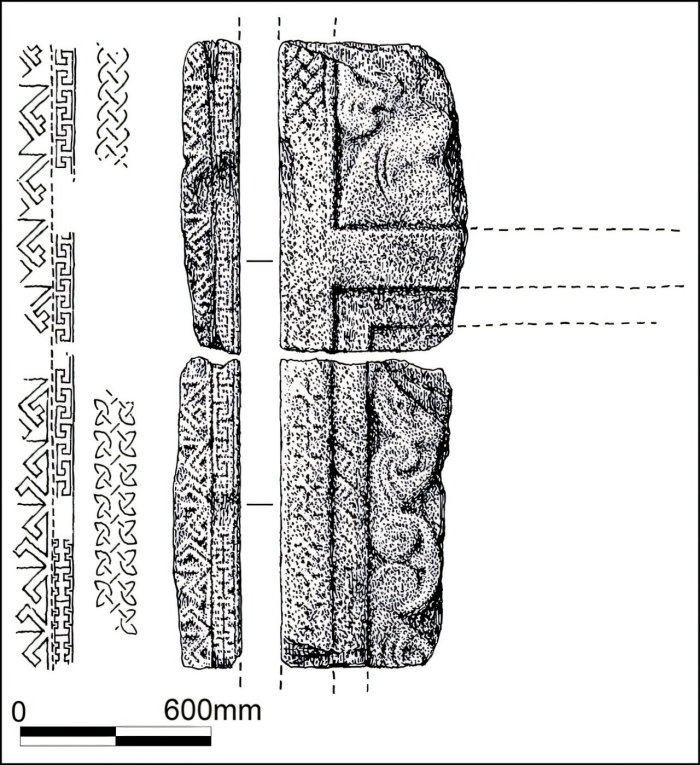
Previously identified early medieval cross fragments from Lios Mòr. Credit: Ian G Scott/Historic Environment Scotland, from Antiquity (2026). DOI: 10.15184/aqy.2026.10379
One such church was the monastery of Lios Mòr (Lismore) on the island of Lismore in Argyll. "Lismore, founded by Saint Mo Luóc in the sixth century, was known from historical records, place-name evidence and local tradition, but there was very little archaeological evidence to confirm its character, extent or significance," says Dr. Clare Ellis of Argyll Archaeology, who led the excavations.
This changed when the Lismore Historical Society launched an investigation of the island's 13th-century cathedral.
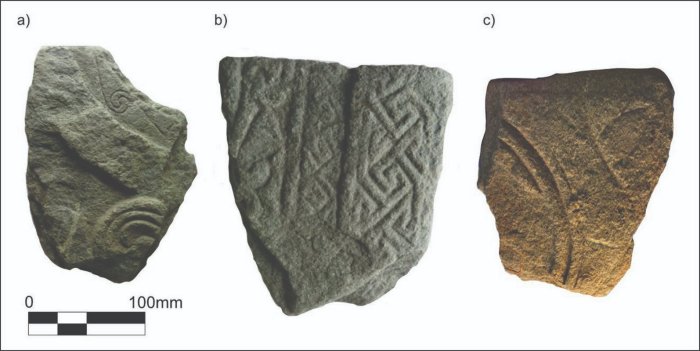
Newly identified early medieval sculpture fragments from Lios Mòr: a) fragment of cross-slab from T10; b) fragment of cross-slab with key pattern from T12; c) cross-slab fragment from T5. Credit: Antiquity (2026). DOI: 10.15184/aqy.2026.10379
"The research aimed to determine whether the site of the later medieval cathedral at Lismore was also the location of Mo Luóc's early monastery, and to assess the scale, nature and status of the settlement," Ellis says.
Excavation and geophysical surveys revealed extensive burial grounds, high-status craftworking areas, early buildings, and rare evidence of precious-metal working. These findings show that Lismore was much more than a small island church.
These discoveries indicate that the island hosted an early medieval monastery of significant wealth and influence.
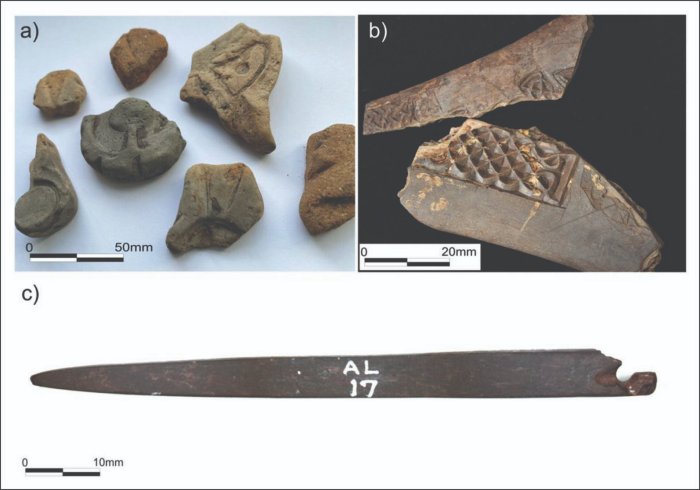
Some finds from Lios Mòr: a) penannular brooch mould fragments from the 2019 excavations in T11; b) motif pieces with fine chip-carved designs from T11; c) an early medieval touchstone for testing gold, now held in the National Museums Scotland. Credit: National Museums Scotland, from Antiquity (2026). DOI: 10.15184/aqy.2026.10379
"For centuries, Lismore's early monastery was known mainly from written records and local tradition. We can now see that it was a thriving center of worship, craftsmanship and learning, whose importance may have rivaled some of the best-known monasteries in early medieval Britain," explains research co-author Gordon Noble, a professor at the University of Aberdeen.
The findings indicate that Lismore supported a thriving monastic community, comparable to leading monastic sites in Britain and Ireland. These results enhance our understanding of early medieval Christian centers and underscore the value of collaboration between archaeologists and local communities in preserving shared heritage.
See also: More Archaeology News
"The discoveries at Lismore demonstrate the value of community-led archaeology in advancing academic research," concludes Bob Hay, a former island resident who organized the funding and volunteers. "Local volunteers and the Lismore Historical Society played a central role in investigating the site, helping to uncover evidence that has fundamentally changed understanding of one of Scotland's most important early Christian centers."
The study was published in Antiquity
Written by Conny Waters - AncientPages.com Staff Writer