
Unusual Vampire Hunting Kit Donated To The Medical University Of Wrocław, Poland
Jan Bartek - AncientPages.com - Vampire stories continue to captivate audiences today, with many people enjoying movies and books centered on these mythical creatures. While modern readers and viewers typically regard vampires as fictional, historical evidence indicates that ancient societies believed in their existence and considered them a serious threat.

Ancient Beliefs In Vampires
References to vampires can be found in myths and folklore from cultures worldwide. Bram Stoker’s "Dracula" is perhaps the most iconic vampire figure, inspiring numerous film adaptations. However, belief in blood-drinking entities dates back much further. Archaeological discoveries from ancient Mesopotamia—specifically cuneiform tablets from the First Babylonian Dynasty (18th century BCE) and pottery shards depicting vampiric figures—demonstrate that early civilizations feared supernatural beings who drank human blood.
This fear was also prevalent across Europe and on other continents. Numerous “vampire graves” have been unearthed by archaeologists; for instance, at an ancient Roman site in Italy, a 10-year-old child’s remains were found buried with precautions intended to prevent resurrection—a practice likely linked to concerns about disease transmission, such as malaria. In 1990, a grave discovered in Griswold, Connecticut, contained a man buried with his arms crossed in an X shape—a method thought to stop vampires from rising again. Similarly, mass graves of decapitated individuals believed to be “vampires” have been found in 19th-century Poland.
Unique Polish Vampire-Hunting Kit
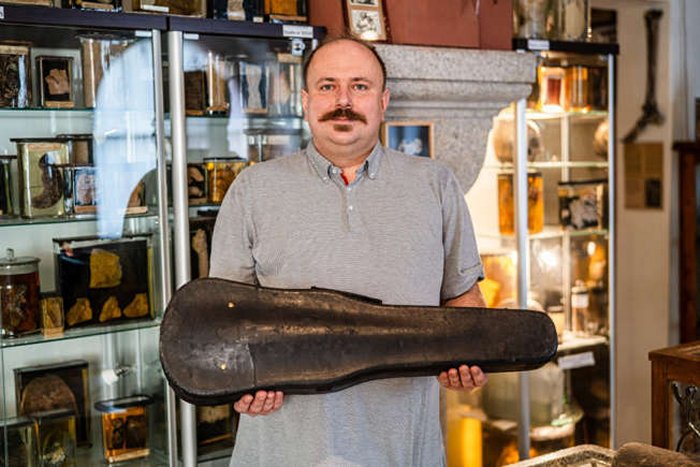
Throughout history, communities have developed various methods to protect themselves against purported vampires. One notable artifact is a vampire-hunting kit recently donated to the Medical University of Wroclaw in Poland.
Credit: Uniwersytet Medyczny we Wrocławiu
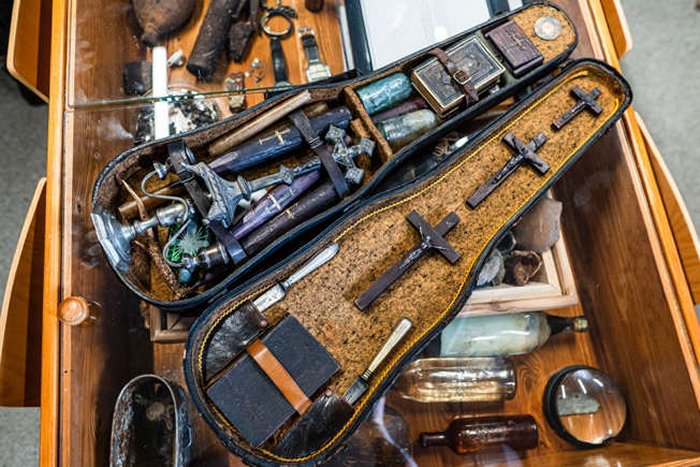
Housed within a violin case and produced locally, unlike most kits which originated from Germany, it reflects both historical anxieties about vampirism and popular folk beliefs regarding creatures said to feed on human blood.
"The peak of interest in vampire themes occurred between 1900 and 1920 and again in the 1950s, although the vampire motif is currently experiencing a renaissance in film.
Credit: Uniwersytet Medyczny we Wrocławiu
Handy vampire-fighting kits were very popular at the time, sold in suitcases, boxes, or, like ours, in violin cases," said Dr. Jedrzej Siuta from the Department of Forensic Medicine at the Medical University of Warsaw and curator of the Forensic Medicine Museum.
He emphasized that the goal was to ensure these could be easily transported and operated, even when a body is present.
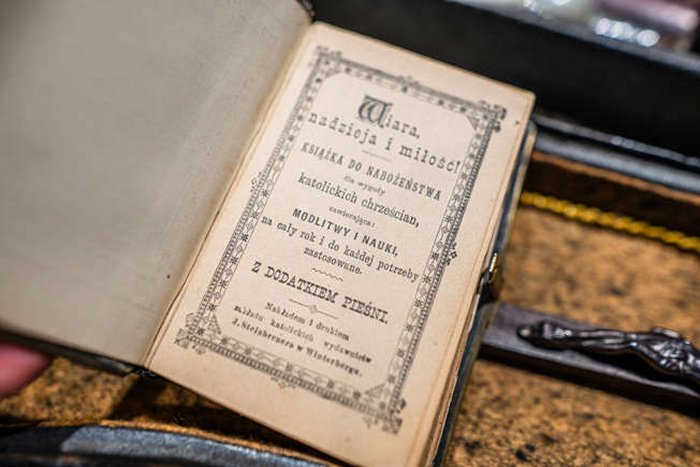
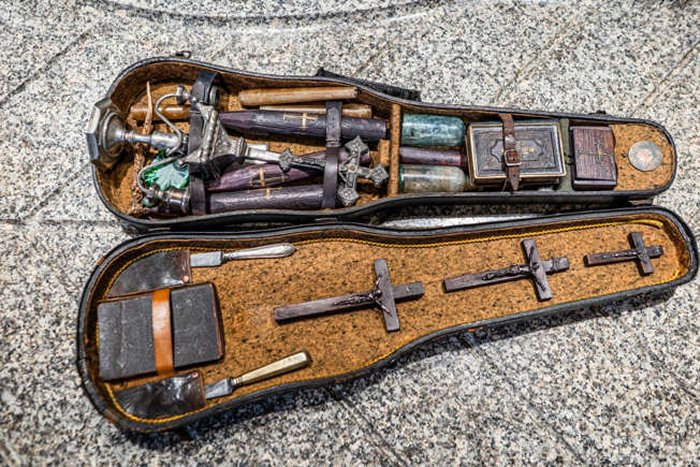
The Polish vampire-hunting kit comprises a set of crosses, a prayer book, a candlestick, silver-plated knives, a mirror, wooden pegs with metal tips used to pierce the heart or skull, and nails likely used to secure the coffin lid.
Credit: Uniwersytet Medyczny we Wrocławiu
There are also bottles—one likely containing holy water, the other holding the remains of an unspecified liquid, which scientists from the Department of Forensic Medicine at the Medical University of Warsaw intend to examine. A medallion found in the case also requires scientific analysis. The kit includes deer antlers, as deer were once considered noble animals on the good side of the Force.

Credit: Uniwersytet Medyczny we Wrocławiu
As Dr. Siuta notes, although most of these sets have never been used, their significance lies in their ability to capture the mindset of their era. The contents of each case provide a snapshot of prevailing folk beliefs at the time, particularly regarding creatures believed to feed on human blood after death.
Different Means To Combat Vampires
He further clarified that silver was traditionally used to combat vampires because it was believed that evil forces were afraid of it. This belief has some medical basis, as silver possesses antibacterial properties. During times when the plague spread through communities, vampires were often blamed for the disease. People noticed that households with silver objects or garlic—both known for their protective qualities—seemed less affected, reinforcing the idea that these items could ward off evil.

Credit: Uniwersytet Medyczny we Wrocławiu
To prevent suspected vampires from causing harm after death, various rituals were performed on their bodies. These included piercing the heart with stakes made from aspen or other hard woods, driving iron rods into them, piercing skulls between the eyes, placing stones or bricks in their mouths, and sometimes even severing heads and placing them between the legs of corpses. Such practices varied widely across different regions.
From a modern forensic perspective, these actions would be considered desecration of human remains. However, according to folk beliefs—which have since influenced popular culture—a vampire was seen as a "living corpse" whose supernatural powers needed to be neutralized after death. In some cases, individuals showing unusual physical traits while alive—such as deformities or sensitivity to light—were suspected of vampirism; nevertheless, most anti-vampire measures began only post-mortem.
Any unusual events following a person’s death—like outbreaks of disease among people or livestock—could be interpreted as evidence of vampirism. In such cases, graves would be opened, and specialists would carry out specific rituals intended to protect the community from further harm.
"Sometimes, after opening a grave, additional 'irrefutable' evidence of the deceased's vampirism was found: a lack of decomposition. This is possible under certain conditions, completely unrelated to supernatural forces. All of them have a scientific explanation," explained Dr. Siuta.
Mummification is the most widely recognized form of preservation, occurring when a body dries naturally. This drying inhibits bacterial activity responsible for decomposition and typically happens in dry, well-ventilated environments where moisture evaporates rapidly from tissues. As a result, the body's form can remain intact for many years or even centuries.
Another preservation method is peat transformation, also known as bog transformation. This occurs in peat bogs, where the unique chemical composition of peat suppresses microbial activity. Consequently, bodies are preserved rather than decomposing normally—skin and hair often remain intact, while bones soften.
Credit: Uniwersytet Medyczny we Wrocławiu
A third process is fat-wax transformation (adipocere formation), which involves the conversion of body fats into a waxy substance called adipose wax under humid and oxygen-poor conditions. This layer acts as a natural preservative by slowing further decomposition and helping to maintain tissue structure.
See also: More Archaeology News
The exhibits at the Museum of Forensic Medicine at the Medical University of Warsaw include examples of all these transformations.
"We won't be hunting vampires. Our set, which has enriched the Museum of Forensic Medicine's collections at the Medical University of Warsaw, will serve as a starting point for stories about ancient folk beliefs, vampire burials, and other issues related to forensic medicine. It will also be the subject of scientific research, as it holds many secrets," concluded Dr. Jedrzej Siuta.
Written by Jan Bartek - AncientPages.com Staff Writer
Expand for referencesMore From Ancient Pages
-
 Has The Mystery Of Neanderthals’ Flower Burial At Shanidar Cave Been Solved?
-
 On This Day In History: Munich Agreement Was Signed – On Sep 30, 1938
-
 New Discoveries Regarding Gladiatorial Games In Roman City Of Carnuntum
-
 World’s Oldest Shipwreck Discovered In Mediterranean
-
 Elk Tooth Rattlers And People’s Dance 8,000 Years Ago
-
 Beautiful Legends Of The Great Smoky Mountains: The Cherokee’s Little People Nunnehi And The Medicine Lake Ataga’hi
-
 Mysterious MUC19 Gene – DNA From Denisovans Helped Ancient People Survive In The Americas
-
 Ancient Depictions Of Eyes Reveal The Untold Story Of The Human Race – Professor Discovered
-
 125,000 Years Ago Neanderthals Hunted Elephants Much Larger Than Extinct Woolly Mammoths
-
 Tāne: Lord Of The Forest Who Brought Three Baskets Of Knowledge To People In Maori Mythology
-
 Never-Before-Seen Face Of A Tattooed Tashtyk Man Hidden Behind A Gypsum Death Mask Revealed
-
 Could Vancouver Island’s Hepburn Stone Be 15,000 Years Old?
-
 Evidence Europeans Used Slash-And-Burn Methods 9,500 Years Ago For Agriculture Purposes
-
 Jolly Roger – Symbol Of Golden Age Piracy
-
 Rare Bronze Hand Found At Roman Vindolanda
-
 Is An Ancient Temple Dedicated To The Lioness Goddess Repit Hidden In The Cliffs Of Athribis?
-
 Evidence Of Cosmic Catastrophe 12,800 Years Ago – Earth Collided With Fragments Of A Comet
-
 Ancient Copper Ingots Are Unlocking Iron Age Secrets
-
 Archaeological Evidence Ancient Egyptians Visited South America
-
 DNA Study Of Ice Age Survivors Reveals A Surprise About The Gravettian Culture

