AncientPages.com - The people known as the Picts have puzzled archaeologists and historians for centuries. They lived in Scotland during the early medieval period, from around AD 300 to AD 900, but many aspects of their society remain mysterious.
The Picts’ unique cultural characteristics, such as large stones decorated with distinct symbols, and lack of written records, have led to numerous theories about their origins, way of life, and culture.
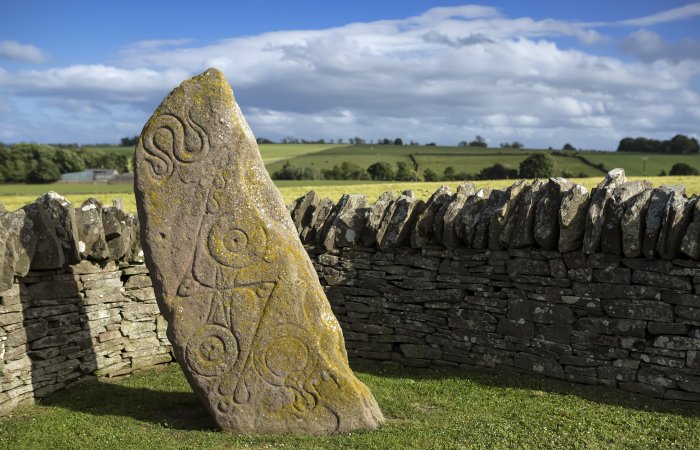
Aberlemno Pictish Stone, Scotland. Credit: Adobe Stock - Fulcanelli
This is commonly referred to in archaeology as the “Pictish problem”, a term popularised by the title of a 1955 edited book by the archaeologist Frederick Threlfall Wainwright.
Our genetic study of human remains from this period challenges several myths about the Picts. These include a proposed origin in eastern Europe, as well as a longstanding idea that the inheritance of wealth passed down the female side of the family.
We attempted to shed light on the Picts’ origins and legacy by sequencing whole genomes – the full complement of DNA in human cells – from skeletons excavated at two cemeteries.
Stone monuments
These cemeteries, at Balintore in Easter Ross and Lundin Links in Fife, date to between the 5th and 7th centuries AD. The results of our research have been published in PLOS Genetics.
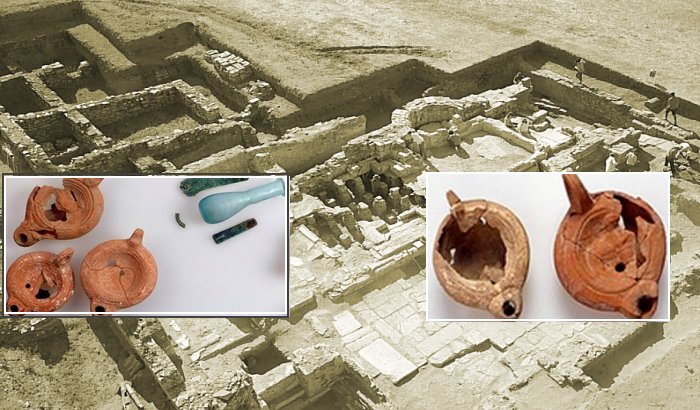
The Balintore burials are not well understood, but Lundin Links is characterised by exceptional stone monuments. The burials take the form of round or rectangular cairns – where numerous stones are piled up as markers – and long cists. Cists are stone-built “boxes” that hold the remains of the dead.
The cemetery probably housed people of a high-status, but this is still hypothetical due to the limited knowledge of these burials and society more generally during this period. Human remains in general from the Pictish era are relatively scarce and often poorly preserved.
There is no known settlement associated with Lundin Links. This is a common issue in Pictish archaeology, as the extent of their settlements is still largely unknown. Recently, however, excavations led by Professor Gordon Noble at the University of Aberdeen have discovered several new Pictish sites, frequently hillforts, around Scotland.
Origin myths
In our study, we looked at how genetically similar the Pictish genomes were to other ancient genomes from Britain and Ireland, Scandinavia and mainland Europe dating to the Iron Age, Roman, Anglo-Saxon and Viking periods. Our findings support a prevailing view that the Picts descended from Iron Age groups in Britain and Ireland.
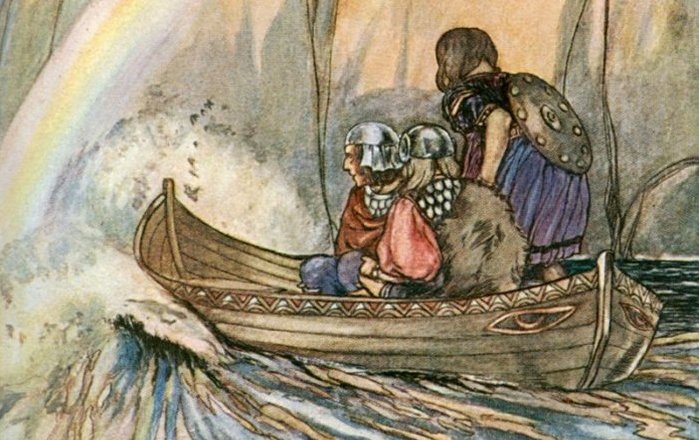
This contrasts with older, often elaborate, myths of exotic origins, such as the one recounted in the Ecclesiastical History of the English People, written by the Anglo-Saxon scholar Bede in AD731. This claimed that the Picts migrated from Scythia (a historical region around the northern coast of the Black Sea) to northern Britain.
Other theories include an origin in Thrace (a historical region in south-east Europe) and islands to the north of Britain.
We sequenced two genomes to medium or high coverage, meaning that we determined the order of the “letters” in the DNA code multiple times while piecing together the highly fragmented genetic sequence. This allowed us to “zoom in” on the genetic diversity – or variation – in the ancient and modern people from our study, gaining greater analytical resolution.
We were able to look at fine-scale differences among ancient and modern groups across Britain and Ireland. We applied a method that investigates something called identity-by-descent (IBD). This involves looking at relatively long stretches of DNA (“chunks” of chromosomes) that are shared by different individuals.
IBD is an indicator of relatedness via shared genetic ancestors. While we all share ancestors, sometimes we share more recent genetic ancestors with some individuals than with others. In this scenario, we would also share more IBD segments of DNA.
Female inheritance
The Pictish genomes share more long DNA chunks with present-day people from western Scotland, Wales and Northern Ireland. We interpreted this as a sign of genetic continuity from the Pictish period to the present-day.
But present-day populations in Britain and Ireland also share relatively high amounts of IBD segments with Anglo-Saxon genomes from southern regions, suggesting mixture between populations in a south-to-north direction.
This fascinating insight provides a glimpse into the demographic processes that have shaped genetic diversity and population structure in present-day populations. However, there were also small but significant differences in the genetic similarity between Pictish genomes and other ancient groups, such as Iron Age genomes we compared them with.
This suggests that “Pictish genetic ancestry” was not static or homogenous. Instead, the genetic variation among ancient people reflects dynamic and complex communities.
Lastly, we managed to address an intriguing question. Bede stated that when the Picts stopped off in Ireland before settling in Britain, they were allowed to marry local women on the condition that Pictish succession passed down the female line.
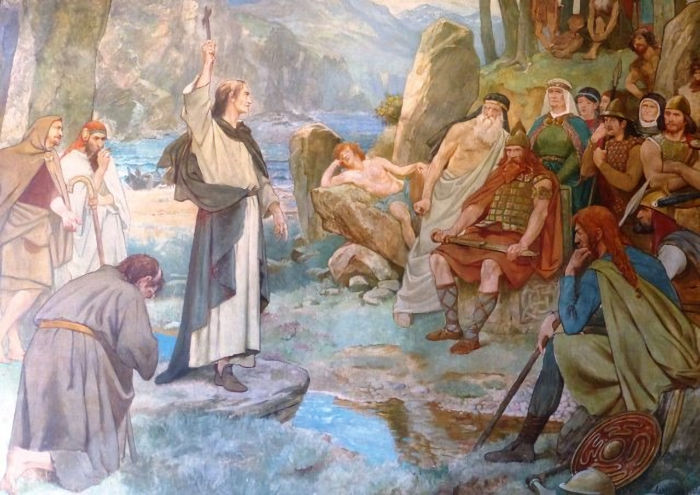
St. Columba converting the Picts to Christianity, by the 19thC artist William Hole. Credit: William Hole - CC BY-SA 3.0
This led to the notion that the Picts followed a tradition of “matrilineal succession”, where the sister’s son inherits the wealth instead of sons on the male line – a system often associated with women marrying locally. Scholars now believe this idea was probably fabricated to boost Pictish identity and validate specific rulers.
We sequenced complete genomes of mitochondria – structures in cells, often described as biological “batteries” – in seven samples from Lundin Links. They all carried unique mutations, meaning that none of the individuals were closely related on the maternal line.
This is more consistent with female exogamy, where women marry outside their social group. This is just one population sample from one location, though, so more research is required to test whether this holds elsewhere.
The study fills gaps in our understanding of the genetic landscape of Britain and Ireland during the early medieval period. It provides a baseline for future studies to investigate the complex genetic ancestry of present-day populations.
Written by Linus Girdland Flink, Visiting lecturer at Liverpool John Moores University, lecturer in biomolecular archaeology, University of Aberdeen, Adeline Morez
Post-doctorate researcher, Université Toulouse III - Paul Sabatier, visiting lecturer, Liverpool John Moores University
Provided by The Conversation
This article is republished from The Conversation under a Creative Commons license. Read the original article.