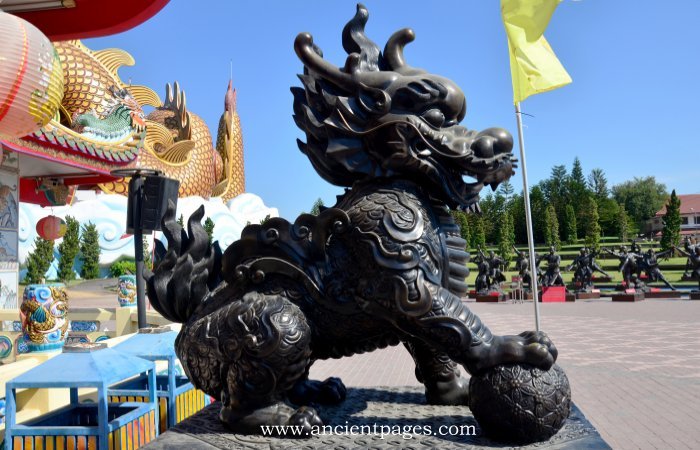
AncientPages.com - One-horned creatures are found in myths around the world. Although unicorns in different cultures have little to do with one another, they have multiple associations in European thought.
For example, the Roman natural historian Pliny the Elder wrote about unicorns in the first century AD. The unicorn features in both medieval Christian and Celtic beliefs, and is Scotland's national animal. The unicorn's prominence in European culture spread across the globe with colonization.
In southern Africa, colonial European ideas encountered older indigenous beliefs about one-horned creatures. I've highlighted this in a recent research article about some of the region's rock art.
Unicorns in Africa?
In the age of natural science, unicorns were gradually dismissed as mythical rather than biological creatures. But some thought that real animals with single horns might yet exist in the "unexplored wilds" of Africa.
A famous search for such evidence was carried out by the English traveler, writer and politician Sir John Barrow (1764-1848). He'd heard rumors about "unicorns" from the colonists and local people he encountered on his southern African travels.
One of those rumors was that unicorns were depicted in the rock paintings made by the indigenous San (Bushman) inhabitants of the region. Barrow searched unsuccessfully for them. Then, in mountains in what's now the Eastern Cape province, he found and copied an image of a unicorn (Figure 1).
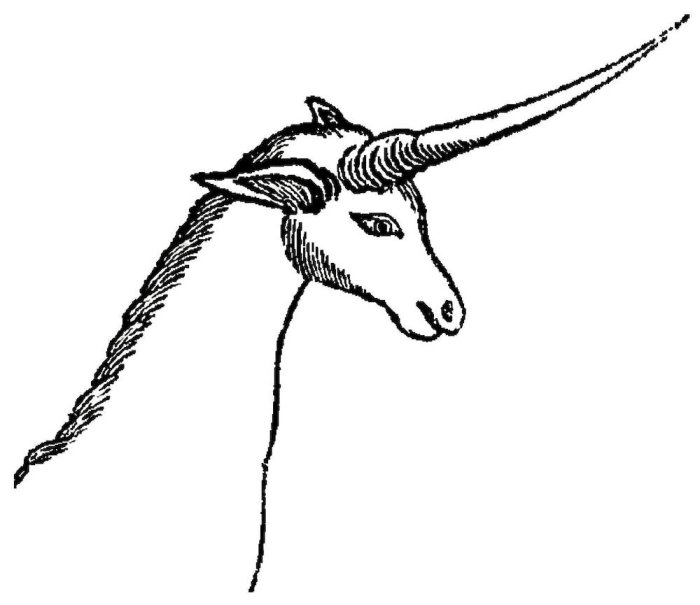
Figure 1. Barrow’s unicorn.
But many were skeptical of his claims. His published copy resembles a European engraving rather than a San rock painting. More generally, critics have argued that rock paintings of unicorns were probably inspired by side-on views of gemsbok or South African oryxes—antelope with long, straight horns—or by rhinos (which might have one horn in India, but have two in southern Africa).
My research concludes that these criticisms don't take into account several factors that have since come to light. My paper provides further support for the claims that some San rock paintings do indeed depict one-horned creatures.
Multiple rock art depictions
Early documented rock paintings of one-horned creatures are known from 19th and 20th century copies by British geologist George Stow and South African teacher M. Helen Tongue.
I draw attention to additional examples of rock paintings of one-horned creatures (Figures 2 and 3).
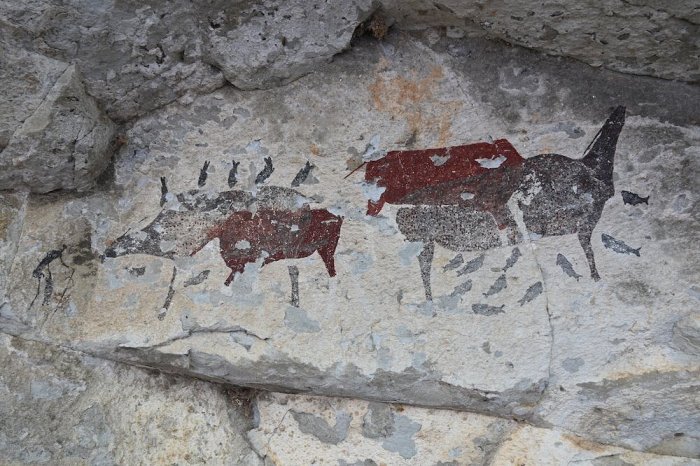
Figure 2. A pair of spotted one-horned animals surrounded by fish. Credit: David M. Witelson
Collectively, these show that rock paintings of one-horned creatures can't be dismissed as naturalistic profile views of two-horned creatures, one horn covering the other.
Rain-animals
The second way in which my research engages with early criticisms is to draw attention to previously overlooked indigenous beliefs concerning one-horned beings.
The evidence suggests that the "unicorns" in indigenous mythical beliefs and rock art are actually animal-like forms of rain, known as rain-animals.
Tongue's colleague and co-worker, Dorothea Bleek, compared Stow's and Tongue's copies and suggested in 1909 that rock paintings of one-horned antelope were probably kinds of rain-animals, which she knew from |Xam San (Bushman) myths.
Rain-animals feature prominently in San ritual, myth and art. They take many forms, ranging from four-legged creatures to serpents. They were ritually captured and slaughtered by San rainmakers to cause rain to fall in specific places. Many |Xam myths tell of the dangerous male rain, sometimes personified as the "Rain", who turned pubescent girls and their families into frogs when the girls did not correctly observe their initiation taboos.
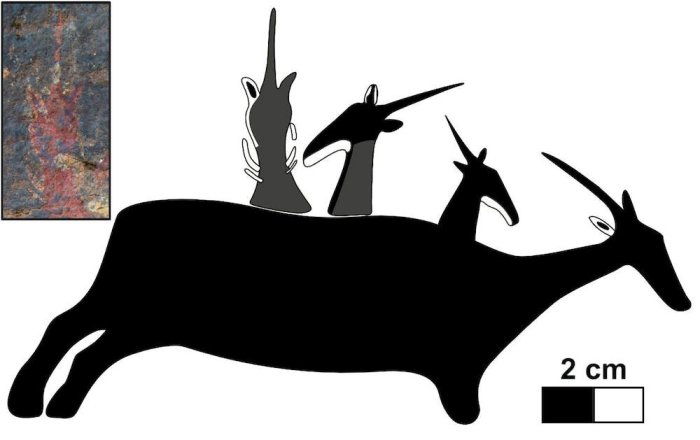
Figure 3. Digital drawing of original rock painting near the town of Dordrecht. Credit: David M. Witelson
Among other details, my paper highlights a fascinating and previously missed reference to a one-horned water creature. In one of the variants of a story told by |Han≠kass'o or Klein Jantje—a |Xam man who was an expert storyteller—a "water child" or juvenile rain-animal is said to have a single horn. The story was written down in phonetic script (to record the sounds of the San langauge) by Lucy Lloyd (Bleek's aunt) and translated into English.
The girl in |Han≠kass'o's story breaks the rules of her ritual puberty seclusion by going to a pond and catching (like fish) the children of the rain, which she cooks and eats. After a few times she struggles to catch another one: unlike the others, this last creature is "a grown-up water".
We know what made it recognizably grown-up: unlike the others, it had a single horn that poked out of the water. We have, therefore, the actual |Xam San words (which translate as "horned rain-child") used to describe this kind of rain-animal, which we find in the rock paintings in and around the Eastern Cape.
An intersection of beliefs
In the colonial period, indigenous people were exposed to European images of unicorns on crests, badges and buttons and through tales. In one of the recorded instances, indigenous people at the Cape saw the British royal coat of arms and commented on the unicorn in it. They recognized it as their "god", but this description, translated into English from an unknown indigenous idiom, probably refers to the creature's mythical nature rather than a genuine god-like status.
Foreign unicorn images may have gradually influenced local ones. Some rock paintings of one-horned creatures—dated by associated human figures in European dress to the colonial period—show horns pointing upward or forward (Figure 4) like the European unicorn, rather than backwards like antelopes, such as the eland (Figure 5), on which many rock paintings of one-horned rain-animals are modeled.
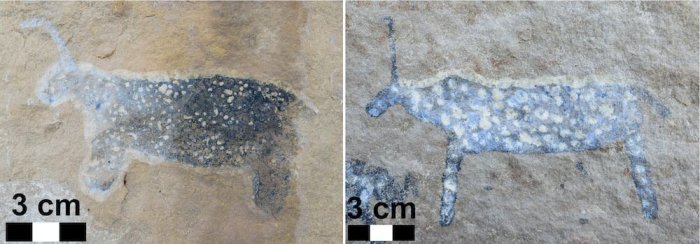
Figure 4. Rain-animals with horns that point up or curve forward at a site near Indwe. Credit: David M. Witelson
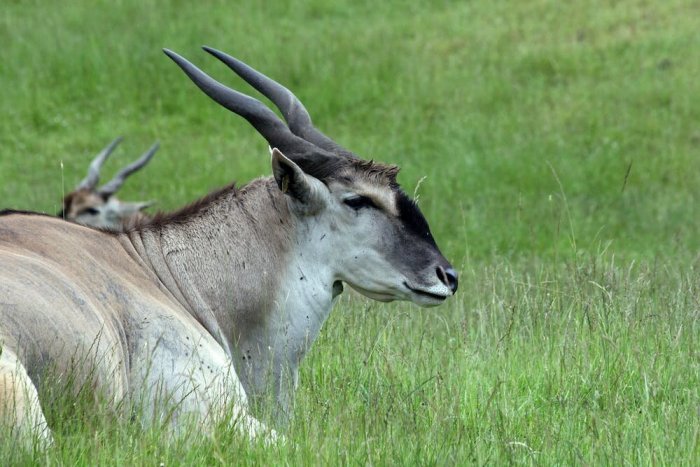
Figure 5. The horns of the common eland. Credit: Pxfuel, CC BY-SA
One-horned animals depicted in rock art are not mere rhinos nor antelope, nor are they the creatures of European myth.
Indigenous beliefs help us to explain that the uncanny resemblance between European unicorns and South African "unicorns" was pure chance. The mixing of foreign beliefs with local ones in colonial South Africa has hidden the independent, indigenous creature.
Written by David M. Witelson, Postdoctoral research fellow, University of the Witwatersrand
Provided by The Conversation
This article is republished from The Conversation under a Creative Commons license. Read the original article.