
Mjölnir: Thor’s Terrible Axe-Hammer And Its Magical Powers In Norse Mythology
A. Sutherland - AncientPages.com - Mjölnir (also known as Miölnir, Mjølne, Mjǫllnr) was a terrible ax hammer that belonged to Norse god Thor. The word Mjölnir means ‘crusher’ (or ‘striker’).
Thor was a righteous god who mastered thunder, storms, and lightning and had supernatural strength. He protected mankind, gods, and fertility and was renowned as the strongest, brave, and most warlike of the gods.
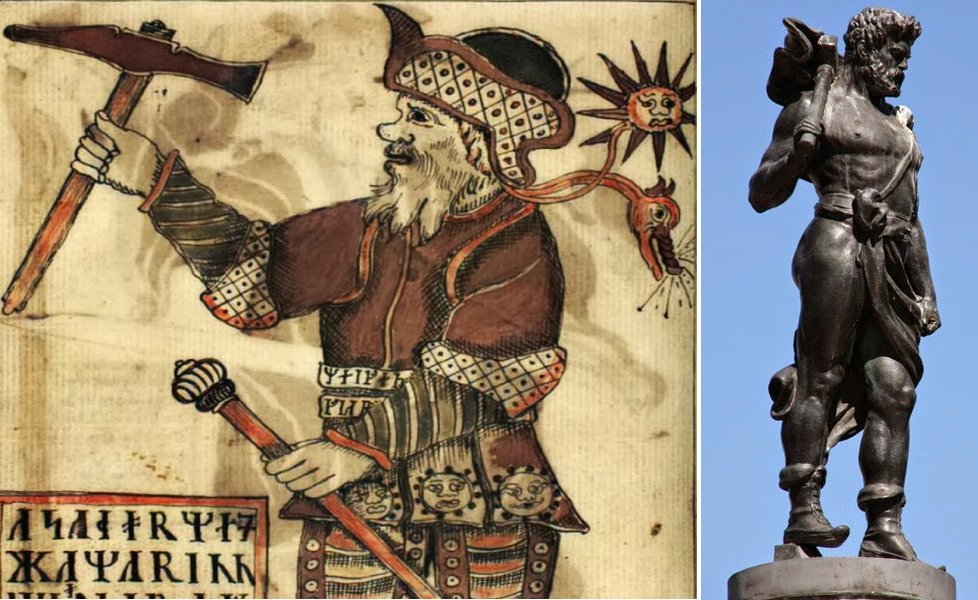
Left: Drawing of Thor, dated to 18th century, Iceland, Right: Statue of Thor In Stockholm, Sweden
He was also known as the great slayer of the Jötuns, terrible giants who were sworn enemies of the gods in Asgard. The Jötuns lived in Jötunheimr, one of the nine worlds of Norse cosmology. Their home was also known as Utgard, which means “Beyond the Fence.”
Thor is considered a hero of the Vikings, and his hammer has long been the Vikings' amulet of protection and power.
In ancient art, Thor is depicted with Mjölnir, a magical hammer in his hand. The hammer’s only flaw was its short handle. Loki, known among the gods as a trickster and mischief-maker, was responsible for this defect.
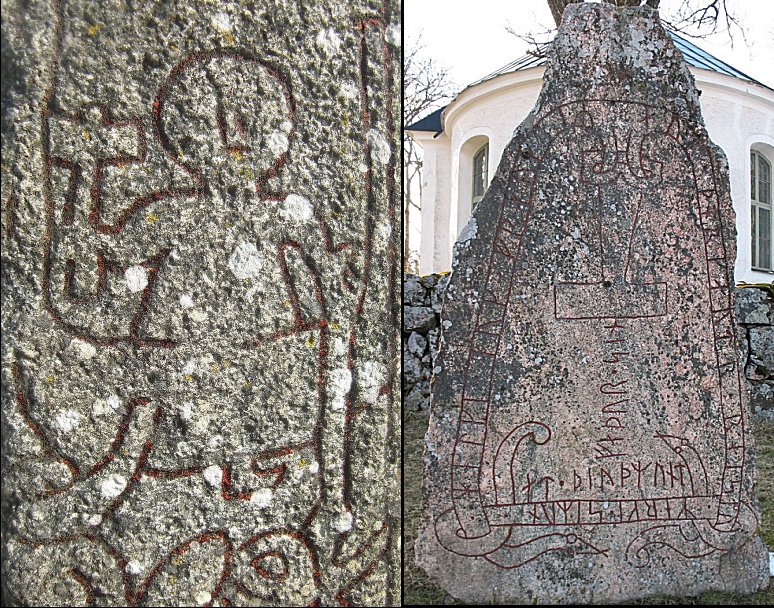
Left: Thor with Mjolnir depicted on the Altuna stone, Uppland; Sweden. Right: A runestone depicting Thor's hammer, Södermanland, Sweden.
As a result, Thor had to wear the magic glove or an iron gauntlet (‘Iarn-greiper’) to hold terribly red-hot Mjölnir in his hand. Thor also used a mysterious belt (Megingjardir) that would double his strength.
Yet, the magical hammer had many wonderful properties and was Thor’s formidable weapon against giants. Mjölnir was capable of leveling mountains and was so heavy that no one else could lift it from the ground. Regardless of distance, Mjölnir always returned to Thor’s hand, which could be squeezed into a smaller size and unexpectedly hidden away. Mjölnir could kill and destroy but also revive people or animals.
It was said to be forged by two dwarfs, Brokkr ( in Old Norse: ‘blacksmith’) and Eitri (‘spark-sprayer’), who both lived in the underground home of the dwarves, Svartalfheim and were widely known, skilled craftsmen and technicians who created many magical objects for the gods of Asgard.
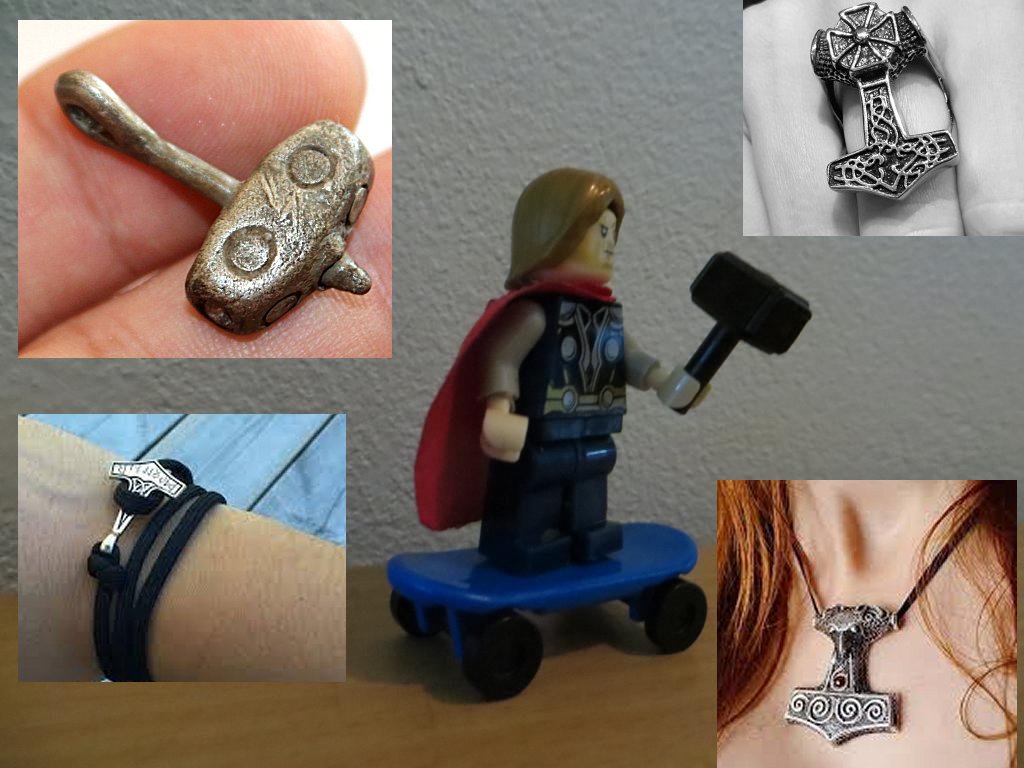
Mjölnir was a tremendous weapon capable of leveling mountains and so heavy that no one else could lift it from the ground.
The saga of Thor’s formidable weapon, which killed countless giants, continued even after Ragnarok, according to Snorri Sturluson's Prose Edda, ‘Skáldskaparmál.’ Mjölnir was in possession of the second generation of gods, who survived the catastrophic events of Ragnarok and were involved in the new world order.
Thor’s Hammer Mjölnir Widely Depicted By The Viking People Of Scandinavia
The memory of Mjölnir and its owner has survived through many generations. Thor’s hammer was frequently depicted on countless boundary stones and gravestones. It was frequently found at wedding ceremonies and raised over newborn children.
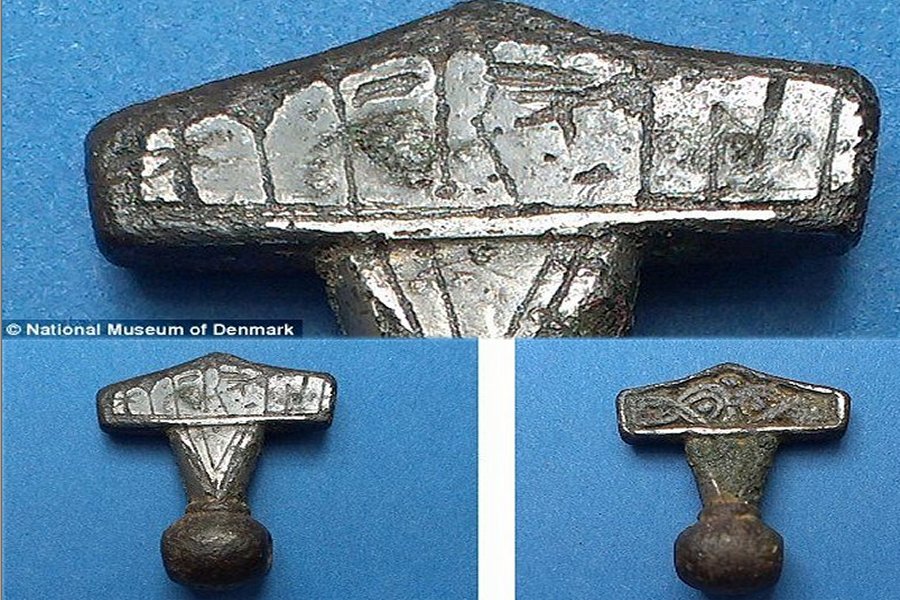
Unusual Hammer of Thor found in Denmark. .Both sides of the amulet are shown here, with runes seen on the left image. The latest find is unusual as it has runes inscribed that read ‘Hmar x is’ (‘This is a Hammer’)
Popular and respected miniature hammers are designed to be worn as pendants. Small silver amulets in the form of Mjölnir symbolize the greatness of Thor and his fight for the land.
Archaeological excavations revealed many of these artifacts.
Updated on January 26, 2023
Written by – A. Sutherland AncientPages.com Staff Writer
Copyright © AncientPages.com All rights reserved. This material may not be published, broadcast, rewritten or redistributed in whole or part without the express written permission of AncientPages.com
Expand for referencesReferences:
Hawthorne, Simon. Norse Mythology
Grimes, Heilan Yvette. The Norse Myths (p. 288). Hollow Earth Publishing. Kindle Edition.
Belton, J. H. An Encyclopedia of Norse Mythology
More From Ancient Pages
-
 Fossil Of Extinct Human Species Reveals Climate Change Led To Unexpected Anatomical Changes 2 Million Years Ago
-
 Unique Viking Age Runestone With A Cross And Animal Biting Its Own Tail Discovered By Farmer In Sweden
-
 New Underwater Discoveries Made Around The Antikythera Shipwreck
-
 Gold Coins Shed Light On The Mystery Of Sandby Borg And Massacre On The Swedish Island
-
 Bezvodovka: Little Known Ancient Solar Observatory In Ukraine Reveals Its Secrets
-
 Ancient Burial Tomb Of A Noble Mongol Warrior With Weapons Unearthed In The Moldavian Village
-
 Mystery Of The Blue Blood Gods: Why Did They Have A Different Blood And Skin Color?
-
 Mysterious Voynich Manuscript Was Written In Two Languages – Scientists Say
-
 Enigma Of The Unusual Forest In Disguise
-
 Exceptionally Rare 1,300-Year-Old Golden Pommel Found In Blairdrummond, Scotland
-
 3,000-Year-Old Fortress Built By The Mysterious Votadini Tribe Discovered On Top Of Arthur’s Seat
-
 Baby Carriers Were Used 10,000 Years Ago – New Evidence
-
 Infamous Queen Jezebel And Her Ancient Seal
-
 Mystery Of The Kusanagi Treasure: The Legendary Sword
-
 Neanderthals And Modern Humans Diverged At Least 800,000 Years Ago
-
 Original Colors Of 2,000-Year-Old Inscriptions At Temple Of Esna, Luxor – Revealed
-
 Mystery Of The Proto-Elamite Tablets – Cracking The World’s Oldest Undeciphered Writing
-
 What Can Grinding Stones Reveal About Europe’s Earliest Neolithic Communities?
-
 Long-Lost Home Of Harold, The Last Anglo-Saxon King Of England Found On Depicted On The Bayeux Tapestry
-
 Mysterious Ancient Stone Structure Discovered In Torreano, Italy

