
Legendary ‘Orichalcum Metal’ Related To Atlantis Found In 2,600-Year-Old Shipwreck
Conny Waters - AncientPages.com - A shipwreck sunk 2,600 years ago, off the coast of Gela in southern Sicily and the story of this ship is still fascinating today.
The ship - dated to the first half of the sixth century - was on its way to Gela in Sicily, possibly coming from Greece or Asia Minor.
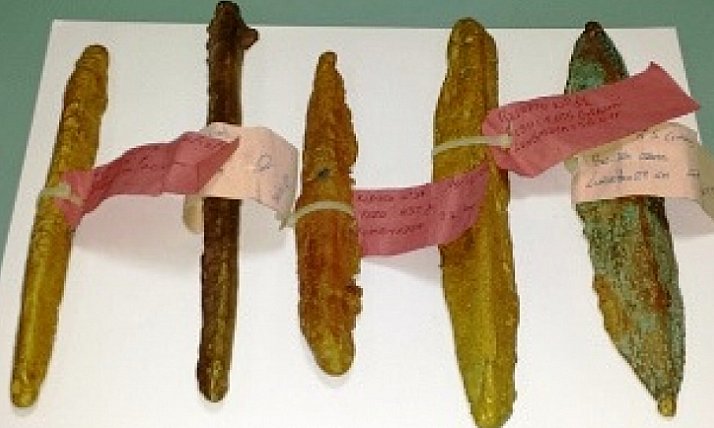 Ingots of orichalcum found in the shipwreck. Image via Accénto.it
It was carrying ingots of orichalcum, ancient gleaming metal, which according to ancient Greeks was supposed to be mined in the legendary Atlantis, a land we have never been able to localize.
In 2015, underwater archaeologists recovered 39 orichalcum lumps from the shipwreck and earlier this month, additionally 47 pieces of this precious alloy have emerged from the seas of Sicily, reports Seeker.
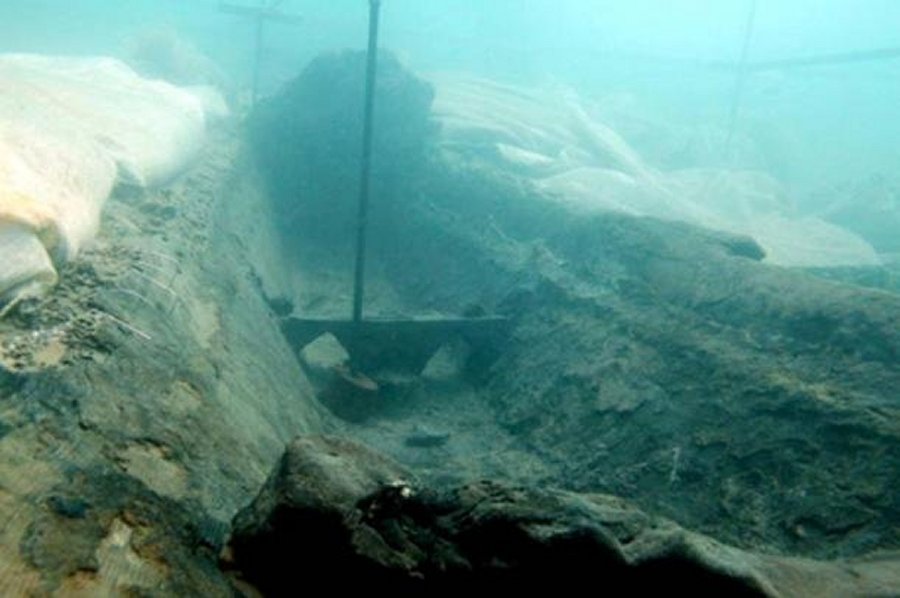 Shipwreck found off the coast of Gela in southern Sicily
"The ship dates to the end the sixth century B.C.," said Sebastiano Tusa, an archaeologist and and Sicily's superintendent of the sea, said.
"It was likely caught in a sudden storm and sunk just when it was about to enter the port."
According to the ancient Greeks, it was invented by Cadmus, a Greek-Phoenician mythological character. The fourth century B.C. Greek philosopher Plato made orichalcum a legendary metal when he mentioned it in the Critias dialogue (460-403 BC).
See also:
Hyperborea Or Atlantis Ruins – Underground Secrets Of The Sacred Lake On The Arctic Circle
Bolivia And The Mystery Of The Twins Of Atlantis
Plato wrote that the metal, second only in value to gold, was mined in Atlantis and was used to cover Poseidon’s temple interior walls, columns and floors. A legend says that the temple stood on pillar made of orichalcum and inscribed with Poseidon's laws.
Today, most scholars agree orichalcum is a brass-like alloy, which was made in antiquity by cementation. This process was achieved with the reaction of zinc ore, charcoal and copper metal in a crucible.
Using X-ray fluorescence, researchers have analyzed the 39 ingots and concluded that they are made with 75-80 percent copper, 15-20 percent zinc and small percentages of nickel, lead and iron.
This brass-like alloy was perhaps not as precious as Plato described it; however, it was valuable enough to be used by skilled craftsmen in workshops of the ancient city of Gela.
Written by Conny Waters - AncientPages.com Staff Writer
More From Ancient Pages
-
 Ukraine – A Place Where People From Different Cultures Intersected Until About 500 Years Ago
-
 Drought Triggered Civil Conflict Among The Ancient Maya – Study
-
 Iraq’s Ancient Kish City Survived The Great Flood – Today It’s Neglected And Lies Buried In Sand
-
 Knaresborough Hoard Reveals Its Secrets – Unusual Roman Discovery In The British Isles
-
 Amazing Ancient Underwater Treasures And Temples Discovered At Thonis-Heracleion
-
 More Than 1, 300 Prehistoric Burial Mounds In Western Azerbaijan Have Been Systematically Surveyed For The First Time
-
 Teaching Is Not Essential For People To Learn How To Make Tools, Study Says
-
 Ancient DNA Reveals Unknown Genetic Exchanges Between North And South America
-
 Thirsty Wheat Needed New Water Management Strategy In Ancient China
-
 A 1,500-Year-Old Holy Well Probably With Healing Water – Discovered In Bulgaria
-
 Bizarre Parthian Tomb Sheds Light On Ancient Life In Isfahan, Central Iran
-
 Powerful Ancient Maya Kaanu’l Dynasty And Their Intriguing Reliefs Of Mythical Animals And Celestial Ancestors In Quintana Roo, Mexico
-
 Four Pre-Inca Tombs Discovered In A Pyramid-Shaped Cemetery, Lima, Peru
-
 Archaeologists Begin Excavations Of A Sunken Zhiyuan Warship That Sank In 1894
-
 Lost Villa Of First Roman Emperor Augustus Found At Somma Vesuviana In Southern Italy
-
 Europe’s Largest Predatory Dinosaur Unearthed On The Isle Of Wight
-
 Humans Used Shells As Body Ornaments 30,000 Years Ago – Discovery In Malaga’s Cueva de Ardales Reveals
-
 Huge Viking Hall From Harald Bluetooth’s Time Discovered In North Jutland
-
 Fossil Tooth Analysis Sheds More Light On Earliest Humans From Southern Africa
-
 Salt Workers’ Residences At Underwater Maya Site – Identified

