
New York Was Once Called New Amsterdam – History Behind The Change Of Name
AncientPages.com - Did you know that New York was once called New Amsterdam?
Today, it’s difficult to imagine that New York could ever have had another name, but it was not so long ago that the city was renamed. New York was once called New Amsterdam and it was the capital of New Netherland.
New York’s name history can be traced to a time during the 17th century when Britain, France and Netherlands all struggled to expand their territories and establish more colonies.
Though Britain and France were rivals, they could still co-operate and form an alliance against their common enemy - the Netherlands, a small country that for 80 years fought for independence and now started to conquer the world.
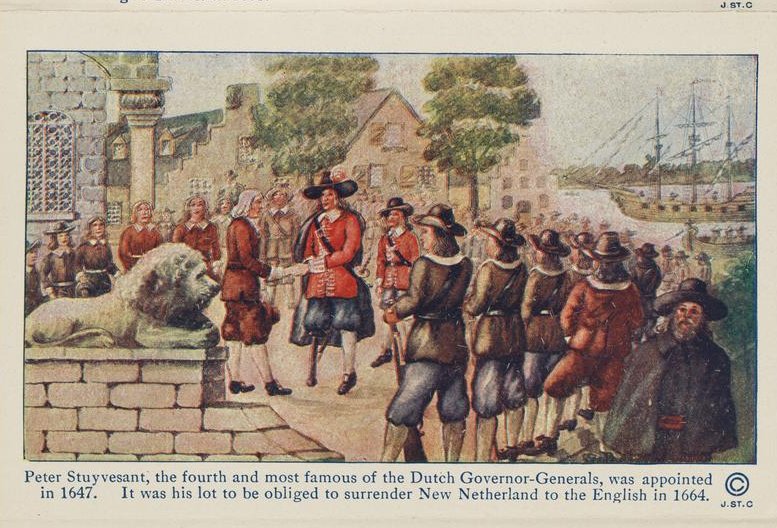
Image credit: Museum of the City of New York
The Netherlands became more and more powerful. One of the goals was to set up colonies in North America.
The first recorded exploration by the Dutch of the area around what is now called New York Bay was in 1609 with the voyage of the ship Halve Maen.
In 1626, Dutch governor Peter Minuit formally purchased Manhattan from the local Indian tribe. According to a legend, the Manhattans–Indians of Algonquian linguistic stock agreed to give up the island in exchange for trinkets valued at only $24.
See also:
The Name Of America Used For The First Time On World Map – On Apr 25, 1507
More Fascinating Ancient History Facts
At the southern tip of Manhattan Island, a Dutch settlement was established. It was considered a good strategic location. A fort was built and the city served as the seat of the colonial government in New Netherland.
It did not take long before a conflict broke out between the Dutch settlements and the Indians who were ignorant of European customs of property and contracts. The Dutch and Indian conflict resulted in the death of more than 1,000 Indians and settlers.
In 1664, New Amsterdam passed to English control, and English and Dutch settlers lived together peacefully.
On September 8, 1664, New Amsterdam was renamed to New York
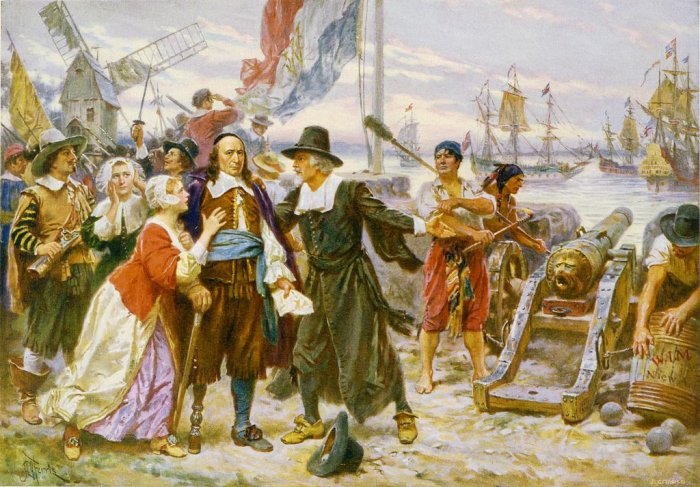
The Fall of New Amsterdam, by Jean Leon Gerome Ferris. Peter Stuyvesant (left of center, with wooden leg) stands on shore among residents of New Amsterdam who plead with him not to fire on the English warships. Image credit: United States Library of Congress
The English had renamed the Colony the Province of New York, after the king's brother James, Duke of York and on June 12, 1665 appointed Thomas Willett the first of the Mayors of New York Town. The city grew northward, and remained the largest and most important city in the Province of New York and became the third largest in the British Empire after London and Philadelphia.
Some years later, in 1673, the Dutch managed to regain control of their settlement, but not for long. The following year, they lost the city again and New York was returned to the Englishmen.
After the American Revolution, the Treaty Of Paris was ratified and New York became the first capital of the United States.
Copyright © AncientPages.com All rights reserved. This material may not be published, broadcast, rewritten or redistributed in whole or part without the express written permission of AncientPages.com
Expand for referencesMore From Ancient Pages
-
 Ancient European Buildings Form A Sacred Symbol When Viewed From The Air – Scientist Reveals
-
 Mysterious Unknown Caves And Tunnels Discovered Beneath The Olsztyn Castle
-
 Chilling Tale Of The Tailor And Odin’s Wild Hunt – Why The Norse God Warns Against Going Out On Christmas Eve
-
 St. Swithin’s Day And The 40 Days’ Weather Prophecy
-
 Magnificent 1,800-Year-Old Rock Tombs Beautifully Decorated Discovered In The Ancient City Of Blaundus
-
 Unique 1800-Year-Old Roman Coin Unearthed On Southern Carmel
-
 Bronze Age Vatya Culture: ‘Urnfield’ Cemetery And Remains Of A High-Status Woman
-
 Survivors Of The Latest Ice Age Thrived Near The Sea Of Galilee 23,000 Years Ago
-
 Antisthenes And Diogenes – Founders Of Cynicism Were Ancient Greek Philosophers
-
 Limestone Stela Of Liberation Discovered In Kom Ombo Temple In Aswan, Egypt
-
 On This Day In History: Walpurgis Night Celebration In Northern Europe – On Apr 30
-
 1,900-year-old ‘water law’ unearthed in Laodicea
-
 Lavish Home And Exotic Garden Of Emperor Caligula Discovered In Rome
-
 10 Great Viking Misconceptions Still Being Perpetuated
-
 Obsidian Blades Reveals Dynamic Neolithic Social Networks – New Analysis
-
 Ashvins: Vedic Twin Gods Of Medicine And Healing Were Skilled Surgeons
-
 Extraordinary 6,500-Year-Old “Noah” Skeleton Re-Discovered – A Survivor Of The Great Flood Hidden In Museum
-
 Surprising Evidence Of 12,000-Year-Old Unknown Advanced Secret Knowledge Held By Elite Individuals – The Connection – Part 2
-
 El Argar Civilization: Bronze Age Palace And Grave Goods Unearthed In Spain’s La Almoloya
-
 1.3-Million-Year-Old Stone Age Axe Discovered In Morocco Pushes Back The Start Sate Of Acheulian Technology In North Africa

