
Battle Of Assandun: The Great Battle In English History And A Brief Period Of Viking Dominion In England
A. Sutherland - AncientPages.com - The Battle of Assandun was an important historical event that gave Canute the Great (Cnut Knut den Store) the Crown of England.
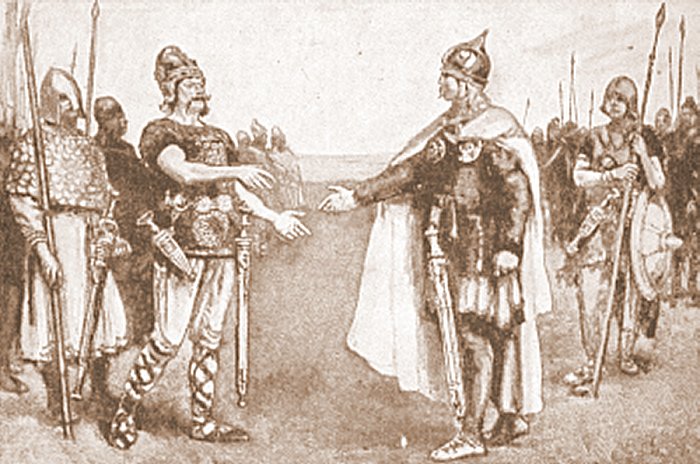 Edmund II Ironside and Canute the Great after Battle of Assandun.
It took place on October 18, 1016, and was fought between Danish armies led by Canute the Great and the English army led by King Edmund II ('Ironside').
"Then he [Edmund] assembled his troops the third time, and they went to London, all north of the Thames, and looked out through Clayhanger, and he freed the populace and drove the enemy to their ships. It was within two nights after the king passed over at Brentford, where he fought the enemy and put them to flight: but there were many Englishmen who were drowned by their own carelessness; who had gone before the army to plunder…" (Anglo-Saxon Chronicle)
The battle was victorious for the Danes and helped them to retake the English territories. For many years, historians have argued in a way that unforunately does not give or have a result regarding the location of this critical battle and whether it took place.
Was Assandun – Ashdon, near Saffron Walden in north Essex, or Ashingdon near Rochford in southeast Essex, England?
After the battle, Edmund had to sign a treaty with Canute. By this treaty, all England except Wessex would be controlled by Canute. Additionally, if one of the kings should die, the other would take all of England, that king's son being the heir to the throne.
Edmund died on November 30, and Canute the Great assumed control of his territories. He was crowned King of England in January 1017.
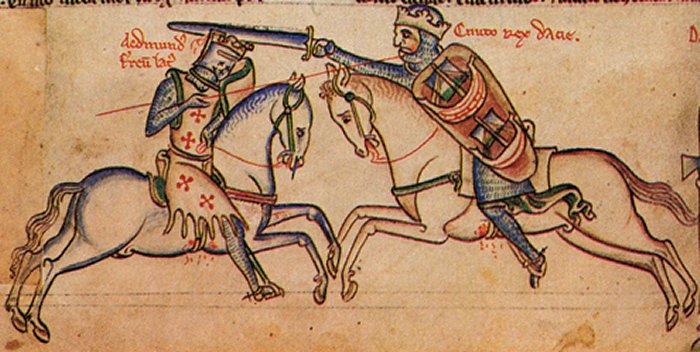 Edmund Eisenseite (left) in a duel with Knut the Great. (Representation from the Chronica Majora by Matthew Paris, around 1250). Image credit: Matthew Paris (1200–1259) - Public Domain
Thus for the first time, England became a single united kingdom, covering the same territory as it does today.
It also remained under Danish rule for the next 26 years.
Canute built a church, chapel, or similar holy site after winning a battle to commemorate the soldiers who died in battle.
A few years later, in 1020, the completion took the place of the memorial church known as Ashingdon Minster on the hill next to the presumed site of the battle in Ashingdon.
"King Canute ordered St Andrew's, "a church built of lime and stone for the souls of those slain in the Battle of Assandune 1016. It was dedicated in 1020 at a ceremony that King Canute and his officers attended. This battle was the decisive military encounter for the throne of England. Much of the church is now a 13C rebuild with a 14C tower. The rubble walls contain Roman tiles, and there are Saxon timbers in the tower."
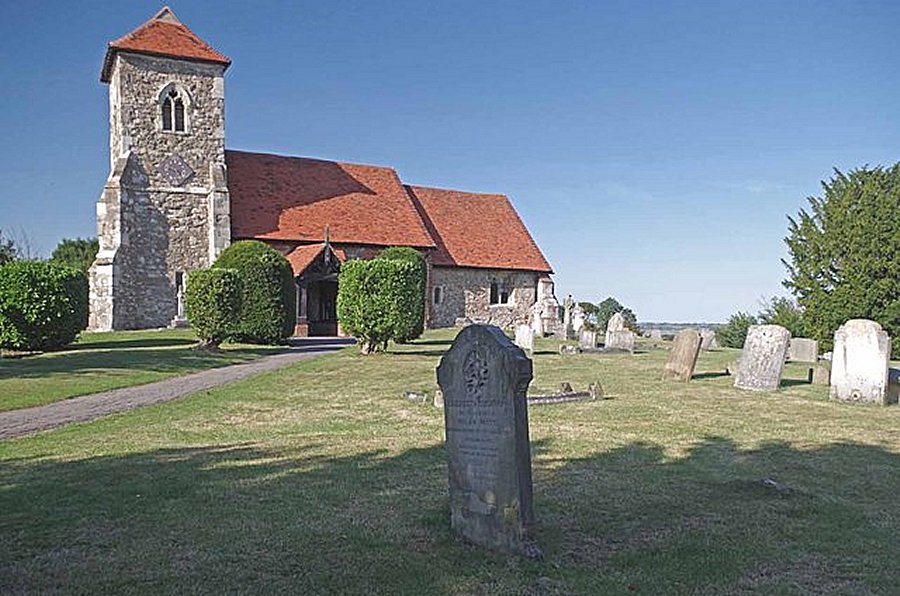 St Andrews Minster Ashingdon. There has been a church here since 1020. King Canute ordered its construction and attended the dedication. Much of the church was rebuilt in the Middle Ages. Image credit: © Copyright Glyn Baker and licensed for reuse under this Creative Commons Licence.
The church still stands to this day and is dedicated to Saint Andrew but is believed previously to have been dedicated to Saint Michael, who was considered a military saint: churches dedicated to him are frequently located on a hill.
Suppose Ashington was not the place of the battle. In that case, there is another possible location based on archaeological finds. Its location is Ashdon in the Essex area, where archaeologists unearthed Roman and Anglo-Saxon coins.
Written by – A. Sutherland - AncientPages.com Senior Staff Writer
Updated on January 21, 2024
Copyright © AncientPages.com All rights reserved. This material may not be published, broadcast, rewritten or redistributed in whole or part without the express written permission of AncientPages.com
Expand for referencesReferences:
More From Ancient Pages
-
 Part Of Jerusalem’s Wall Destroyed By The Babylonians In 586 BC – Unearthed
-
 INAH Archaeologists Focus On Ancient Religious And Ceremonial Site Of Teteles Of Avila Castle, Puebla, Mexico
-
 Gallic Leader Vercingetorix In Victorious Battle Of Gergovia, 52 BC
-
 There Is A Problem With The Footprints Claimed As Evidence Of Ice Age Humans In North America – Scientists Say
-
 2,700-Year-Old Ancient City Of Limnai On Turkey’s West Coast – Discovered
-
 Unusual Burial Ceremony: Bones Of The Dead Were Sorted And Categorized Before Burial
-
 On This Day In History: SS City of Glasgow Leaves Liverpool And Is Never Seen Again – On March 1, 1854
-
 Beautiful Gold ‘Lynx’ Earrings Discovered In The Ruins Of The Ancient Lost City Of Ani Go On Display In 2023
-
 Ancient Mystery Of The Tomb Of Tiryns – Burial Place For An Unknown Mycenaean Hero?
-
 Munkholmen: Island With Intriguing Yet Dark And Scary History
-
 31,000-Year-Old Skeleton Missing Foot May Show Oldest Amputation
-
 Cosmic Impact Destroyed Huge Ancient City In The Jordan Valley – Evidence Has Been Found!
-
 DNA Study Shows Pre-Historic Wallacea Was A Melting Pot Of Human Genetic Ancestries
-
 Independent Innovations In Stone Tool Manufacturing Across Europe And The Middle East
-
 Tāne: Lord Of The Forest Who Brought Three Baskets Of Knowledge To People In Maori Mythology
-
 Great Living Chola Temples: Outstanding Workmanship Of Chola Dynasty Builders Of South India
-
 Secret Underground Ancient Teotihuacan Tunnel May Solve A Long-Standing Mystery And Reveal Royal Tombs
-
 European Bronze Age Treasure Of Villenna Has Artifacts Made Of Meteoric Iron
-
 4,500-Year-Old Lost ‘Sun Temple’ Dedicated To God Ra Unearthed In Abu Gorab Necropolis
-
 Chickens Were Introduced To Britain, Mainland Europe, And Northern Africa Later Than Previously Thought

