
Were The Viking Berserkers True Or Drug Addicted Warriors Fighting In Trance?
Ellen Lloyd - AncientPages.com - The word "berserk" is used to describe the behavior of a person who was acting irrationally in a state of great agitation, unable to control their actions.
In Norse mythology, during the Viking age, the berserkers were considered a type of "warrior-shamans" who showed exceptional fighting fury and courage. Being in some kind of trance, they were able to ignore the wounds inflicted in battles.
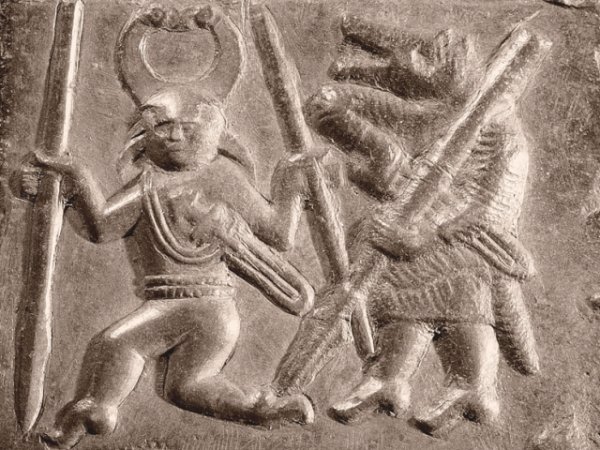
Vendel-period bronze plate discoverd on Öland (Torslunda socken), Sweden. Image credit: Benganshistoriasidor/
These Viking berserker warriors were the most feared off all, believed to used herbal-type drugs such as anmirifta to enhance their mood for battle, the eager berserker warriors are believed to have stood here biting their shields and swords in anticipation of the forthcoming battle and violence.
The totem animal of the berserkers was, as the name implies, the bear. In pre-Christian Scandinavia, berserkers seem to have been members of cults connected with Odin in his capacity as god of warriors.
Snorri Sturluson in Ynglinga Saga, recalling numerous elements of ancient lore, describes Odin's warriors in this way:
His men went to battle without armor and acted like mad dogs or wolves. They bit into their shields and were as strong as bears or bulls. They killed men, but neither fire nor iron harmed them. This madness is called 'berserker-fury'. The berserkers of the saga, who often appear as the core of the king's forces, are at times reminiscent of the retinue of warriors surrounding Odin and may ultimately derive from ancient bear cults.
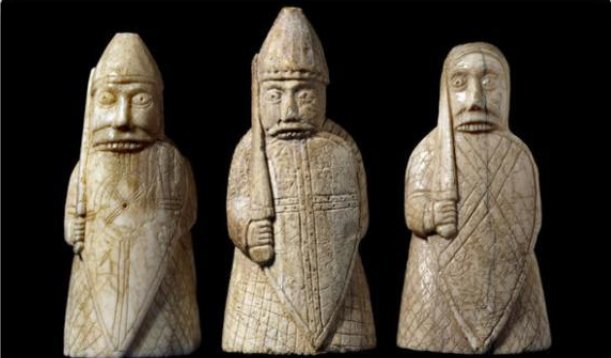
“Berserker” rook, at the British Museum.
Debate has centered on the meaning of the word itself. Berserker could mean "bare shirt," that is, naked; berserkers, as a mark of ferocity and invincibility, are said to have fought without needing armor. The word, however, may also mean "bear-shirt," reflective of the shape and nature of the bear assumed by these warriors. More literally, it may refer to protective bearskins that such warriors may have worn into battle.
When the "berserker rage" was upon him, a berserker was thought of as a sort of "were-bear" (or werewolf), part man, part beast, who was neither fully human nor fully animal. Although not specifically so called, Bodvar Bjarki is a berserker of sorts.
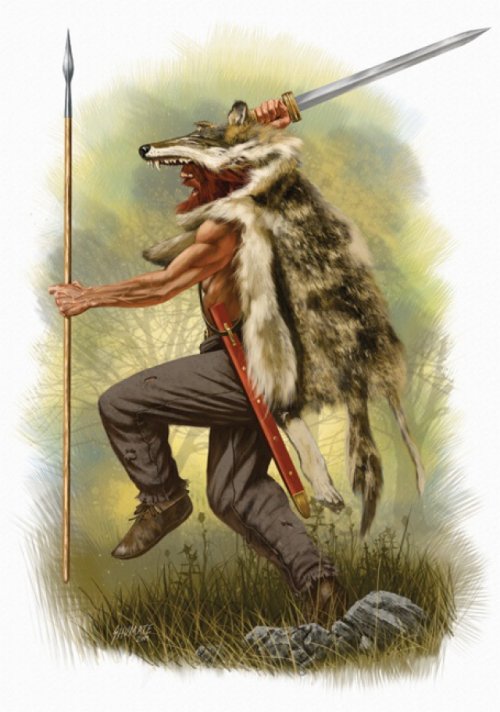
These warriors – half-naked and covered in furs – entered into combat in trance, possessed by hatred and blind fury.
See also:
10 Great Viking Misconceptions Still Being Perpetuated
Revealed: Vikings’ Symbols Of Travels, Prestige And Adventure Were Imported From Abroad
Beautiful Ancient Viking Jewelry Made By Skilled Craftsmen
He appears at Hrolf's final battle in the form of a huge bear, invulnerable to weapons.
In both his invulnerability and his ability to change shape, Bodvar also displays preternatural abilities resembling those of Odinic champions.
To this day it remains a mystery how these terrible warriors brought them to a state of trance and could survive deadly wounds.
According to one theory, the berserkers Vikings were able to produce the desired warrior state by drinking something that contained hallucinogenic properties before the battle.
This could explain why the warriors were totally exhausted after the battle and had to rest for several days. Specialists in the field of botany also suggest the use of a plant known as the European bog, commonly used in the brewing industry until its replacement hops. The extract of this plant is toxic and can cause serious, irreversible harm.
This begs the question: Were the berserkers Vikings true warriors or drug addicts fighting in trance?
Written by - Ellen Lloyd – AncientPages.com
Copyright © AncientPages.com All rights reserved. This material may not be published, broadcast, rewritten or redistributed in whole or part without the express written permission of AncientPages.com
More From Ancient Pages
-
 Neanderthals In Swabian Jura Used Complex Tool-Making Techniques 45,000 Years Ago
-
 A ‘Millet Mystery’ And Its Complex Agricultural Adoption In Ancient Japan – Study
-
 Curious Pre-Columbian Clay Figurines With Smiling Faces From Veracruz
-
 Dragon Empress Wu Zetian Challenged Confucian Beliefs Against Female Rulers
-
 400-Year-Old Documents Reveal Japanese Opium Was Produced For Medical Purposes
-
 Gonzalo Guerrero – The Renegade Who Joined The Maya Against His Own People
-
 Was The Mysterious Powerful Viking Warrior Buried In A Ship In Scottish Highlands A Woman?
-
 Anaximander Of Miletus: Father Of Cosmology, Pre-Socratic Greek Philosopher Who Discovered Equinox, Solstices And Gnomon
-
 York’s Thriving Medieval Jewish Community – New Study
-
 Powerful Ancient Maya Kaanu’l Dynasty And Their Intriguing Reliefs Of Mythical Animals And Celestial Ancestors In Quintana Roo, Mexico
-
 Riddle Of The Hanging Gardens Of Babylon – Ancient Place Still Shrouded In Mystery – Part 1
-
 Hellenistic Decorated Tombs And Tombstone Probably Used As A False Door Unearthed In Egypt
-
 Artifacts And Long History Of Unguja Island – Ancient Humans Impact Island’s Environment
-
 Search For Noah’s Ark Continues – The ‘Inside Mount Ararat’ Research Project
-
 Giant Ancient Roman Underground Structure Discovered Near Naples, Italy – Aqua Augusta Investigated
-
 On This Day In History: First Battle Of Reading Took Place – On Jan 4, 871 AD
-
 On This Day In History: William Laud Archbishop Of Canterbury Beheaded – On Jan 10, 1645
-
 Guide To The Classics: On The Art Of Physical Exercise, A 16th Century Account Of Ancient Sports And Workouts
-
 Knowledge Of Ancient Medicine Hidden In Undeciphered Egyptian Manuscripts
-
 New Method Reveals Falsified And Original Manuscripts Of Famous Robert Burns

