
Mysterious Grave Of King Valdemar IV Atterdag – Will The 600-Year-Old Historical Puzzle Ever Be Solved?
Ellen Lloyd - AncientPages.com - In 1375, King Valdemar IV Atterdag was put to rest in Vordingborg, Denmark’s’ the biggest royal castle.
For over 600 years scientists and historians have been puzzled by the strange circumstances surrounding his grave.

King Valdemar IV Atterdag's tomb. Credit: Find A Grave
Before King Valdemar IV died, he expressed that he had the wish to be buried in the Vordingborg Castle.
Yet, for some unknown reasons, his daughter, Margaret I asked the Pope for permission and moved Valdemar Atterdag’s tomb from its original place in 1377 to the abbey in Sorø instead.
Valdemar IV was one of the most important kings in Denmark. Atterdag means "Dawn of a new day" and in many ways, this powerful King was the beginning of a new era.
He reigned between 1340 - 1375 and when he ascended the throne, Denmark was a much-divided country. He successfully managed to unite the country and bring all people together.
King Valdemar IV Atterdag lived during a time when kings’ burial places had special symbolic significance. Royals were often buried in Danish churches or cathedrals, so why was his resting place moved?
Danish archaeologist and research assistant at the University of Aarhus, Lars Sass Jensen is trying to get to the bottom with this historical mystery. One of his goals is trying to solve the reason why the greatest king in Denmark was transferred from the biggest castle in the country to a small monastery.
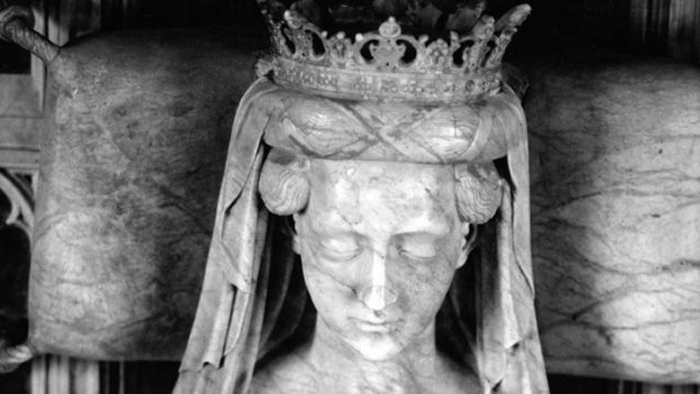
Queen Queen Margate I moved the tomb of her father for unknown reasons. Credit: Polfoto
Vordingborg was at that time the most important fortress in Denmark and since Valdemar began to re-conquer Denmark in 1341, it was the first castle, he would redeem Zealand. This shows this particular castle was of great importance to him, Jensen said.
Jensen believed King Valdemar IV Atterdag saw the Vordingborg Castle as a monument of himself, which is the reason why he wanted to be buried there.
The Danish king was inspired by a North German order, whose knights, were also buried in their main strongholds.
The King visited the knighthood of the Teutonic Order in 1346 in connection with the sale of Estonia.
See also:
Cnut The Great – England’s Danish King And Ruler Of One Of The Largest Nordic Empires
Legendary Harald ‘Bluetooth’ King of Denmark – ‘Who Made The Danes Christian’
Northern Germany was of a special significance to the Danes and Vordingborg Castle was strategically located close to the sea. This helped raids as well as trades.

Ancient ruins of the Vordingborg castle.
“King Valdemar Atterdag’s choice of burial place is perhaps the most direct sign of inspiration from the Teutonic Order,” Jensen said.
So why would his daughter defy his wishes to move the grave to Soro Abbey Church in 1377?
According to Jensen, Queen Margate I sought the Pope’s permission to move her father stating that her parents were reunited, but her mother Helvig, who was and still is buried at Esrom Monastery in North Zealand, was never moved to Sorø.

King Valdemar IV Atterdag was one of the greatest kings in Denmark.
However, Jensen is not convinced this was the real motive. In his opinion, the King’s tomb was deliberately moved for political reasons.
By moving King Valdemar from Vordingborg to Soro, the great castle lost a lot of its symbolic importance.
"I'm sure that there must have been a good reason why she did as she did,” said Birgitte Bøggild Johannsen researcher at the National Museum and a contributor to the book "Danish Royal Tombs'.
The Vordingborg castle tells a remarkable story of kings and power in medieval times. The great castle never entirely lost its significance and remains the town’s great attraction.
The case of King Valdemar’s grave remains unsolved, at least for now.
Copyright © AncientPages.com & Ellen Lloyd All rights reserved. This material may not be published, broadcast, rewritten or redistributed in whole or part without the express written permission of AncientPages.com and Ellen Lloyd
About the author:
Ellen Lloyd – is the owner of AncientPages.com and an author who has spent decades researching ancient mysteries, history, myths, legends and sacred texts, but she is also very interested in astronomy, astrobiology and science in general.
More From Ancient Pages
-
 Old Book Mysteriously Controlling The Minds Of Thousands Was Banned – But What Or Who Caused This Chilling Phenomenon?
-
 Carved Stone Depicting Mystery Horseman Unearthed At Roman Vindolanda, Hadrian’s Wall
-
 New Evidence Of Roman And Medieval Leicester
-
 Oldest Evidence Of Mysterious Humans On ‘Hobbit’s’ Island Neighbor – Found
-
 Ghostly Appearance Of Weird Ancient City Suspended In The Sky Witnessed By Many People
-
 Why Did Students Turn Medieval Oxford Into A Murder Capital?
-
 Scottish Settler’s Ominous Encounter With A Mysterious Being In West Virginia
-
 Mystery Of The Ancient Red Sign Witnessed In The Sky Over Japan
-
 Excavations In Keezhadi, Tamil Nadu, India Shed Light On Life During Sangam Age
-
 Researchers Provide New Insights On The Evolution Of Ancient Egypt’s Karnak Temple
-
 Ancient Egyptian Women Had Equal Rights As Men – Egyptian Cosmology And Goddess Maat Reveal Why
-
 Manco Capac: Legendary Founder Of The Inca Dynasty Of Peru
-
 Jambu Tree In Great Cosmogonic Forest Of Sacred Land Of Jambudvipa In Buddhist Mythology
-
 What Can Languages And Grammar Reveal About Our Ancient History?
-
 Gorgo – Queen Of Sparta And Wife Of King Leonidas Broke A Secret Code And Stopped An Invasion
-
 What Is The Giant Neolithic Circular Structure Near Durrington Walls Henge?
-
 Young Boy Finds Unique Micro-Mosaic Cross Medallion In Jerusalem
-
 Mysterious Runes Deciphered By School Children In Sweden Shed New Light On The Kensington Stone
-
 Early Humans In Europe Were Making Fires At Least 250,000 Years Ago – New Study
-
 Humans Used Shells As Body Ornaments 30,000 Years Ago – Discovery In Malaga’s Cueva de Ardales Reveals

