
Powerful Chola Rulers Of Southern India: Patrons Of Architecture, Art And Literature
A. Sutherland - AncientPages.com - Among three prominent Tamil dynasties that ruled in Southern India, the Chola Dynasty, which ruled for four hundred years, is considered to be the most powerful and one of the longest-ruling dynasties; two others were the Cheras and the Pandyas.
It is believed that the center of the Chola Empire was located in the valley of the sacred Kaveri River of southern India, but not much is known about the early Cholas until the rise of Vijayalaya Chola, a king of South India Thanjavur (r. 850 – 870 CE) who founded the imperial Chola Empire.
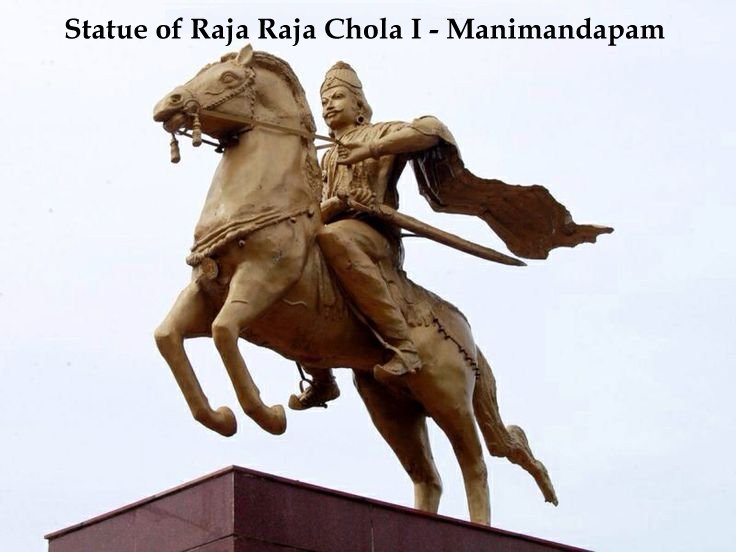
Statue of Raja Raja Chola I - Manimandapam. He was one of the greatest emperors of the Tamil Chola Empire of India
There is a vast number of inscriptions that help to reconstruct the dynasty's later history, which is mentioned in the earliest historical documents known as Ashoka’s Rock Edicts II and XII, a collection of 33 inscriptions on the Pillars of Ashoka as well as boulders and cave walls made by the Emperor Ashoka of the Mauryan Empire during his reign from 269 BC to 232 BC.
The achievements of Vijayalaya Chola were recorded in stone inscriptions and copper-plate foundation documents. He initiated a great period in the history of southern India, which was later continued by other rulers of this dynasty.
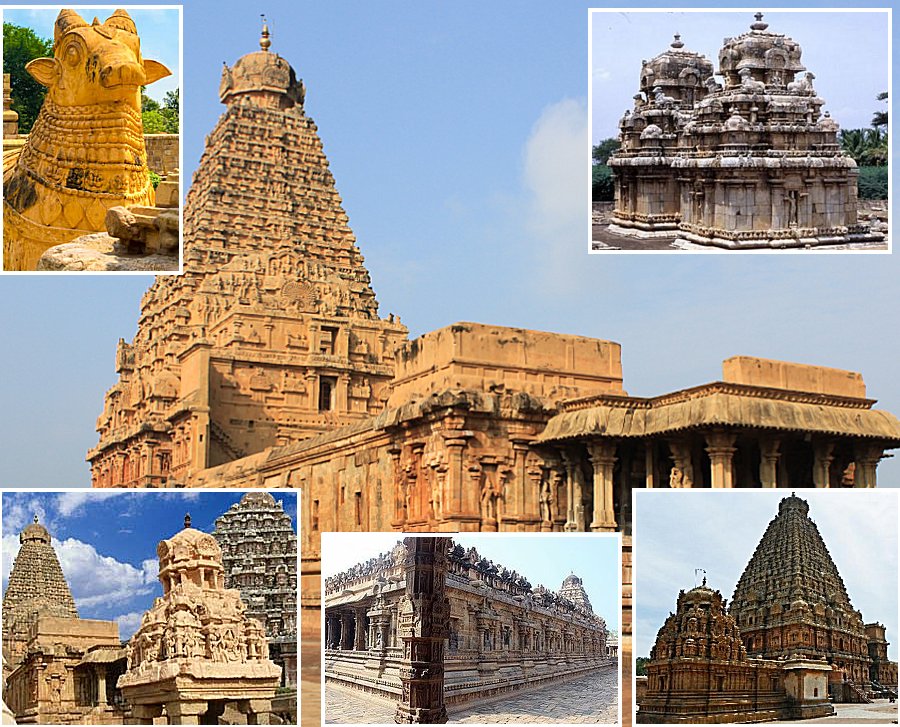
The temples were not only religious institutions but served as centers for economic and educational activities.
Another renowned ruler of the Chola Empire was Raja Raja Chola I (or Rajaraja Chola I, who ascended the throne in 985 and ruled until 1014. He was an efficient ruler, a great warrior, and a great enthusiast of architecture.
He commissioned the building of Brihadeshwara Hindu Temple dedicated to Shiva and located in Thanjavur in Tamil Nadu, southern India. Completed in 1010 AD, this magnificent temple in Dravidian style was the tallest (216 feet) building in India at the time. Its rich endowment included a huge gift of 60 bronzes of which 22 were given by the great King Rajaraja I.
The temple is now part of the UNESCO World Heritage Site known as the "Great Living Chola Temples".
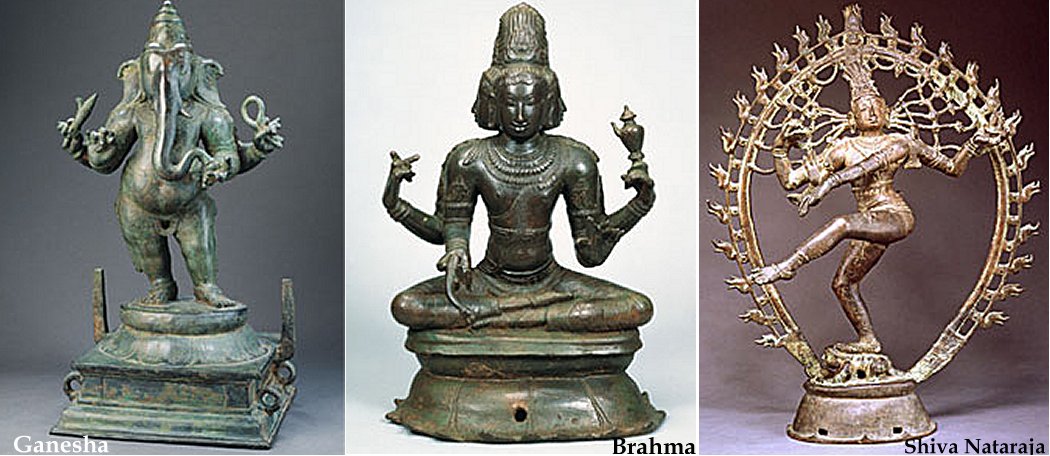
The bronze sculpture was raised to its recognition between the ninth-thirteenth centuries by the imperial Chola dynasty, the patrons of art, literature, and architecture. Source
At their height (about the 9th century till the beginning of the 13th century), the Cholas ruled over much of southern India, extending their control to include Sri Lanka, the Maldives, parts of Indonesia, and north up the coast of the Bay of Bengal to the Godavari basin (in the modern state of Andhra Pradesh.
The empire became very powerful politically, economically, and culturally. Their kings developed agriculture and created wide access to the thriving maritime trade routes, which included those of the Tang dynasty in China, Jewish traders in Aden, Yemen, and the Srivijaya Empire in the Malaysian archipelago. They developed strong trade links with China by sending their embassies. Ships of the Chola Empire carried goods from Africa and West Asia to China.
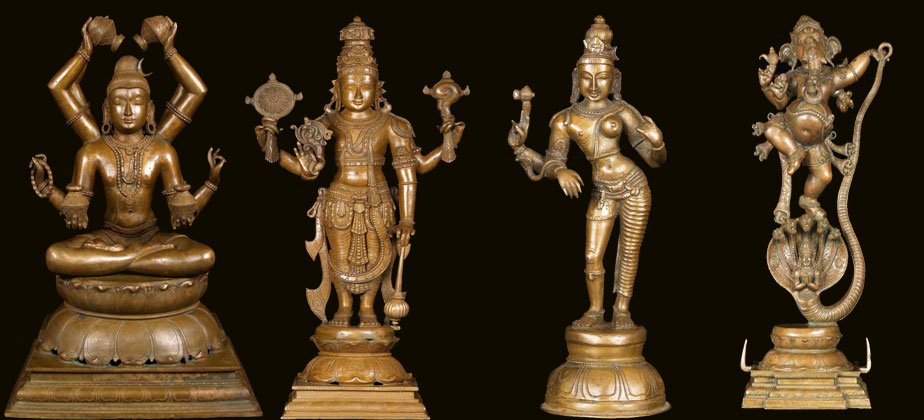
Chola Bronze sculptures. Source
The Cholas also started a large construction project and focused their work on the Tamil arts and literature, and built numerous stone temple complexes richly decorated with depictions of Hindu gods. The Chola skilled master builders used very hard building material, charnockite, and accomplished masterwork in a short time. The temples were not only religious institutions but served as centers for economic and educational activities.
Many argue that the magnificent bronze sculpture related to the Cholas is a masterwork that has never been equaled. The kings of this significantly elevated the art of bronze sculpture. Famous bronze masterwork was based on using the lost wax process. This ancient process was already established at the time the Chola kings came to power, but they additionally contributed to further development of the process and encouraged artists and bronze-smiths to work.
At the beginning of the 13th century, the Chola dynasty began to gradually decline until it was finally absorbed by the powerful Pandya kings.
However, the contribution of the Chola rulers to Tamil literature, art, and architecture has left a lasting and highly noticeable legacy throughout the region.
Written by – A. Sutherland AncientPages.com Staff Writer
Copyright © AncientPages.com All rights reserved. This material may not be published, broadcast, rewritten or redistributed in whole or part without the express written permission of AncientPages.com
Expand for referencesReferences:
Malarvannan, A. The Life of Mahabalipuram
Thapar, Bindia. Introduction to Indian Architecture
More From Ancient Pages
-
 Unearthing South Australia’s Oldest Known Shipwreck: The Bark South Australian (1837)
-
 Evidence Of Ritualistic Gatherings 35,000 Years Ago Found In The Manot Cave In Galilee, Israel
-
 Mysterious Railway Car Discovered Under An Old Fortress In Antwerp, Belgium
-
 Ördög – Shapeshifting Demon Who Controls The Evil And Dark Forces In The World
-
 Taweret – Powerful Egyptian Hippopotamus ‘Household Goddess’ Guarded Childbirth, House, Sleep And Dispelled Evil Forces
-
 Knights Templar’s Legendary Sword In Stone In Terminillo Mysteriously Disappeared – Where Is It Hidden?
-
 Mysterious Scottish Stone Circles On Orkney Were Used To Something Very Different Than Previously Thought
-
 On This Day In History: Aztec Calendar Stone Rediscovered – On Dec 17, 1790
-
 Zawisza Czarny: Most Famous Polish Knight And The Quest For His Family Home
-
 Mysterious Undeciphered Ripley Scroll And Its Connection To The Philosopher’s Stone
-
 Unknown Highly Advanced Civilization Created Malta’s Cart Ruts With Sophisticated Machinery
-
 Deeper Look Into Chinese Swords Throughout The History Of The Dynasties
-
 Cretaceous Fossil From Antarctica Reveals Earliest Modern Bird
-
 Incredibly Rare 3,500-Year-Old Wooden Spade Found In English Trench
-
 On This Day In History: National Hero Paul Revere Warns Of The British Coming – On Apr 18, 1775
-
 Unknown Aspect Of Human Evolution Discovered Through Ancient DNA Study
-
 Smuggled 1,800-Year-Old Lydian Atonement Inscription Sent Back To Turkey By Italy
-
 DNA Analysis Led To Discovery Of An Ancient Crop In Canary Islands
-
 Brokkr And Eitri – Norse Dwarves Who Fashioned Magical Artifacts For The Gods
-
 Playful Master Of Harmless Mischief Puck (Robin Goodfellow) And Shakespeare’s Visit To The Magic Valley In The Midsummer Dream

