
Ancient Tombs Of The Nobles In The Valley Of The Queens
A. Sutherland - AncientPages.com - In the Valley of The Queens, tombs were cut into the hills from the 19th Dynasty onwards for the princes, queens, and some royal children of the Ramesside kings, who ruled during an era known as the ‘Ramesside period’.
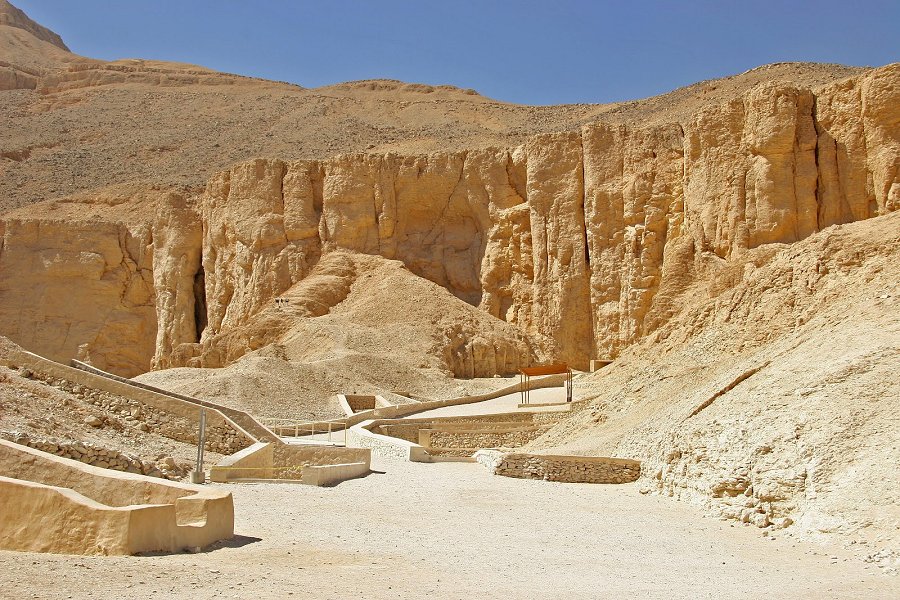
The Valley of the Queens is a small desolate area on the southern edge of the Theban hills but it still has some very beautifully decorated tombs of the nobles of the ancient Egypt
In ancient times, the Valley of the Queens - the second great royal cemetery after the famous Valley of the Kings - was known as Ta-Set-Neferu, meaning –"the place of beauty". It is located about 1.5 miles (2.4 km) west of the mortuary temple of Ramses III (1187–56 BC) at Madinat Habu.
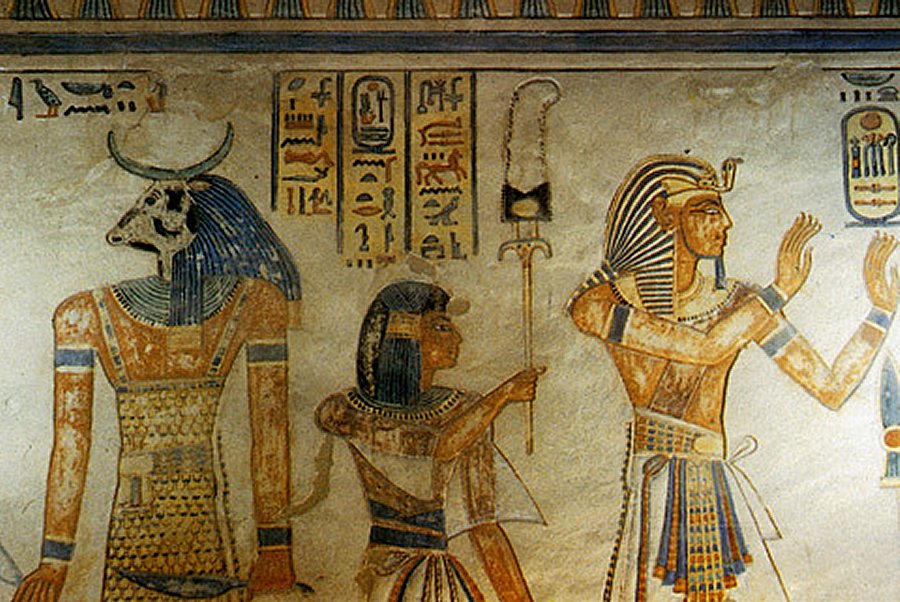
There are about 75 tombs in the valley. They usually consist of a small antechamber followed by a corridor that leads to the burial chamber, but only a few of these tombs were beautifully decorated; most suffered extensive damage from looting, vandalism and flooding..
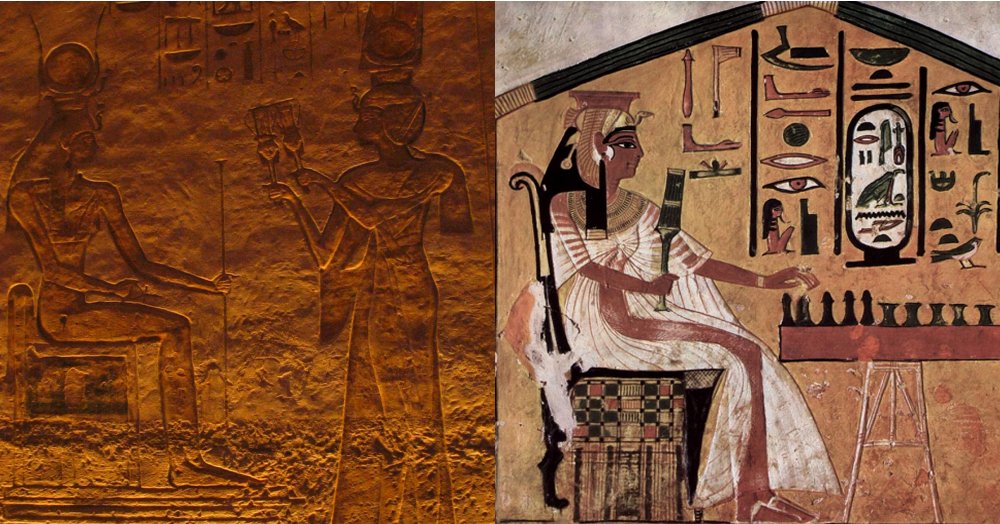
Left: Nefertari depicted offering sistrums to Hathor in her smaller temple of Abu Simbel; Right: Nefertari playing Senet. .Images via Wikipedia
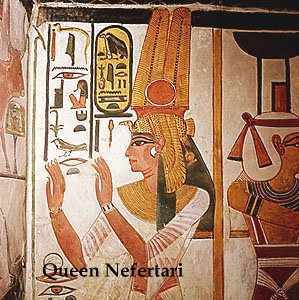
One of the largest and most spectacular tombs in the Valley of the Queens is the resting place carved out of the rock for Queen Nefertari (1290–1224 BC). The tomb - discovered by Ernesto Schiaparelli, an Italian Egyptologist in 1904 - was commissioned by Ramesses II, credited with the building of many temples and monuments including the two rock temples at Abu Simbel.
Nefertari ('beautiful companion') was the first of the Great Royal Wives of Ramesses the Great and one of the best known Egyptian queens, next to Hatshepsut, Cleopatra, and Nefertiti.
Queen Tyti ‘s sarcophagus chamber is another fascinating burial place, located to the south of the Theban Hills. It is designated QV52 in the Valley of the Queens. Tyti (or ‘Thiti) had many titles such as 'King's Daughter', 'King's Sister', King's Wife; King's Mother','Lady of the Two Lands'.
 However, her tomb has long been a mystery, because it does not record who she was, or the name of the king with whom she was associated.
It has been suggested that she was a wife of Ramesses IIÍ and possibly the mother of Ramesses IV.
On the tomb’s walls, there are depictions of Tyti as a young girl and as a middle-aged lady.
He is also shown before Thoth and the four sons of Horus guard the burial chamber.
Among other paintings, there is one depicting Tyti in the company of gods and goddesses.
She shakes an ancient Egyptian object - sistrum - before Horus, ("Heru" - 'the distant one'), one of the most important ancient Egyptian deities, worshiped from at least the late prehistoric Egypt until the Ptolemaic Kingdom and Roman Egypt.
Her burial chamber has jackal and baboon paintings.
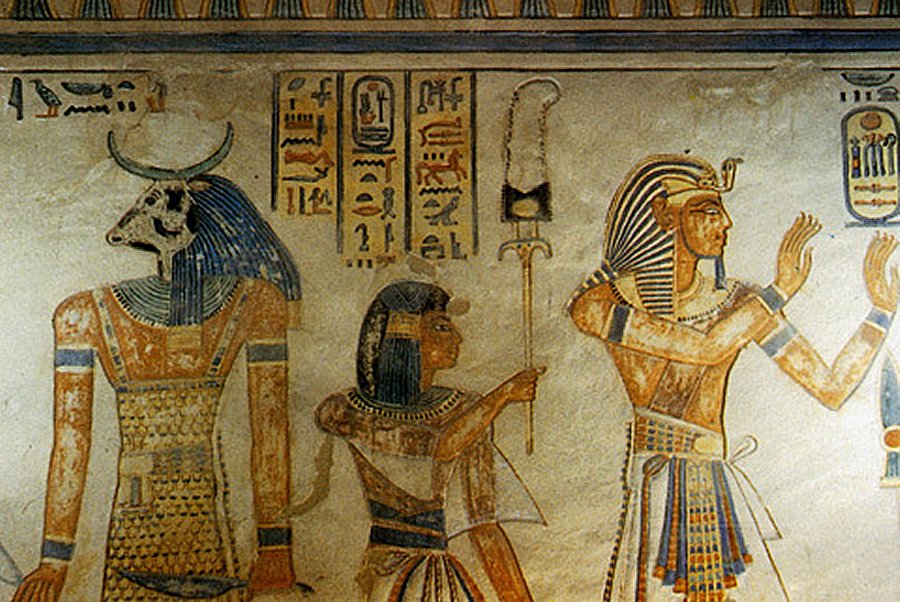
Young prince Amunherkhopshef with his father Rameses III. Image via Egyptian monuments.
Yet another tomb – discovered in the Valley of Queens in 1903 and completely looted - belonged to Amenhirkhopshef, a crown prince, a son of Ramesses III, who died when he was only a young child; in his tomb, the wall paintings are well-preserved.
Written by – A. Sutherland AncientPages.com Staff Writer
Copyright © AncientPages.com All rights reserved. This material may not be published, broadcast, rewritten or redistributed in whole or part without the express written permission of AncientPages.com
More From Ancient Pages
-
 Male-Female Roles 7,000 Years Ago Were Less Traditional Than Previously Thought – New Study Reveals
-
 On This Day In History: ‘Devil’s Footprints’ Appeared In Devon, England – Feb 8/9, 1855
-
 Historian Discovers Artifacts And Skeletons Of An Ancient Unknown Race In The North American Desert
-
 How Henry VIII Accidentally Changed The Way We Write History
-
 Curse Of Evil Eye: Powerful Ancient Belief That Still Frightens People Around The World
-
 Troublemaker Eris: Greek Deity That Ignited Hatred Among All
-
 Ancient Trade Routes Between Iran And Mesopotamia – Uncovered
-
 Evidence Of Yue – Ancient Chinese Criminal Punishment Found At Sanmenxia City
-
 Bronze Age Long-Distance Connections: Baltic Amber In Aššur
-
 Acheulian Culture Of Ethiopian Highlands And Their Prehistoric Tool Selection To Make Society’s Life Easier
-
 Rare Discovery: Giant Stone Artifacts Found On Ice Age Site In Kent
-
 On This Day In History: Albert Einstein Publishes His General Theory Of Relativity – On Mar 20, 1916
-
 Sculpted Head Of Ancient Warrior Wearing A Serpent Helmet Found At Chichen Itza
-
 Tikal Of Maya: Sophisticated Culture That Experienced Humble Start, Golden Age, Wars And Decline
-
 New Path For Early Human Migrations Contradicts A Single ‘Out Of Africa’ Theory
-
 What Was On The Menu For Stonehenge’s Builders, 2500 BC? Milk, Yoghurt And Cheese Only Eaten In Exclusive Ceremonies
-
 Eastern Necropolis Of Ancient Thracian And Roman City Of Serdica – Unearthed
-
 Mystery Of The 30,000-Year-Old Venus Of Willendorf Solved?
-
 Beautiful Zeugma-Like Mosaics Unearthed In Sinop Province, Northern Turkey
-
 Ancient City Of Isaura And Zengibar Castle Used By The Hittites, Persians, And Romans

