
Watlington Viking Hoard May Re-Write History Of England
AncientPages.com - British Museum presents a Viking Hoard dating from the time of the ‘Last Kingdom’, when the Anglo-Saxon kingdoms of Mercia and Wessex were fighting for their survival against a ‘Great Heathen Army’ of Viking raiders.
This most valuable hoard was discovered by metal detectorist James Mather in a field in Watlington, Oxfordshire and reported through the Portable Antiquities Scheme (PAS), headed up the launch of the PAS annual treasure report at the museum, which details the thousands of finds reported by detectorists and amateur archaeologists via a network of local museums.
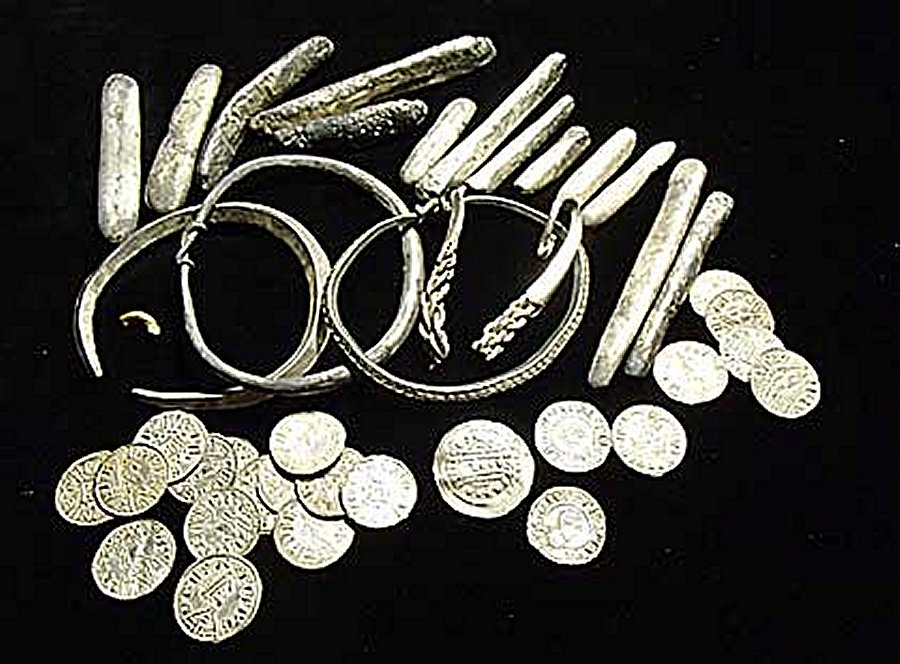
The 186 coins (some fragmentary), seven items of jewellery and 15 ingots were then examined by experts from the museum alongside colleagues from the Ashmolean Museum in Oxford. © PAS
The hoard includes rare coins of King Alfred ‘the Great’ of Wessex (r.871-99) and King Ceolwulf II of Mercia (874-79), as well as Viking arm-rings and silver ingots, and is said by archaeologists to be nationally significant.
Experts believe the hoard was buried around the end of the 870s, in the period following Alfred’s decisive defeat of the Vikings at Edington in 878, a victory which lead to the unification of England.
Following their defeat, the Vikings moved north of the Thames and travelled to East Anglia through the kingdom of Mercia. It seems likely that the hoard was buried in the course of these events, although the precise circumstances will never be known.
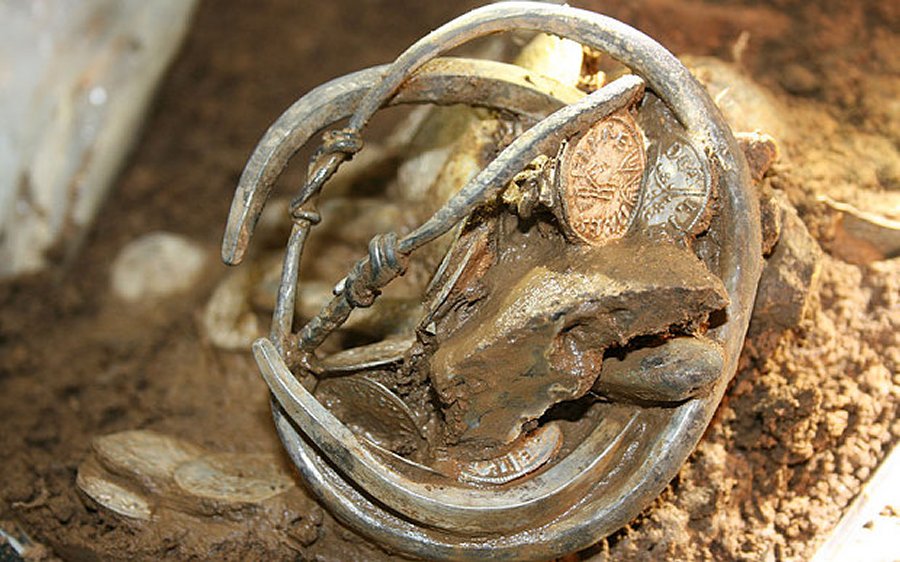
Experts believe the hoard was buried around the end of the 870s, in the period following Alfred’s decisive defeat of the Vikings at Edington in 878, a victory which lead to the unification of England. © PAS
The 186 coins (some fragmentary), seven items of jewellery and 15 ingots were then examined by experts from the museum alongside colleagues from the Ashmolean Museum in Oxford.
Recalling the experience of finding the hoard and helping excavate it with archaeologists from the PAS, finder James Mather said it was the “icing on the cake of my 60th birthday”.
“It highlights how responsible metal detecting, supportive landowners and the PAS contribute to national archaeological heritage.” “I hope these amazing artefacts can be displayed by a local museum to be enjoyed by generations to come," Mather said.
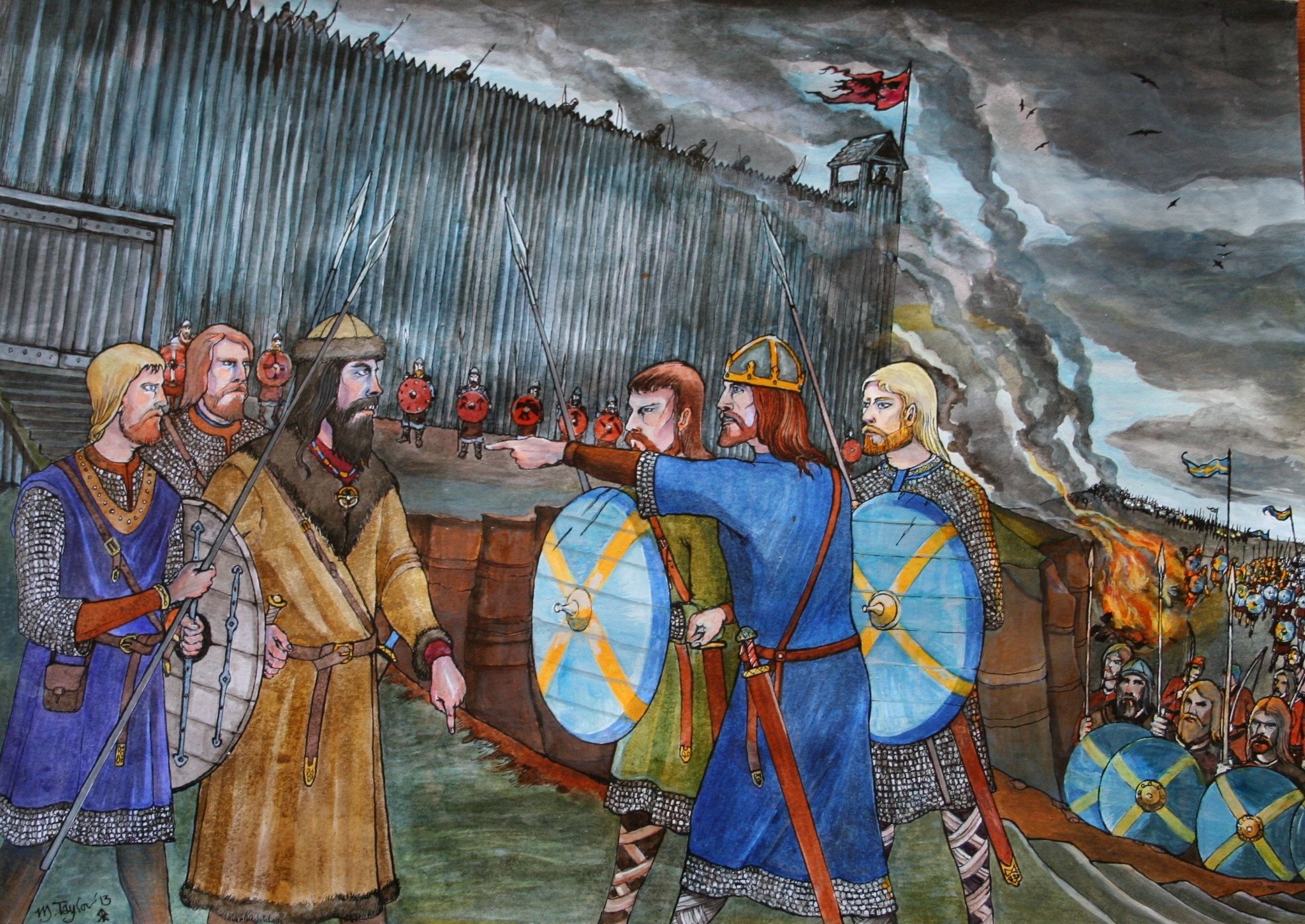
In 867 Æthelred's brother-in-law, Burghred king of Mercia, appealed to him for help against the Vikings. Æthelred and his brother, the future Ælfred the Great, led a West Saxon army to Nottingham, along with Edmund, King of East Anglia, but there was no decisive battle, and eventually Burghred bought off the Danes and they retreated to York...Artist Mark Taylor: Go to his website www.wyrdart.co.uk for this and more ethnic English art.
If the Watlington Hoard is declared Treasure, the Ashmolean Museum and Oxfordshire Museums Service will be working in partnership with others, and potential funders, to try to ensure it is displayed for local people to learn about and enjoy.
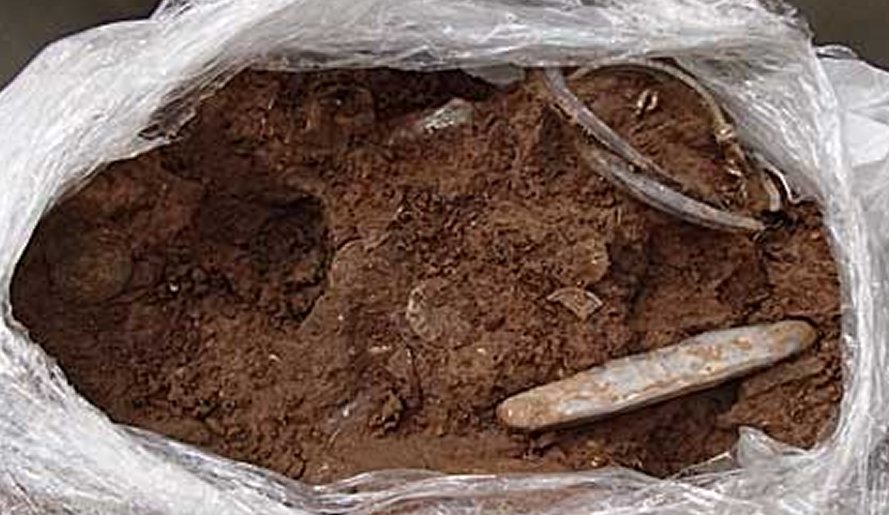
The valuable hoard, which was discovered by metal detectorist James Mather in a field in Watlington, Oxfordshire. © PAS
Since 1997, when the Treasure Act became law, the number of finds reported has increased fivefold from 201 cases in 1998 (the first full year of the Act) to 990 in 2013, and 1008 in 2014.
Of the finds reported as Treasure in 2013 (the last year for which figures are available), 363 were acquired by 91 local museums, so they can be displayed close to where the items were discovered. This year’s annual report reveals that in addition to reported Treasure, a further 113,784 archaeological finds have been recorded by the Portable Antiquities Scheme in 2014. All of them are recorded on the PAS database (finds.org.uk), where local people can learn about them and discover more about the archaeology and history of their local area.
Find out more about the PAS at www.finds.org.uk
AncientPages.com
source: Culture24
More From Ancient Pages
-
 Etruscan Urn With Skillfully Adorned Medusa Relief Discovered In The Palazzone Necropolis, Perugia, Italy
-
 LIDAR Discovers Circular Iron Age Village At Cap d’Erquy, France
-
 Relics From Day-To-Day Life At Shakespeare’s Home – Now Shown In New Virtual Exhibition
-
 True Colors Of The Parthenon Sculptures Revealed In New Study
-
 Royal Flagship Gribshunden: Unique Discovery In Baltic Sea Wreck From 1495
-
 Battle Of Arsuf – Site Where King Lionheart And The Crusaders Defeated Saladin – Found
-
 8,000-Year-Old Human Skeletons Found In Neolithic Village Of Slatina, Bulgaria
-
 Floors In Ancient Greek Luxury Villa Were Laid With Recycled Glass
-
 Neolithic Mendik Tepe Site Discovered In Southeastern Türkiye Is Older Than Gobeklitepe
-
 ‘Exceptional’ Ancient Roman Bath Complex Discovered In Mérida, Spain
-
 ‘Completely Unique’ Seal Matrix Found Near Norwich, UK
-
 Vikings Feared Climate Change 1,200 Years Ago – Famous Rök Stone Reveals
-
 Remains of Maurya-Era Wall Discovered In Tilaurakot, Kapilvastu, Nepal
-
 4,000-Year-Old Temple With Mysterious Large Monolith Discovered In Cyprus
-
 Mysterious Ancient Underground Chambers Beneath Jerusalem Baffle Archaeologists
-
 Pompeii Region IX: Roman Advanced Construction Techniques In New Light
-
 Mysterious Rock Inscription Found In Brittany Baffles Experts – Reward If You Can Decipher It
-
 Secrets Of The Andean Cloud Forest – LiDAR Reveals Hidden Inca Roads And Possible Platforms Near The Mandor Wall, Machu Picchu
-
 Evolution Of Tree Roots Led To Ancient Mass Extinctions – Geologists Say
-
 Extremely Rare Medieval Folding Chair Reveals Its Secrets

