AncientPages.com - At the 44th UNESCO World Heritage Committee meeting held online on July 26, 2021, it was decided to record Arslantepe Mound, where the oldest city-state of Anatolia was founded, on the UNESCO World Heritage List.

Arslantepe Mound. Image provided by Inonu University, Science Teaching Department
Arslantepe Mound, located within the provincial borders of Malatya, is an archaeological site that has become an open-air museum today.
The reason why the mound is called Arslantepe is M.S. It is two lion statues made of stone and found at the entrance of the building until 1000 BC.

Entrance to the mound. Image provided by Inonu University, Science Teaching Department
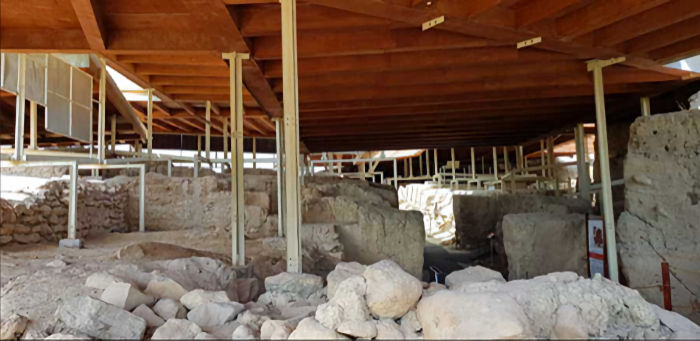
The First Palace Building in Anatolia. Image provided by Inonu University, Science Teaching Department

Image provided by Inonu University, Science Teaching Department
Arslantepe Palace is the first palace, the first collection of buildings in Anatolia, due to the variety of public activities it hosts and the usage purposes of the buildings.
Today, the mound is protected by a wooden protective roof with steel legs. This roof also protects those who visit the mound from weather conditions. The only open area without a wooden roof is the rock tombs section and visitor entry is prohibited. But the episode can be observed from afar. It is possible to take photos without flash in the entire open-air museum area.
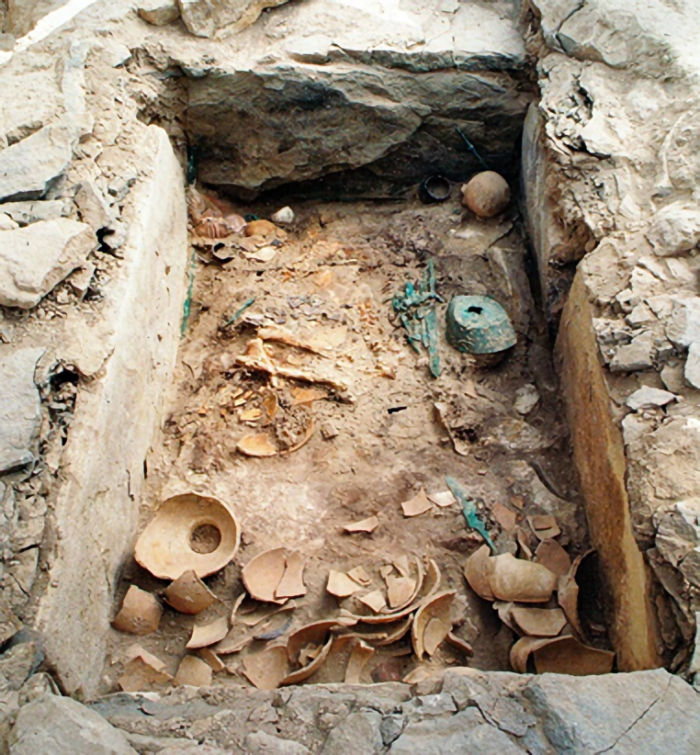
Image provided by Inonu University, Science Teaching Department

Image provided by Inonu University, Science Teaching Department
Arslantepe Palace Building
There are official and ceremonial structures (temples) in the higher parts of the mound area. In the lower sections, there are areas (palace warehouses, shops) where economic and administrative activities are carried out. The word palace is used here not in the sense of a place where a lord or ruler lives, but because it is a set of structures where different public activities (religious, economic, political, and political) of central institutions are carried out.

Temple B - Image provided by Inonu University, Science Teaching Department

Palace walls. Image provided by Inonu University, Science Teaching Department
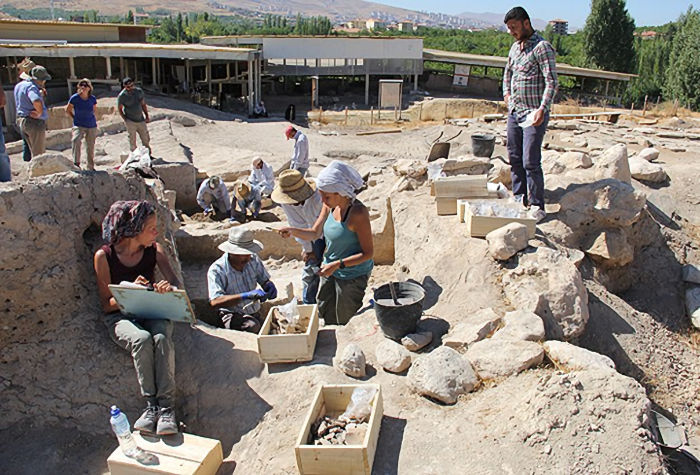
Temple C. Image provided by Inonu University, Science Teaching Department
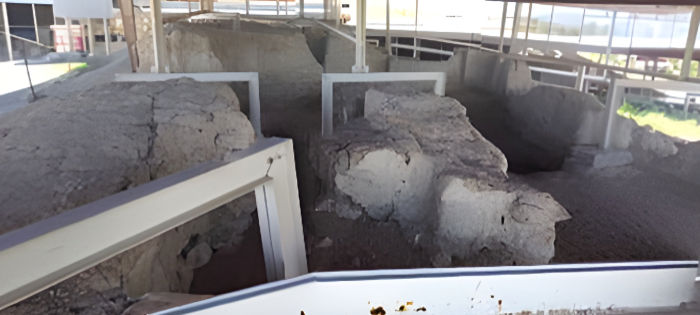
Temple A. Image provided by Inonu University, Science Teaching Department
Who Lived in Arslantepe?
Based on this, M.O. Sumerians and City States in the 4th and 3rd millennium BC. Akkadians in the 3rd millennium BC. In the 2nd millennium B.C., the Babylonians are located in the lower half of Mesopotamia. B.C. Hittites in the 2nd millennium BC. In the 1st millennium, Assyrians and Arameans appeared on the stage of history in Mesopotamia.
B.C. In 2000, Arslantepe was used as the city of the Hittite Empire, which expanded towards the Euphrates, under the name Melidia-Meliddu. This settlement was used as a Late Hittite city surrounded by earthen walls, similar to the Central Anatolian Hittite cities with its city gate and courtyard opening to the north-eastern slope of the hill.
B.C. Arslantepe, which continued its existence as a settlement from the 5th millennium BC until the Assyrian invasion in 712 BC, was abandoned for a while later on. It was used as a Roman Period village between the 5-6th centuries and later completed its settlement as a Byzantine Necropolis.
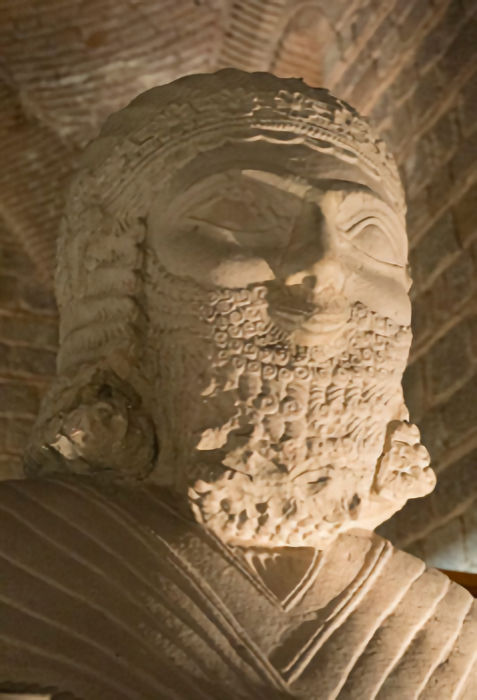
King Tarhunzas bust. Image provided by Inonu University, Science Teaching Department

A boy's skeleton found. Image provided by Inonu University, Science Teaching Department

Arslantepe mounds mulars. Image provided by Inonu University, Science Teaching Department
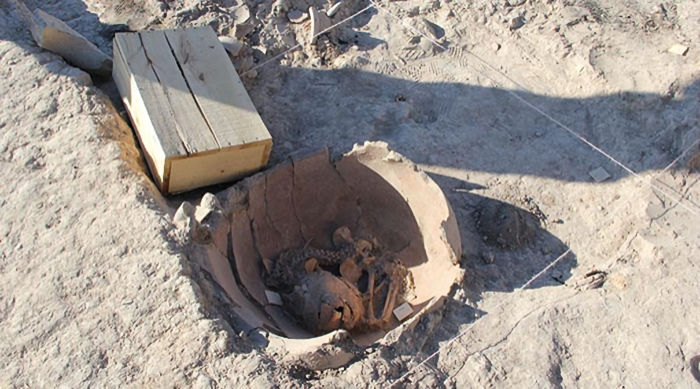
A child skeleton found. Image provided by Inonu University, Science Teaching Department
More than twenty tombs and six house remains and two child skeletons in a jar, a temple from 3600-3500 BC, a palace from 3300-3000 BC, and many seals and masterworks, which are thought to belong to 3600-3700 BC during the excavations metal objects were found.
All these finds show that the settlement was an aristocratic political, religious and cultural center at that time.
While the settlement was inhabited, water resources were abundant, but it was outside the Euphrates floodplain. In this way, the settlement, which had very suitable lands for agriculture, was ruled by a local ruling class. This ruling class held both political, economic, and religious power. As such, it is the first city-state in Anatolia.
World's Oldest Swords And Seals

Image provided by Inonu University, Science Teaching Department
A total of 6000 seal impressions and fragments were found during the excavations in the palace structure of the Arslantepe mound. These very important finds can be seen in the exhibition halls of Malatya museum along with many other excavations finds. Seal prints occupy a very important place in history.
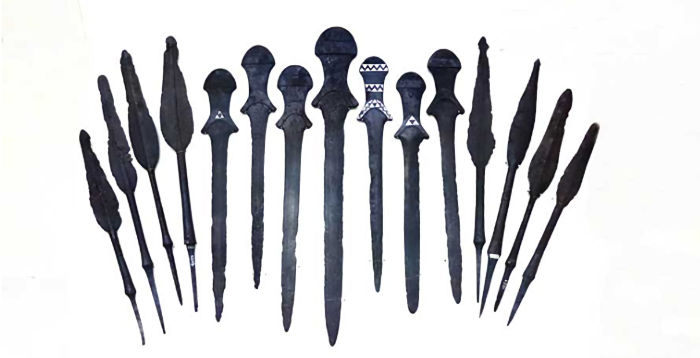
Image provided by Inonu University, Science Teaching Department
Economic Privileges And Economic Inequality
It is known that the foodstuffs distributed to the public are collected as taxes. Although food distribution is seen as a part of ceremonial activities, it is a way of remuneration of the worker for his labor. The leaders or priests in the society gradually came out of the role of intermediary between the god and the people and became the control of these distributions. Thus, they have gained many advantages as well as political competence and prestige, and social inequality has become an economic inequality over time.
The elite class employs most of the society and pays for their labor in food. Thus, public products and activities manage events and their economic privileges are growing day by day.
In fact, large amounts of food and beverages were prepared and consumed in Temple B. This event was held only with the participation of people with a political-religious identity from the elite class. This event was closed to the public.
Written by Inonu University, Science Teaching Department for AncientPages.com
Copyright © Inonu University, Science Teaching Department - AncientPages.com All rights reserved. This material may not be published, broadcast, rewritten or redistributed in whole or part without the express written permission of Inonu University, Science Teaching Department and AncientPages.com