A. Sutherland - AncientPages.com - Already three centuries ago (in 1726), John Toland wrote that brochs, or the so-called 'Pictish Towers', "are apt all over Scotland to make everything Pictish, whose origin they do not know.'
It is estimated that at least seven hundred brochs once existed across Scotland. Some five hundred brochs, or their remains, are still surviving in Scotland.
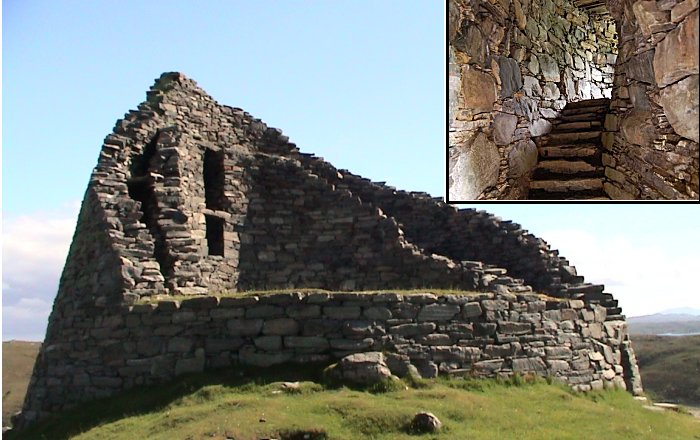
Dun Carloway Broch, Lewis, Scotland. Image credit: Mlm42 - CC0 1.0 - Stairway in Dun Troddan. A well-preserved stairway between the inner and outer walls of the Iron Age Dun Troddan broch. Image credit: John Allan - CC BY-SA 2.0
Now, most are in poor repair, but some have resisted extreme weather and resemble the cooling towers of modern power stations. Monumental, stone-built roundhouses, dated to ca. 2,000 years ago, have remarkable architectural details such as intramural cells and at least one upper story or gallery.
Like 'castles' of Iron Age chieftains, brochs have been found throughout Atlantic Scotland, to the north and west of the country's landscape, mainly on Orkney, Shetland, and the Western Isles, most probably because of the availability of stone.

This is a preview of our premium article, available only to Ancient Pages members.
Become a member to read more - Click here
If you are already a member and have logged in to your account, you can access the article here

See also:
History Of Jarlshof – Thousands Of Years Of History With Traces Of Picts, Vikings And Scots
Vikings’ Encounter With The Picts Was Not As We Thought, Archaeological Discoveries Reveal
Who Were The Picts, The Mysterious People Of Northern Scotland?