
Strange Tale Of Demonic Possession And Exorcism In 17th-Century New France – What Happened?
AncientPages.com - During the autumn of 1660, colonists in and around Québec started to report some very strange occurrences.
In the sky they saw a man enveloped in flame and a canoe of fire. In the air they heard lamentable cries and a thunderous, horrible voice. A teenaged domestic servant said that she was being terrified by demons.
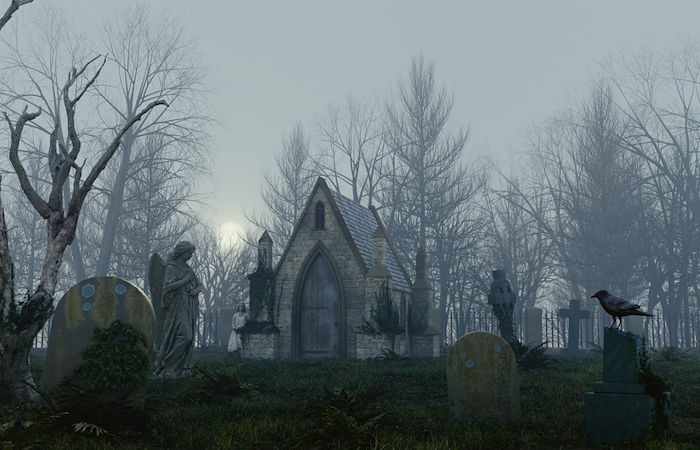
Credit: Pixabay: clivetomkins9 - Public Domain
People who tried to chase the malevolent spirits away described phantasmal music as well as stones that detached themselves from walls and flew by themselves. The servant accused a miller of witchcraft. After showing signs of demonic possession, this servant was brought to the hospital where she was treated by nuns. The miller was imprisoned and later executed.
When people learn that my research examines these stories of demonic infestation, they often ask: But what was really happening?
My first answer is simple: I don’t really know. My next answer is better: Whether we believe the stories on a surface level or not, we can learn about the people who told them by asking historical questions.
Reason and historical sources
As a historian, I remain “professionally agnostic” about questions that cannot be answered using reason and the historical record: I accept that some things simply cannot be fully explained with the evidence I can access.
But a wise respect for the limits to our knowledge does not mean we cannot know anything at all.
Historical investigation is an exercise in trying to understand the past as best we can from the evidence that remains. As historians have shown with studies of witchcraft, demons and demonic possession, reports of supposedly supernatural phenomena provide valuable insight into past societies and our own time.
Everyday lives of ordinary people
The poor and humble are just as worthy of our attention as the rich and famous. “Ordinary histories” can be challenging to research, though, without sources by or about regular folk.
Barbe Hallay, the servant suffering from demonic torments in New France, could not read or write. The only thing we have in her own hand is the “marque” (a sign that she left in place of her signature) on her marriage contract.
People’s concern with demonic possession generated documents that allow us to know more about her life, with glimpses into her experiences as a servant in a manor house and a patient in a hospital.
Through the approach of microhistory, which looks up close at a small object of study in order to answer big questions, we can explore the deeper meanings and wider significance of her actions, and the actions of those around her.
How did colonists in New France make decisions? Their thoughts and deeds were shaped by the environment, as well as by ideologies of colonialism, class, gender and religion.
In studying how these forces influenced people in the past, we develop a clearer sense of how we too are subject to forces we might not control, or even perceive.
Seeing beyond the surface
Details of ordinary life appear almost accidentally in records of extraordinary occurrences. We can also consider these occurrences themselves to investigate a society’s underlying beliefs and assumptions.
Marie Regnouard was the seigneuresse (a female head of a seigneurie) at the estate where Hallay worked. She left a remarkable account of her efforts to end the demonic torments using a rib bone from a recently deceased Jesuit priest. This account labels her actions as a “deliverance,” a “relief,” and a “healing.”
Such words evoke health care, but the procedure itself resembles a ritual that Regnouard, as a lay woman, would not be expected to perform: an exorcism.
Exorcism, while controversial, has also become more mainstream in some Christian churches. Exorcism can cause real harm. In some cases, it may amount to a criminal offence.
Exorcisms were controversial in the past too. People struggled to discern the true causes of disruptive behaviour, and they disagreed about who was qualified to decide.

Pixabay: mollyroselee - Public Domain
For early modern people, an exorcism served functions beyond freeing someone from an evil presence. It demonstrated the power of the exorcist, and of whatever spiritual system that exorcist represented.
Why did Regnouard perform a ritual that was an exorcism in all but name? She demonstrated the fulfilment of her duty to care for members of her household (a responsibility widely acknowledged by those around her) and the authority to draw upon both medical and religious knowledge (domains that were contested, especially for women).
In looking beyond the labels of Regnouard’s account to the actions she performed, we remember to pay attention not only to what things are called, but also to what they mean.
Our demons, ourselves
We can study what frightens us to learn about ourselves. Just as the popularity of horror films today is probably a symptom of our cultural unrest, historical fears are signs of past anxieties.
French leaders had planned for New France to become a perfect society. With the establishment of the Compagnie de Nouvelle-France in 1627, the king and Cardinal Richelieu wrote that New France, with divine help and the example of good behaviour by colonists, would bring people to knowledge of the true God. A few years later, in the words of Jesuit priest Paul Le Jeune, it was to be “a new Jerusalem blessed by God, composed of citizens destined for heaven.”

The City of Québec and surroundings in 1691, from ‘Mémoires de l’Amérique septentrionale,’ Baron de Lahontan, 1728. BiblioArchives / LibraryArchives, CC BY
Then the settlers came to realize that Indigenous people would not simply assimilate to French norms as some back in France had arrogantly presumed, and trans-Atlantic migrants needed to compromise traditional beliefs and practices for new surroundings. They were isolated during much of the year and vulnerable to attack from other imperial powers and from Indigenous nations who were not allies of the French.
New France was precarious, and the colonists knew it. They did not know exactly if or when a final blow would fall. Such uncertainty can lead to deep anxiety.
What were the colonists expressing through their fears of a demonic infestation? Probably many things, with a core of insecurity in the colonial project and anxiety about the unknowable future of New France. In studying their fears of the supernatural realm, we can also learn about the more tangible world around them.
Written by Mairi Cowan, Associate Professor, Department of Historical Studies and Institute for the Study of University Pedagogy, University of Toronto Mississauga, University of Toronto
This article is republished from The Conversation under a Creative Commons license. Read the original article.
More From Ancient Pages
-
 Mysterious Mythical City Found In One Of North America’s Beautiful National Parks
-
 Unusual Parcel With 500-Year-Old Horn Container Discovered In South Africa Sheds Light On Pre-Colonial Khoisan Medicines
-
 Mystery Of The Haraldskærkvinnan (Haraldskærwoman) – Bog Body Of A Viking Queen?
-
 Lilith – Beautiful Demonic And Brave Symbol Of Equality And Adam’s First Wife Who Refused Subordination
-
 Bible And Book Of Enoch Reveal Why Ancient Giant Bones Are Missing
-
 Setne Khamwas And The Book Of Magic Written By Thoth
-
 Grandfather Frost And Snow Maiden Bring Gifts On New Year’s Eve
-
 Khepri – Egyptian Progenitor God, Spirit Of Life, Resurrection And The Rising Sun
-
 Mystery Of The Creature In The Vault: A Victorian Horror Unearthed
-
 Unexplained Visions Of Airmen – Controversial Investigation – Part 2
-
 Ancient Mystery Of The Oghars – An Unusual And Little-Known Lost Race
-
 Heimdall: Genetic Link Between Gods And Humans – Once On A Journey – Do We Ever Know His Role Or Roles On This Planet?
-
 Tezcatlipoca: Enigmatic Aztec God Who Looked Inside People’s Hearts And Observed Their Deeds On Earth
-
 Eye Of Providence – Powerful, Secret Symbol With Deep Meaning
-
 Coricancha – Stunning Golden Garden And Lost Treasures Of The Inca
-
 Mystery Of The Lost Beverina Castle – Did Knights Templar Know Where It Was?
-
 Pancho Villa: Mexico’s Robin Hood – A Ruthless Bandit Or A Hero?
-
 Dzibilchaltún: One Of The Most Ancient Mayan Centers In Northwest Yucatan, Mexico
-
 Irish God Ogma – Outstanding Warrior And Inventor Of The Ogham Script
-
 Ullikummi – Genderless, Blind, Deaf Rock Monster Created For Strategic Purposes In Beliefs Of Hurrian People

