
Soyal: Hopi Indians’ Winter Solstice Celebration And Arrival Of Katchinas
Ellen Lloyd - AncientPages.com - There are many different kinds of winter solstice celebrations across the world.
The Hopi Indians of Northern Arizona celebrate Soyal and welcome the Kachinas, protective spirits from the mountains. The celebration begins on the shortest day of the year and symbolizes the second phase of Creation at the Dawn of Life
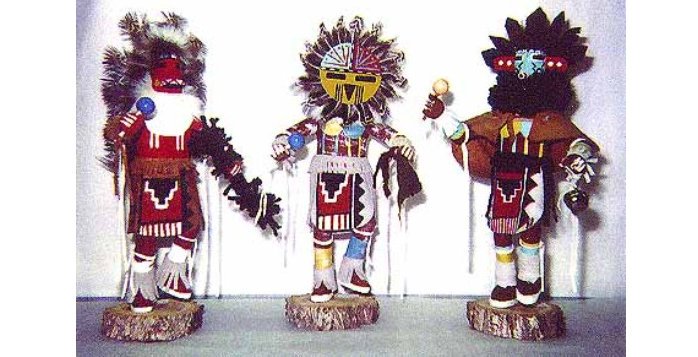
December has been held sacred for over a thousand years. To the Hopi Indians this month is associated with the arrival of the Katchinas (Katsinam ) who bring the Sun back to the world.
In his book, The Oxford Handbook of North American Archaeology, Timothy R. Pauketat, archaeologist and Professor of anthropology and Medieval studies at the University of Illinois writes that “according to official Hopi history Katsinam are Hopi spirit messengers who send prayers for rain, bountiful harvests, and prosperous healthy life for humankind.
They are friends and visitors who bring gifts and food, as well as messages to teach appropriate behavior and consequences of unacceptable behavior.”
There are over 250 different types of Katsinam and they all represent various beings, from animals to clouds.

The Hopi Indians celebration of Soyal. Credit: Wilder Utopia
During their stay at the Hopi the Katsinam appear in physical form, and they participate in the ceremony dancing and singing. On the first and second Mesa, the Katsinam arrive in February at the Bear Dance ceremony and on the third mesa they come in December celebrating the Soyal ceremony.
Before the Soyal ceremony can take place there are many things that need to be prepared.
The Hopi Indians make prayer sticks of tied feathers and pinyon needles called Pahos to bless the community, including their homes, animals and plants. Children receive small dolls made in the image of the Kachinas and they must learn about hundreds of Katchina spirits.

Sixteen days before the winter solstice, one of the chief kachinas enters the Pueblo.
He is dressed like an old, tired man and appears to have just awakened from a deep slumber. He sings and dance and people follow his every move. But he sings in a very low voice because the songs are sacred and not everyone is allowed to hear them.
“We Hopi are deeply religious people. We follow divine instructions and prophecies received from the caretaker of this world, Maasaw. Our religion teaches us a lifeway of humility, cooperation, respect and earth stewardship.
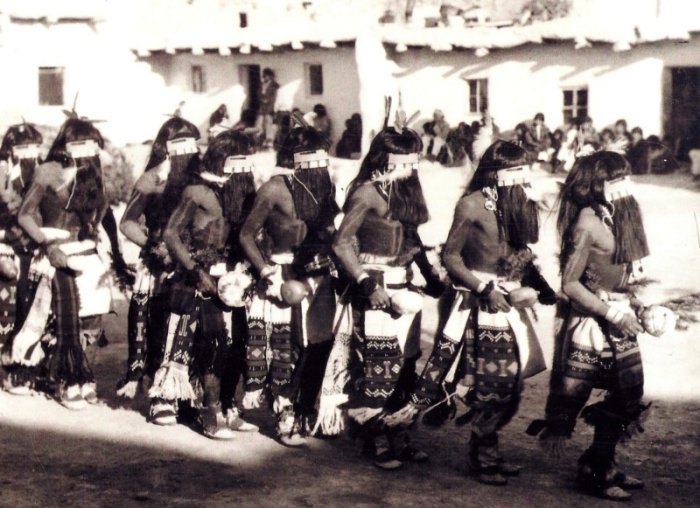
Soyal celebration. Credit: University of Toronto
We practice our religion with different ceremonies throughout the year which are timed according to phases of the Moon and solstices of the Sun. Many of our ceremonies seek to maintain and improve our harmony with nature, enhance our prospects for good health and long, happy life, and are supplications for rain.
Through our dances we celebrate the renewal of our life pattern, ancient immigration, and a spiritual connection with our ancestral sites.
This together with our farming traditions, ties us both physically and ceremonially to our ancestral land, the Sun, and the cycle of the seasons,” the Hopi themselves say about their annual cycle.
The Katchinas stay with the Hopi for the first half of the Wheel of the Year until the summer solstice, when they return to their home in the mountains.
Written by - Ellen Lloyd – AncientPages.com
Copyright © AncientPages.com All rights reserved. This material may not be published, broadcast, rewritten or redistributed in whole or part without the express written permission of AncientPages.com
More From Ancient Pages
-
 Neanderthals Painted Andalusia’s Cueva de Ardales – New Study Confirms Their Cave Art
-
 London’s Underground Rivers Were Deliberately Hidden
-
 Aditi – Primeval Hindu Goddess Who Is Source Of All Living Beings
-
 Controversial Hollow Earth Theory – Questions And Answers – Part 3
-
 Secret History Of The Micmac – The Mysterious Red Earth People
-
 Fragments Of 100 Viking Swords Unearthed In North Estonia – Largest Find To Date
-
 World’s Oldest And Largest Maya Structure Revealed By LIDAR
-
 4,000-Year-Old Funerary Garden Found In Luxor, Egypt
-
 DNA Of 10,000-Year-Old Skeletal Remains And Kinship Of Earliest World Settlers
-
 Were Mysterious Ancient Man-Made Earthworks In The Amazon Forest Ritual Communication Spaces?
-
 3,000-Year-Old Bakery With Large Amounts Of Flour Discovered In Armenia
-
 Ancient Mexicans’ Precise Solar Observations Fed Millions – Remarkable Farming Calendar Invented
-
 On This Day In History: Battle Of Fraustadt – One Of The Most One-Sided Swedish Victories – On Feb 3, 1706
-
 Modern Humans Did Not Enter Europe By Sea – New Study Says
-
 Rare Bronze Hand Found At Roman Vindolanda
-
 Secretly Engraved Woman Name Discovered In Medieval Manuscript – Who Was Eadburg?
-
 Murder Of Duke Béla Of Macsó: A 700-Year-Old Archaeological Mystery
-
 Controversial Story And Secret Knowledge Of Li Ching-Yuen Who Lived For 256 Years
-
 Has The Mystery Of Cerne Abbas Giant Been Solved?
-
 Ancient Cosmic Secrets – Mystery Of The ‘Four Sons Of Horus’ And Their Connection To Stars In The Ursa Major Constellation

