
Was A Statue Of Asherah Hidden In The Ark Of The Covenant?
Ellen Lloyd - AncientPages.com - The Ark of the Covenant is one of the greatest mysteries of the Bible. Treasure hunters, historians, archaeologists have searched for the sacred ark for many years, but it hasn’t been found yet.
The Ark of the Covenant mysteriously vanished around 589-587 BC when the Babylonians destroyed the temple, built by King David’s son King Solomon, where it was placed. The Ark’s location remains an unsolved ancient mystery.
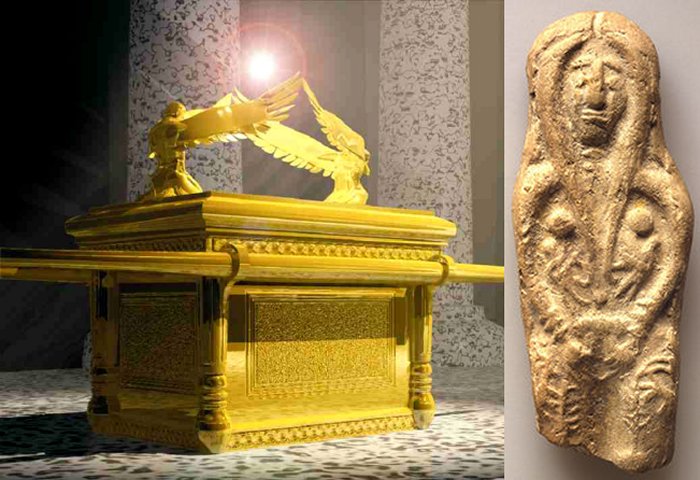
The Ark of the Covenant was built during the time of Moses in the Book of Exodus. The sacred gold-plated wooden box held the two stone tablets where the 10 Commandments were inscribed after God gave the covenant to Moses at Mount Sinai. An interesting theory suggests the Ark of the Covenant contained more items, such as the statue of the mysterious Asherah!
According to the Book of Samuel, the Ark of the Covenant was stored at Kiryat Ye’arim for 20 years after it was returned to the Israelites by the Philistines, who had captured it in battle and to their dismay were smitten with the disease.
The text also informs that the ark was stored “in the house of Abinadab in the hill” and tended by the priest Elazar before King David conveyed it to his capital in Jerusalem.
As Ancient Pages previously reported, archaeologists will soon excavate Biblical site where Ark of the Covenant once stood.
Who Or What Was Asherah - A Controversial Subject
The identity or Asherah is open for debate. According to many scholars, Asherah was a deity, but there are also indications Asherah was an object or both.
Ancient Pages discussed the mysterious deity in the article ‘Lost And Forgotten Goddess Asherah – Queen Consort Of The Sumerian God Anu And Ugaritic God El’.
As we mentioned, known as Lady of the Sea and mother goddess, Asherah is one of the oldest deities in the Sumerian and Ugaritic pantheon.

Asherah – Chief Goddess Of The Canaanite Pantheon
Goddess Asherah was worshipped by many ancient civilizations in the Near East. In northern Syria, goddess Asherah was described as the wife of chief god El, the West Semitic counterpart of god Anu. It is said that she had as many as 70 children and among them were important gods such as Baal, Anath and Mot.
There is a Biblical connection to Asherah as well. Raphael Patai writes in his book The Hebrew Goddess that “while it is not easy to reach a definite conclusion as to the physical shape in which Asherah was represented among the Hebrews, a careful perusal of Biblical references to the “Asherahs” seems to indicate that they carved wooden images which were set up by implanting their base into the ground.
See also:
Biblical Mystery Of Urim And Thummim: God’s Puzzling Communication Devices
In early times they often stood next to altars dedicated to Baal, later a “statue of Asherah” was set up in the Jerusalem Temple itself. The word Asherah in Biblical usage can refer to either to the goddess herself or to her image.”
In the Bible, we encounter descriptions of the so-called Asherah Poles.
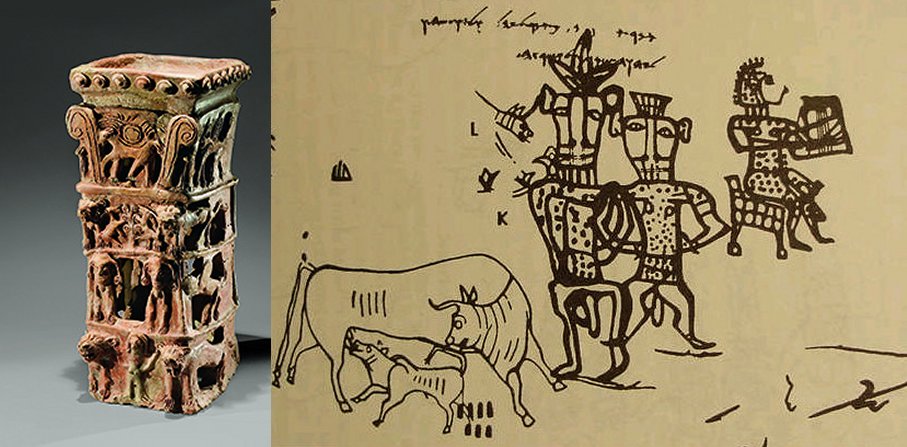
Biblical scholars, historians, and archaeologists have long debated whether the figures found on an ancient drawing storage jar depict Yahweh and his Asherah or someone else.
The Lord commanded the people of Israel to not make Asherah poles of their own, but the Israelites disobeyed this command. It is believed that many Asherah poles were raised in honor of the mother-goddess Asherah. The purpose of the objects remains a subject of heated debate among scholars.
The whole subject becomes even more complicated due to the discovery of ancient inscriptions unearthed at Kuntillet ‘Ajrud. The inscriptions are religious in nature, invoking Yahweh, El, and Baal. What created an intense debate are the inscriptions that include the phrases “Yahweh of Samaria and his Asherah” and “Yahweh of Teman and his Asherah.
So, it’s fair to say scholars still cannot agree on what or who Asherah was because in the end it depends on the interpretation of Asherah in relation to Yahweh.

Joshua passing the River Jordan with the Ark of the Covenant by Benjamin West, 1800
Were Statues Of Pagans Gods Hidden In The Ark of The Covenant?
In his book, The Invention Of God, Thomas Römer, Professor of the Hebrew Bible at the Collège de France put forward a very provoking theory suggesting the statues of God Yahweh and Asherah were deliberately hidden in the Ark of the Covenant.
Professor Römer points out that God prohibited Israelites from worshipping other gods and of course his prohibition would be pointless if there were no other gods. God only subsequently became the god of Israel, but before this happened he had to eliminate rival male and female gods, such as the mother goddess Asherah.
According to Professor Römer it is possible that the Ark of Covenant stayed much longer at Kiriath Jearim, and it was only Josiah who brought it to Jerusalem when he wanted to centralize all cultic and political activity there, and his scribes justified it by writing the story about David taking the ark. This might explain why there are no more stories about it,” since after Josiah’s reign (640-609 B.C.E.) Judah would survive less than three decades before falling to the Babylonians.
The apologetic verse in 1 Kings 8:9 states that “there was nothing in the ark save the two tables of stone, which Moses put there at Horeb" (Mt Sinai). This may be an indication that the Ten Commandments had substituted something else. Could the Ten Commandants have been replaced with statues of Pagan gods?
As Ancient Pages mentioned previously, early Israelites worshipped Canaanite gods like Baal and El. The ancient ‘Yahweh and his Asherah’ inscriptions discovered at Kuntillet ‘Ajrud remain an unsolved Biblical mystery.

Painting depicting King David bearing the Ark of the Covenant into Jerusalem.
Professor Römer elaborates on this subject in his book and he suggests that the Ark of the Covenant may have originally contained two statues representing Yahweh and Asherah. Throughout the Levant, it was common for pre-Islamic Arabs and Bedouins to carry holy chests that contained two sacred stones or the statues of two gods, that were later replaced by the Koran.
What was hidden inside the Ark of the Covenant remains a subject open to speculation? If we one day discovered the Biblical Ark we will finally know the truth.
Written by Ellen Lloyd – AncientPages.com
Copyright © AncientPages.com All rights reserved. This material may not be published, broadcast, rewritten or redistributed in whole or part without the express written permission of AncientPages.com
More From Ancient Pages
-
 U.S. Bible Museum Says Five Dead Sea Scrolls Fragments In Their Collection Are Fake
-
 Little Known History Of Amazon’s Ashaninka People Studied By Researchers
-
 Ground-Breaking Discovery: A 3,300-Year-Old Deep-Sea Canaanite Shipwreck Found
-
 DNA Analyses Suggest The Plague Contributed To Stone Age Farmers’ Decline
-
 Strange And Unexplained Events In Transylvania – One Of The Most Mysterious Places In Europe
-
 Flexible Glass – Lost Ancient Roman Invention Because Glassmaker Was Beheaded By Emperor Tiberius
-
 Mayan Maize God And Ancient City Of El Mirador
-
 Ancient Mystery Of The Enigmatic ‘Cat Men’ – Advanced Prehistoric Machines Or Humanoids? – Part 2
-
 Ancient Calendar Predicted The Coronavirus And Other Disasters In 2020 – History Researcher Says
-
 Eye Of Ra – Powerful Ancient Egyptian Symbol With Deep Meaning
-
 New Species Of Softshell Turtle That Lived In North Dakota 66.5 Million Years Ago With Dinosaurs Discovered
-
 Mystery Of The Bizarre Dark Figure Vanishing Into Thin Air Seen By Hotel Guests And Staff
-
 Ancient Maya People Used Volcanic Ash To Build Pyramids When Huge Eruption Occurred
-
 On This Day In History: Russian Writer, Poet, Critic Nikolay Gogol Died – On Mar 4, 1852
-
 Aboriginal People Made Pottery And Navigated To Remote Islands Millennia Before Europeans Arrived
-
 Fatocuriosos.club Guilty Of Hundreds Of Copyright Violations Is Stealing Content Daily From AncientPages.com
-
 On This Day In History: Soviet Spacecraft Venera 7 Launched: First To Send Data From Venus To Earth – On Aug 17, 1970
-
 Unknown Saxon Village And Bronze Age Artifacts Found Near Ely, Cambridgeshire
-
 Summer Solstice Festivals Around The World – Midsummer Celebration Is An Ancient Tradition Still Alive
-
 Unexpected discovery of hidden color in ancient mummy portraits

