
Ancient Roman Government Structure And The Twelve Tables
A. Sutherland - AncientPages.com - According to an ancient legend, Rome was founded in 753 BC, and the first two centuries of existence passed under the rule of the Etruscan kings.
The decline of the monarchy dates back to 509 BC, when there was a revolt of the aristocracy and the exile of the last king, Tarquinius Superbus. An important figure who contributed to this decline was Lucius Junius Brutus, the founder of the Roman Republic and traditionally one of the first consuls in 509 BC.
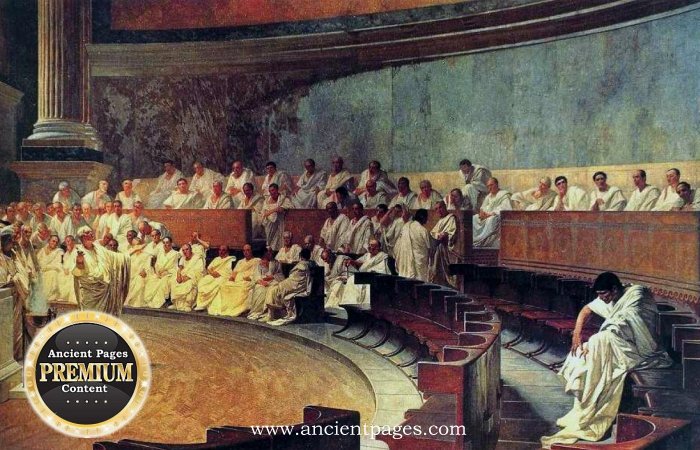
Since that event, a new regime – ‘an aristocratic republic’ was established in Rome and the power of the Roman republic was divided among the people, the Senate and officials.
Ancient Rome's government would not have been successful without the citizens who supported it. Ancient Romans were convinced it was their responsibility and civil duty to the empire to participate in government affairs, and so they did.
The senate was a political institution in the ancient Roman kingdom. The word senate derives from the Latin word senex, which means "old man"; the word thus means "assembly of elders". The Roman Senate was one of the most enduring institutions in Roman history, being established in the first days of the city (traditionally founded in 753 BC).

This is a preview of our premium article available only to members of Ancient Pages.
Become a member to read more - Click here
If you are already a member and have logged in to your account, you can access the article here

More From Ancient Pages
-
 Hunter-Gatherers Used Open Habitats Millennia Before Stonehenge Monuments Were Built
-
 On This Day In History: Battle Of The Egadi Islands Took Place – On Mar 10, 241 BC
-
 Has The Mystery Of Cerne Abbas Giant Been Solved?
-
 Surprising DNA Study Links Present-Day Native American Tribe To Ancestors In San Francisco Bay Area
-
 Stunning Ancient Lod Mosaic With Message Of Approaching Danger To The Ship At Sea
-
 When Did Humans First Start To Speak?
-
 Stalagmites In Mexican Caves Shed New Light On The Ancient Maya Collapse
-
 25,000 Ancient Egyptian Statues, Ushabti Figurines And Artifacts From New Kingdom Cemetery Revealed For The First Time
-
 Mystery Of The Patagonian Giants: Europe’s Lost Race From The ‘Land Of The Bigfeet’
-
 Strange Story Of Tecumseh’s Comet, Black Sun Prophecy And New Madrid Earthquakes – The Biggest Earthquakes In American History
-
 Unique Heart-Shaped Jesuit Ring At Fort St. Joseph In Michigan
-
 Lamashtu Plaque: Assyrian Healing Device Against The Evil Goddess
-
 First 5th Century Mosaic Found Near Cirencester Once The Second-Largest Roman-British Town In England
-
 Necropolis of Porta Nola, Pompeii – new discoveries
-
 Sacred Bird Garuda And Stealing Of Amrita Drink Of Immortality From The Gods
-
 Freya And Her Lovely Husband Odr, God Of Summer Sun And Passion In Norse Mythology
-
 Ancient Clay Tablets Reveal Mesopotamians Experienced Emotions In Their Bodies Differently Than Modern Humans
-
 The ‘Band Of Peace’ And Ancient Egyptian Technology – Is It Possible These Sites Were Power Generators?
-
 The Punishment Of A Troll Woman Whose Curse Turned Against Her
-
 Tullus Hostilius: Warrior King Of Rome, Who Succeeded Numa Pompilius And Feared Prophecies

