
Submerged Qin Dynasty ‘Seaside Palace’ Of China’s First Emperor – Found
AncientPages.com - Archaeologists believe they may have found a submerged seaside palace built more than 2,200 years ago by China’s first emperor, Ying Zheng, mainland media reports.
The building, thought to date back to the Qin dynasty (221-207BC), was discovered under the sea off the coast of Suizhong county, in Liaoning province, researchers from Liaoning and Beijing told the Liaoshen Evening News.
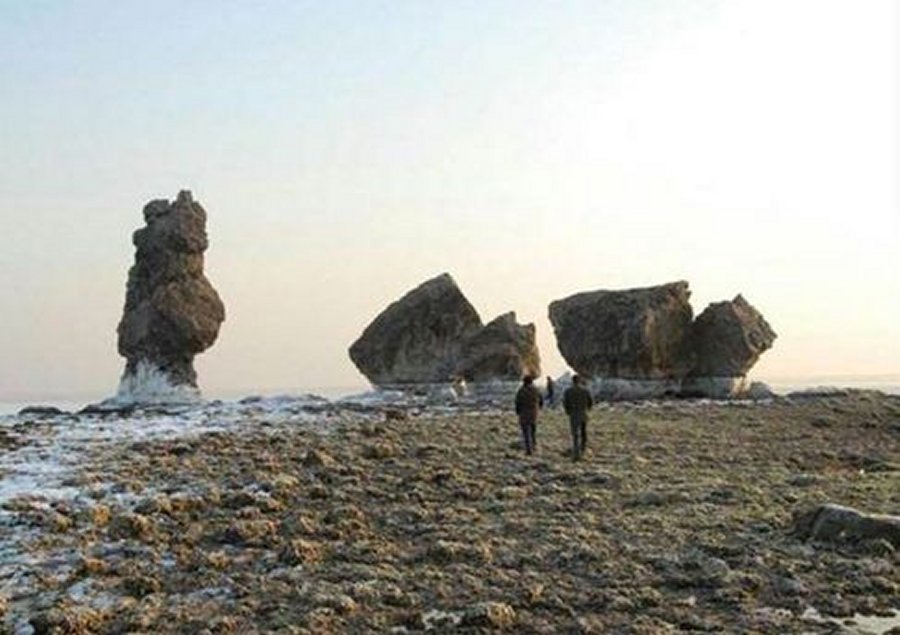
Some parts of the palace can be seen during low tide. Photo: Liaoshen Evening News
The largest discovery was a 60-metre wide square, formed of large stones, which could be the foundations of a large platform for religious sacrifices or other important activities, the archaeologists said.
They also found the remains of a stone road running through the palace.
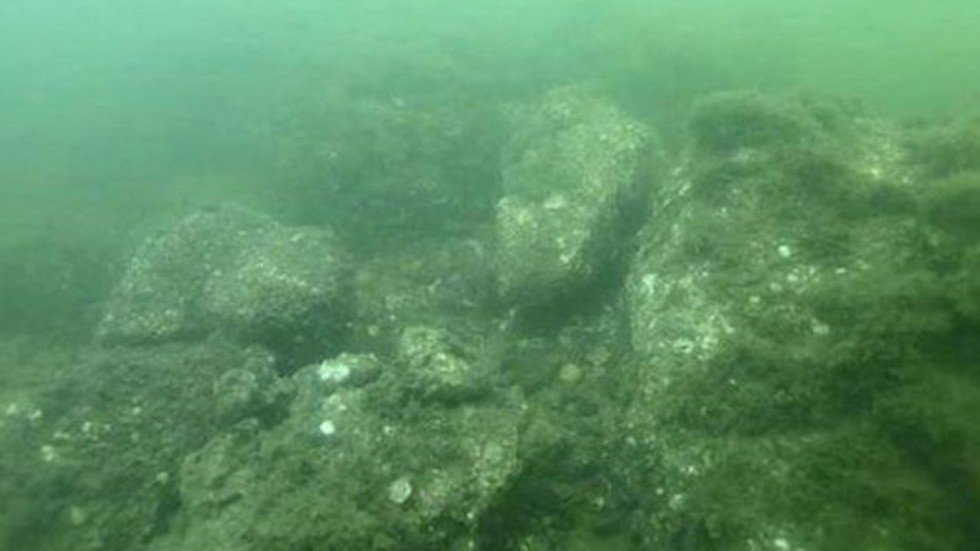
Most of the remains of the Qin dynasty palace lie submerged off the coast of China’s Liaoning province. Photo: Liaoshen Evening News
Local fishermen said they had previously found ancient coins and ceramics on the seabed, while some of the stone walls were clearly visible at low tide.
Ying Zheng, also known as Qin Shihuang, was China’s first ruler, who united the nation by conquering all of the warring states in 221BC.
He is said to have visited the East China Sea coast three times before his death in 210BC in his futile quest for immortality.
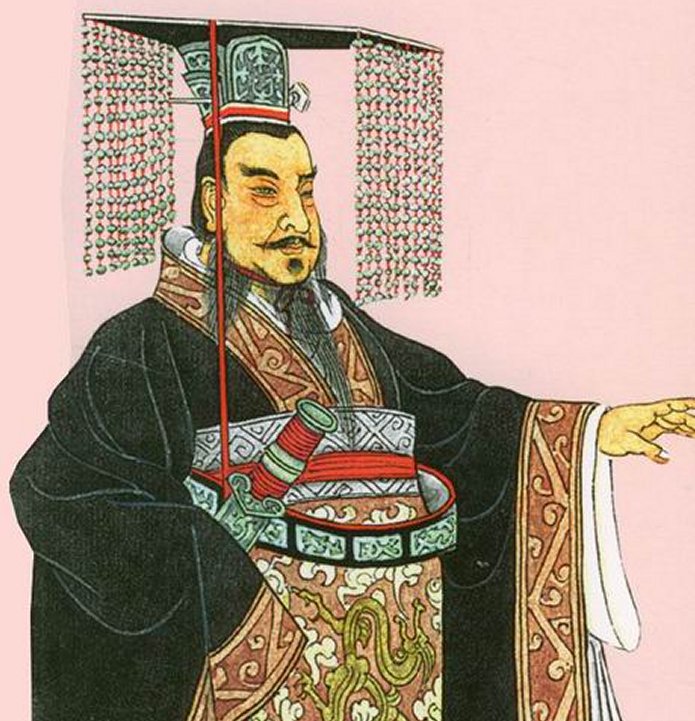
Emperor Qin Shi Huang (259 BC – 210 BC) fascinates people when they talk about the Great Wall and the Terracotta Warriors and Horses – his two greatest achievements to China. As the first emperor of China, he indeed has a profound influence on Chinese history and culture. Credits: I-China.
Emperor Qin Shi Huang (259 BC - 210 BC) fascinates people when they talk about the Great Wall and the Terracotta Warriors and Horses - his two greatest achievements to China. As the first emperor of China, he indeed has a profound influence on Chinese history and culture.
When Ying Zheng unified China, he considered his achievement surpassing the legendary "San Huang (three emperors)" and "Wu Di (five sovereigns)".
He created a new title for himself: "Huangdi" together with "Shi (means the first)", hence get the name "Qin Shi Huang" or "Qin Shi Huangdi", which means he was the first emperor of China. He hoped his descendants would follow in his steps to rule China for eternity.
AncientPages.com
source: South China Morning Post
More From Ancient Pages
-
 John Dee’s Magical Mirror Used To Contact Spirits Can Be Traced To The Aztecs
-
 Evidence Of Ancient Lakes In The Sahara Desert Discovered
-
 Male-Female Roles 7,000 Years Ago Were Less Traditional Than Previously Thought – New Study Reveals
-
 Two Rare Full-Sized Viking Burial Ships Uncovered In Sweden
-
 Afterlife Of Egyptian Religious Statues Intentionally Hidden In The Temple Of Ptah At Karnak
-
 3D Scan Will Uncover Secrets Of The Magnificent Vindelev Gold Treasure
-
 Meet The First Neanderthal Family And Community
-
 Piecing Together Scotland’s Religious Past With Shards Of Glass
-
 Fascinating Expedition In A Dugout Canoe Sheds Light On Long Unanswered Questions
-
 U.S. Bible Museum Says Five Dead Sea Scrolls Fragments In Their Collection Are Fake
-
 Mysterious Philistines: They Migrated Across Mediterranean – DNA Testing Shows
-
 Ancient Maya Sacred Groves Of Cacao Trees – Located
-
 Large Roman Public Latrine With 60 Wooden Seats Discovered In Bet Shean, Israel
-
 Three Ingots Shed Light On The Mining Exploitation Of The Sierras de Córdoba Mountain Range
-
 Can Peptide Droplets Explain The Emergence Of The First Living Organisms On Earth?
-
 Ancient Cosmic Sanctuary Unearthed In Sogmatar, Turkiye, Where Moon God Sin Was Worshipped
-
 Amazing 2,000-Year-Old Engraved Roman Gems Discovered Near Hadrian’s Wall
-
 Prehistoric Human Migration In Southeast Asia Driven By Sea-Level Rise – Study Reveals
-
 Late-Surviving Dinosaurs In New Mexico Lived In Vibrant, Regionally Distinct Communities Until The Very End
-
 A Great Flood Destroyed The Mysterious Ancient City Of Petra – Evidence Has Been Found

