
Gefjon: Norse Fertility Goddess Who Knew Humans’ Fates, And Plowed Away Part Of Sweden To Give It To Denmark
A. Sutherland - AncientPages.com - Gefjon (Gefion) was the Aesir goddess of fertility, plow, and agriculture in Norse mythology. She also possessed extraordinary mental abilities and, like Frigg, knew the secrets of human fates.
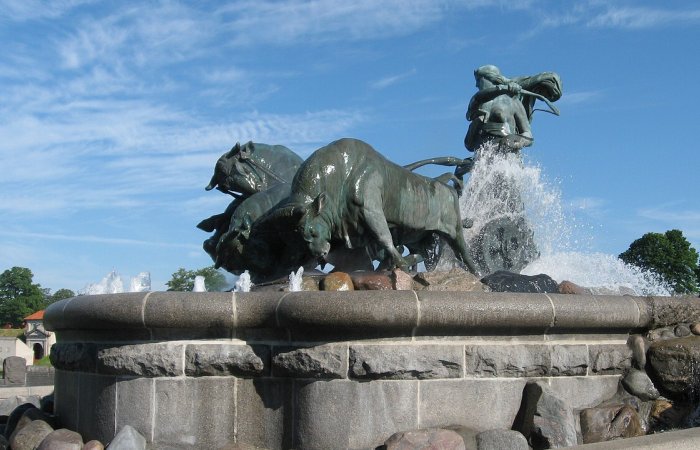
The Gefion Fountain (Gefionspringvandet) is located in Langelinie Park, Copenhagen, Denmark. The large stones symbolize the land plowed by the goddess Gefjon and her four oxen. Credit: Hartz - CC BY-SA 3.0
According to the Prose Edda, she was one of the maidens in the palace of Frigga (Frigg) ("the beloved"), who, in Norse mythology, was the queen of the gods, Asgard's mistress, the wife of Odin, mother of Baldr, and stepmother of Hermod, Vidar, and Höder.
Gefjon, a beautiful goddess of the Æsir, had many maidservants; all maidens who died unwedded were entrusted to her. This happened when Gefjon lived in Jotunheim, the country of legendary giants located in the very north of Europe. According to some authors, Gefjon did not remain a virgin forever but married one of the giants, and she had four sons with him.

This is a preview of our premium article, which is available only to members of Ancient Pages.
Become a member to read more - Click here
If you are already a member and have logged in to your account, you can access the article here

See also:
The Norns – Shapers Of Destiny Who Recorded Days In A Person’s Life In Norse Mythology
Frigg: Chief Norse Goddess Who Knew Secrets Of Humans’ Fates
More Myths & Legends
More From Ancient Pages
-
 Nephthys – Egyptian Funerary Goddess Who Also Protected The Pharaohs While They Were Alive
-
 Drinking Horn: Important Yule Symbol And Its Connection To Biblical Magi And Christmas
-
 Deciphered Ancient Cuneiform Tablets Reveal Locations Of Long-Lost Cities And Shed Light On The Secrets Of Mesopotamia
-
 Unsolved Mystery Of The Anomalous Underwater Structures Discovered In Minnesota
-
 Intriguing Hoard Of Bronze Age Bracelets From Brittany, France Remains An Archaeological Puzzle
-
 Perperikon, Tomb Of Orpheus And A Small Baffling Stone – Unraveling A Puzzling Connection That May Solve A Mythological Riddle
-
 Why Were The Jews Exiled To Babylon?
-
 Zhang Heng Seismograph Could Record Earth’s Dangerous Movements
-
 Mystery Of The Lost Beverina Castle – Did Knights Templar Know Where It Was?
-
 Mongol Empire: Rise And Fall Of One The World’s Largest And Fearsome Empires
-
 Unraveling The Mystery Of The Celestial Matrix
-
 Dionysus – Greek God Of Wine, Music, Ritual Madness And Ecstasy Was Born Twice
-
 Kallikantzaroi: Naughty Nocturnal Goblins Emerge From Underground Only During Twelve Days Of Christmas
-
 Riddle Of Brazilian Atlantis – Strange Discovered Rocks The World Forgot About
-
 LIDAR Discovery Of Valley Of Lost Cities In The Amazon
-
 Hidden Manuscripts Reveal Ancient Sacred Wisdom Of The Gods And Surprises
-
 Fascinating Legend Of The Seven Sleepers Of Ephesus
-
 Nue – Shape-Shifting Evil Yokai Transforming Into A Black Cloud In Japanese Folklore
-
 Mysterious Ancient European Civilization – Puzzling Mysterious Ancient European Civilization – Part 2
-
 Unexplained And Bizarre Scottish Mystery Of A Man Who Vanished Into Thin Air

