


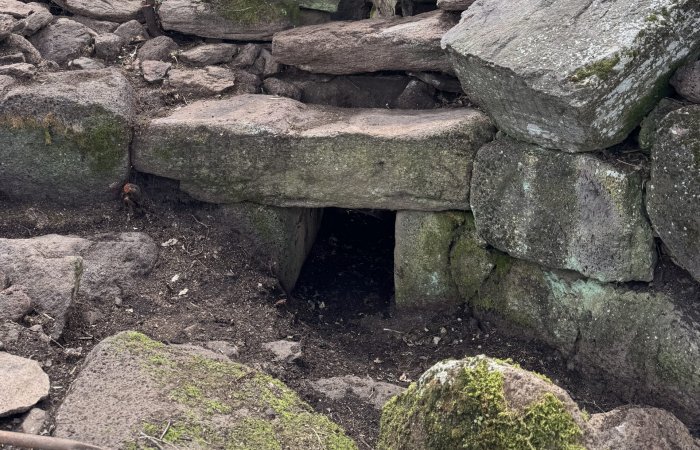


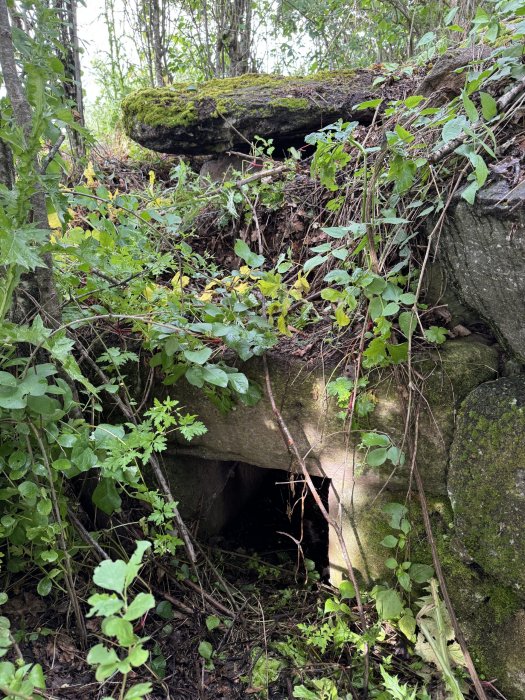
Jan Bartek - AncientPages.com - A new megalithic funerary monument known as a Giant's Tomb was discovered on the southern slope of Crastu Littu, at 740 meters above sea level, within the Carrarzu Iddia archaeological site in Sardinia. The tomb, located on a hill with strategic and scenic views over the Macomer plain, the Abbasanta and Paulilatino plateaus, the Nuoro hills, and the Gulf of Oristano, had been completely concealed by dense vegetation.
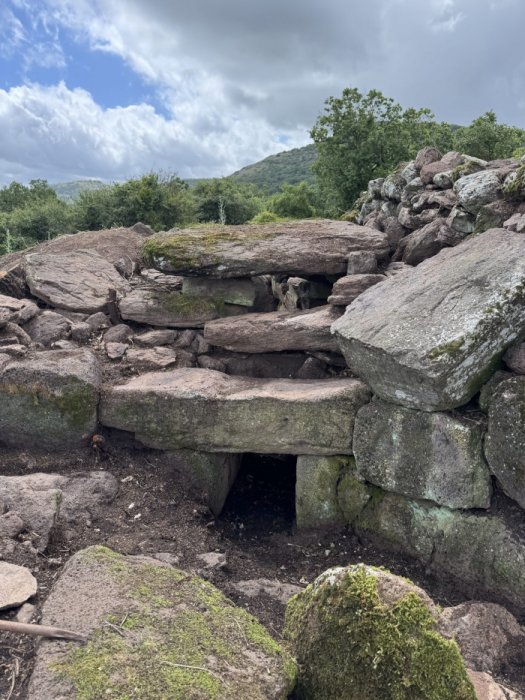
Credit: Soprintendenza Archeologia, belle arti e paesaggio per la città metropolitana di Cagliari e le province di Oristano e Sud Sardegna
After initial surveys, the two Superintendencies of Archaeology, Fine Arts and Landscape of Sardinia, in coordination with the landowners, began clearing and removing materials from the site. This work, which complements ongoing excavation and restoration of the nuraghe, has made the tomb visible again and revealed its exceptional state of preservation.
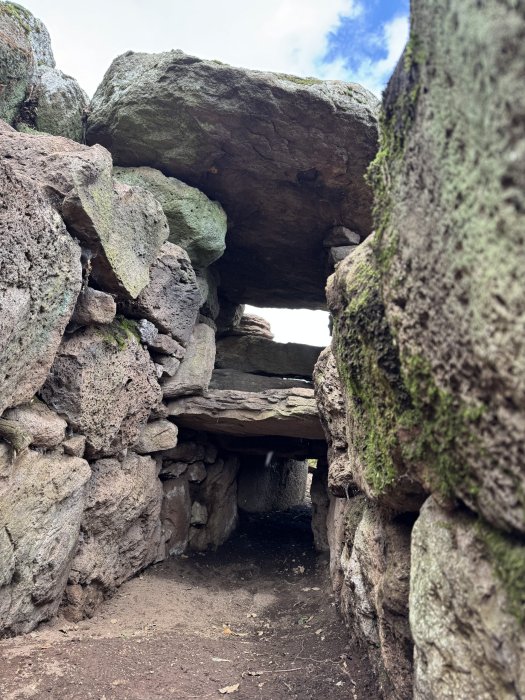
The tomb is built from trachyte blocks and still has both its burial chamber and the large exedra at the entrance. The chamber is unusual because it is divided into two levels near the entrance, a feature that will be studied further.
Credit: Soprintendenza Archeologia, belle arti e paesaggio per la città metropolitana di Cagliari e le province di Oristano e Sud Sardegna
Even though there were earlier unauthorized excavations, ceramic materials found inside the tomb show that it dates back to the earliest phases of the Nuragic civilization.
The Nuragic civilization began in Sardinia during the early Bronze Age, around 1800 BC, and lasted until the Romans conquered the island in 238 BC. In some areas, there is evidence that Nuragic culture continued into the early centuries AD. Scholars debate its origins; some think it developed from local pre-Neolithic groups, while others believe it was influenced by migrations linked to the Beaker culture.
Religion was very important in Nuragic society, and some scholars think it may have been a theocracy, a form of government in which the ultimate leader is a supreme deity (or group thereof), who rules either directly as a god in human form or indirectly. Nuraghe bronzes show chief-kings, who can be recognized by their cloaks and staffs with knobs, along with other social groups like miners, artisans, musicians, wrestlers similar to those from the Minoan civilization, and many warriors. These images suggest the society was warlike and had clear military divisions.
The Nuraghe, called nuraghi in Italian, is the main type of ancient megalithic stone building found only in Sardinia, Italy. These unique buildings are the most impressive and well-known symbols of the Nuragic civilization. There are between 7,000 and 8,000 nuraghi in Sardinia.
Credit: Soprintendenza Archeologia, belle arti e paesaggio per la città metropolitana di Cagliari e le province di Oristano e Sud Sardegna
The area around the ancient Giant's Tomb has signs of human activity from prehistoric times to the Roman era, especially during the Nuragic period. The landscape is full of monuments, such as connected settlements, places of worship, and burial sites. The newly found Giant's Tomb is part of a larger archaeological complex that includes two protonuraghes, a sacred well, a settlement, and a large burial area used since before the Nuragic period, as shown by the presence of a dolmen.
See also: More Archaeology News
Giants' Tombs appeared around 1800 BC, evolving from earlier dolmens, and are some of the most important examples of Nuragic funerary architecture. Their larger burial chambers and the unique semicircular exedra show how these monuments were built for group burials. The exedra was also used for ceremonies and rituals to honor ancestors.
Source: Soprintendenza Archeologia, belle arti e paesaggio di Cagliari
Written by Jan Bartek - AncientPages.com Staff Writer

