


A. Sutherland - AncientPages.com - Today, all we know about the ancient city of Ur comes from the written documents unearthed at Ur. Since Ur was part of Mesopotamia, it is important to note that its people used cuneiform, written on clay tablets that were often broken and unreadable. As a result, scholars have worked hard to decipher them.
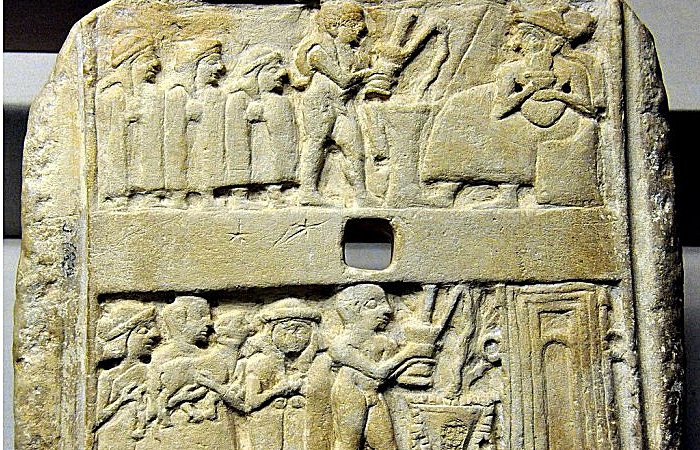
Wall plaque from Ur, 2500 BCE; the British Museum. image credit:
This historical material is undoubtedly the essential source of our knowledge about Ur. The city's monuments have survived to this day, largely due to the test of time. Built of mud brick - not as resilient a building material as stone, widely used in ancient Egypt – the Sumerian structures could not survive.
The city of Ur was once a large, wealthy, busy, and prosperous port located close to the mouth of the Euphrates River in the Persian Gulf, and much of Sumerian history is linked to this city.
The geographical location of Ur (now Tell el-Muqayyar, Iraq), in the vicinity of the river and the sea, contributed to the city's dominant role in foreign trade, with ancient Dilmun serving as a transit harbor.


This is a preview of our premium article available only to members of Ancient Pages.
Become a member to read more - Click here
If you are already a member and have logged in to your account, you can access the article here

See also:
Uruk – The Hero Gilgamesh’s City With A Sophisticated, Carefully, And Intentionally Planned Layout
Ziggurats, Axis Mundi And Strong Connection To Religion In Mesopotamia
Ancient City Of Urkesh – Home Of Kumarbi – The Foremost Son Of Anu