
Spir Mountain Cairns: Prehistoric Ancient Monuments To The Dead In Northern Sweden
Ellen Lloyd - AncientPages.com - In Northern Sweden, there are many fascinating and mysterious ancient sites and places.
Unfortunately, several of these historical sites have not been properly investigated because they are very difficult to access. Due to their remote location, they are also little known to their outside world.
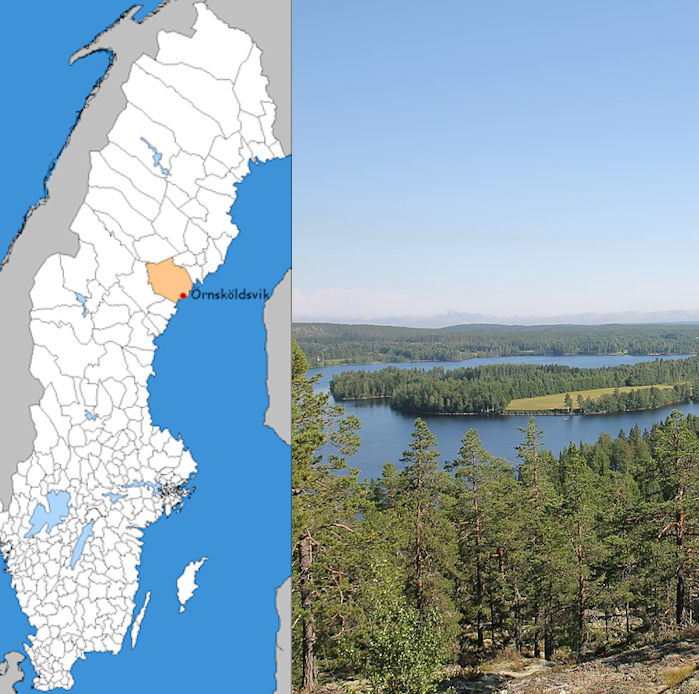
Left: Location of Örnsköldsvik Municipality in Sweden. Credit: Fred J - CC BY-SA 2.5 - Right: Byviken, Örnsköldsvik Municipality. Credit: Sasja - CC BY-SA 3.0
The Ritual Use Of Cairns
The tradition of building cairns and stone settings in the coastal area is generally ascribed to the Bronze Age and Iron Age. Cairns and cairn-like monuments can be found in many different parts of Sweden, Norway, and Finland. In the city of Örnsköldsvik in Norrland, we come across some of the best prehistoric monuments that Sweden has to offer – the Spir Mountain cairns.
Many of the cairns were constructed near or overlooking what was once the seashore. They are standing about 30-50 meters above present sea level. During the Bronze Age, the Spir Mountain had once been an island within a bay.
One can find many ancient cairns along the coast of Norrland. Our ancestors placed them all the way from northern Uppland to Piteå in Norrbotten, a distance of about 860 kilometers. The coastal cairn-zone in Ångermanland is particularly rich and includes about 700 registered sites. There are roughly over 2,300 cairns and stone settings distributed along the northern coast, but they are not represented at all in the interior of Norrland.
The discussion about the ritual use of cairns is vast. It is generally held that the use of Bronze Age cairns and cairn-like stone settings is similar to the ritual use of Bronze Age mounds, that is, they represent burial monuments raised over individual persons.
Ancient cairns were of religious importance to our ancestors. It was believed that by frequently rebuilding the cairns and placing bones inside them, these ancient monuments would become active and enable communication with higher powers. Many of the cairns contain cremation burials and this indicated they appear to have been built as monuments to the dead.

Norrland is famous for its beautiful Northern Lights, but there are also many interesting archaeological sites here. Credit: Pavel.shyshkouski - CC BY-SA 4.0
A widely held suggestion concerning the underlying motives behind religious sacrifices, ritual ceremonies and festivals, is the attempt to maintain and support the existing "world-view" or "cosmological" order within a society or group over time.
The sacrificial rituals may vary from one society to another, but the motives are generally to receive luck, prosperity, forgiveness, stability, safety, fertility, etc., from the higher powers of both ancestors and gods.
It is reasonable to suggest that the ritual use of the cairn-monuments also aimed at creating contact between the living society and the spirits of the ancestors. In this practice, the cairns and stone settings became a medium through which contact with the ancestral spirits could be channeled.
Some researchers also suggest the cairns functioned as tribal markers for family group territories.
The Discovery Of Two Very Large, Well Preserved And Almost Perfectly Circular Cairns
Some years ago, archaeologists discovered two astonishing cairns in Ångermanland. The larger of the cairns is 13m in diameter. It is exceptionally well preserved, and almost perfectly circular. The stone required for construction must have required an immense investment of labor. The smaller cairn is just to the east and is 6m in diameter.
The Spir Mountain cairns have internal burial chambers with cists containing skeletal remains, accompanied by various grave goods. In some cases, the cairns have been used repeatedly, and have been expanded out from their original structures.
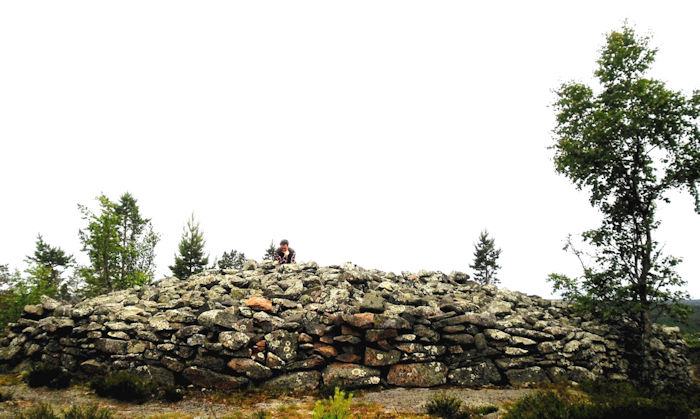
Archaeologist Carl L. Thunberg at the larger of the Spir Mountain Cairns. Credit: Ångermanlands fornminnesförening - CC BY-SA 4.0
The cairn-building tradition was widespread in Northern Sweden and the existence of cairns along the coast could possibly reveal different cultural and economical systems between the Bronze Age people. The social and economic structure in Bronze Age Norrland has by several archaeologists been viewed as u dualism between the coast and the inland area.
Scientists say there was an egalitarian structure with hunter-gatherers in the interior of Norrland and a more complex and socially stratified order with "ranked" farmers buried in cairns along the coast. The cairn-building tradition is, undoubtedly, one of the more evident material differences between interior and coast in Bronze Age Norrland.
Written by Ellen Lloyd – AncientPages.com
Copyright © AncientPages.com All rights reserved. This material may not be published, broadcast, rewritten or redistributed in whole or part without the express written permission of AncientPages.com
Expand for referencesActivating the Monuments - The Ritual Use of Cairns in Bronze Age Norrland by Hans Bolin
More From Ancient Pages
-
 Hypatia Of Alexandria – Brilliant, Controversial Scientist And Her Dramatic End
-
 Peculiar Unsolved Greek Mystery In New York
-
 DNA Evidence Ice Age Humans Migrated From China To The Americas And Japan
-
 Modern Humans Used Favorable Climatic Conditions On Their Long Way From Africa To Europe
-
 Mystery Of The Faceless Creature – Ancient And Modern Sightings
-
 Medieval Magic – A Service Industry Used By Rich And Poor Alike
-
 Unexplained Mystery Of The Ship Of Horror – An Unsettling Story
-
 China’s Ancient Water Pipes Show People Mastered Complex Engineering Without The Need For A Centralized State Authority
-
 Island Archaeology Could Be A Model For Space Exploration
-
 Huldra: Seductive Female Creature Living In Forest Or Mountains In Norse Beliefs
-
 Preserve Elfdalian: Sweden’s Secret Forest Language From The Viking Era
-
 On This Day In History: England’s Act Against Multipliers Signed Into Law – On Jan 13, 1404
-
 Unearthing South Australia’s Oldest Known Shipwreck: The Bark South Australian (1837)
-
 Native Americans And European Legends Tell Peculiar Beings From The Sky Still Live On The Earth
-
 Legendary And Mysterious Stone Of Brutus – The London Stone Refuses To Give Up Its Secrets
-
 First-Ever 3D Model Allows You To Explore The Iconic Easter Island Statues Up Close
-
 Burnt Food Remains In Neolithic Cooking Pot Sheds Light On 5,000-Year-Old Food Preparation
-
 Diver Says He Found Mysterious Underwater Ancient Tomb, Ruins And Artifacts Of An Unknown Advanced Civilization
-
 Yungang Grottoes: Marvellous Example Of Ancient Buddhist Rock-Cut Architecture
-
 Flexible Glass – Lost Ancient Roman Invention Because Glassmaker Was Beheaded By Emperor Tiberius

