
Soap Was Invented In 2800 B.C By Babylonians
AncientPages.com - The first evidence of the use of soap can be traced to around 2800 B.C. Soap was invented by Babylonians and also used in Mesopotamia, ancient Egypt, ancient Greece and by the Romans.
However, in ancient times soap was not used for personal hygiene. Instead it was used cleaning cooking utensils and medicine purposes, such as for example treatment of skin diseases.
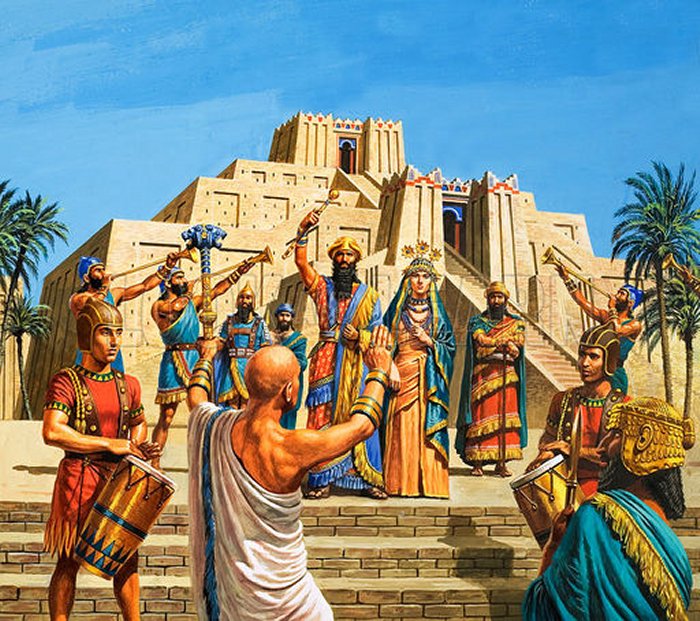
Ancient Babylonians invented soap about 2800 B.C.
Ancient Babylonians discovered that by mixing animal fats with wood ash and water they could create a cleansing substance.
Originating from the Syrian city of Aleppo, the Aleppo soap is widely considered to be the first soap ever made. It quickly became very popular across the Middle East and far beyond.
The ancient city of Aleppo thrived on trade for thousands of years, and was famous for being the endpoint of the famous Silk Road that bridged East and the West world before the advancement of sea trade routes in the “Age of Sail”.
One of the most important trade items of the city of Aleppo was the unique soap that was made by the generations of merchant families and manufacturers for thousands of years
It was made from mixing oil from laurel (bay) trees with olive oil and soda. Formula and manufacturing process for this highly prized soap did not change over time and is still today produced in its original form.
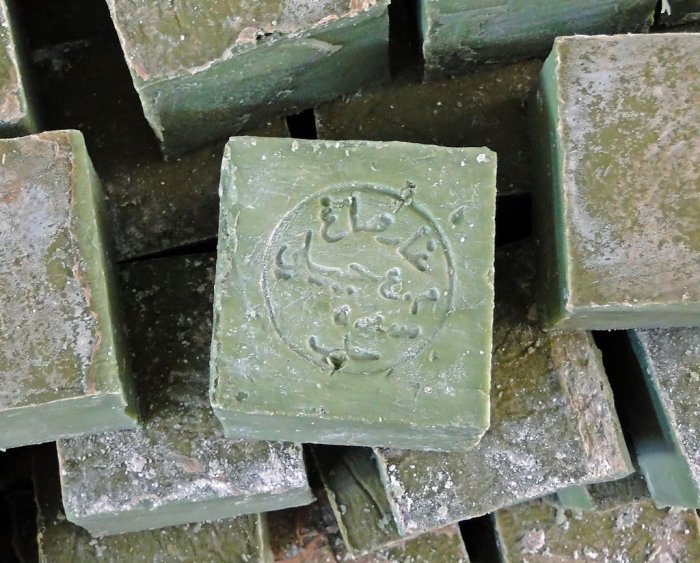
Aleppo soap. Image credit: Bernard Gagnon
People from all around the world who visited Aleppo quickly realized the value of the soap and it was first introduced to Europe by the Crusaders in the 11th Century.
Unfortunately, the exact origin of the Aleppo soap is lost in time, and even though there is hundreds of tales and legends about its creation, modern historians cannot confirm any one. The earliest written mentions of this soap come from the 8th century AD. When the Aleppo soap was brought to Europe people started to produce their own variations of the soap.
See also:
Oldest Evidence Of Beer Was Found On A Sumerian Tablet In Mesopotamia
First Bathrooms Appeared Around 8,000 B.C In Scotland
Ancient Egyptians Invented Toothpaste
The Castile Soap was an early European high quality soap that became popular. The Spanish city had an abundance of olive oil, crucial ingredient that was used in the production soap.
Unlike the Aleppo soap, the Castille soap did not require the use of laurel oil that short in supply, Castille’s easy access to olive oil enabled creation of pure white soap that was very mild and effective. Castile soap became one of the best natural and bio-degradable soaps that can be manufactured by hand.
The soap was perfect for washing body, laundry, hair. It could be easily and safely used by children.
Copyright © AncientPages.com All rights reserved. This material may not be published, broadcast, rewritten or redistributed in whole or part without the express written permission of AncientPages.com
More From Ancient Pages
-
 Did Neanderthals And Modern Humans Meet In The Czech Republic 50,000 Years Ago?
-
 Amazing Discovery Of Ancient Roman Temple In The Netherlands Hailed As An Extraordinary Archaeological Find
-
 Marble Head Of Roman Emperor Augustus Unearthed In Isernia, Italy
-
 Biblical Tefach: Amazing ‘Common Constant’ Found Among Ancient Storage Jars In Israel
-
 A Rare Pre-Roman Tomb Unearthed In Pompeii
-
 Mysterious Chultuns – Ancient Underground Chambers Built By The Maya – But For What Purpose?
-
 Early Humans Were Probably Driven To Extinction By Climate Change- Study Suggests
-
 Did Ancient Seafarers In Southeast Asia Build Sophisticated Boats As Far Back As 40,000 Years Ago?
-
 Flexible Glass – Lost Ancient Roman Invention Because Glassmaker Was Beheaded By Emperor Tiberius
-
 Islands Of The Tropical Pacific Ocean Were Settled Much Earlier Than Previously Thought – New Theory
-
 Dark And Light Sides Of Pax Romana: Great Political Slogan Introduced After Civil Wars
-
 Medieval Ring Found In Piast Stronghold Near Gniezno, Poland – Is A Unique Christian Artifact
-
 Eating And Social Habits Of People In The Balearic Islands 3,000 Years Ago – Reconstructed
-
 Interaction Between Homo Sapiens And Neanderthals Studied Using New Radiocarbon 3.0 Method
-
 Justinianic Plague: Modeling Study Challenges Death Rate And Severity Of Infectious Disease
-
 Secret High-Tech Knowledge Hidden In Ancient Manuscripts And The Mysterious Seven Sky Kings
-
 Fashion Police Enforced Gender Norms In Early Modern Genoa
-
 Strange Reports Of A Mysterious Stone-Throwing Phenomenon And Invisible Entity Encountered Worldwide
-
 Ancient City Of Knossos – A Cosmopolitan Hub Of The Minoan Civilization And Culture
-
 Mayan Elites Lived In Pre-Hispanic Teotihuacán – New Evidence

