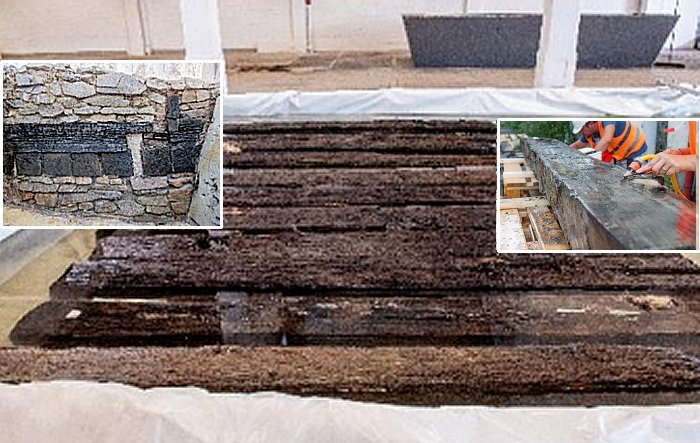




Conny Waters - AncientPages.com - In March 2026, workers found wooden elements while constructing an overflow basin in Aschaffenburg, northwest Bavaria, Germany. Although the age of the remains was initially unclear, they were evidently part of a larger structure.
A few weeks later, the team from the Bavarian State Office for Monument Preservation (BLfD) determined that the oak trees used in the construction had been felled between 372 and 352 BC. This was the Celtic period in Germany.
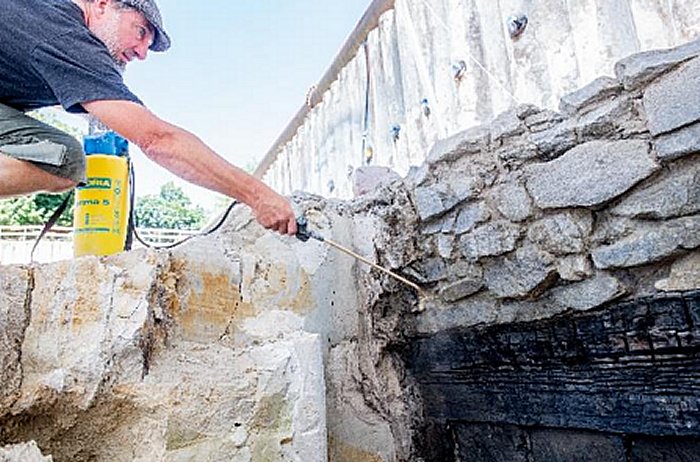
To protect the exposed wood from drying out and decay, they first moistened it by hand before experts from the BLfD installed an automatic irrigation system in July. Image source
This period, part of the La Tène culture (approximately 450 BC to the 1st century BC), saw Celtic tribes dominate central and southern Germany.
Experts consider this Celtic structure unique in Germany due to its age, construction method, and exceptional preservation.
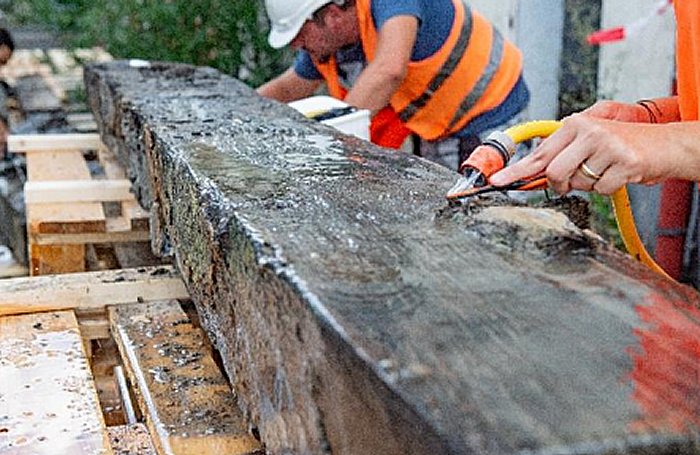
After their recovery, the woods were cleaned. Image source
Following months of research and planning, archaeologists began excavating the site. The structure consists of beams measuring 3 to 4 meters long and weighing up to 350 kilograms. Its purpose is unclear, though experts believe it may have secured access to the settlement from the Main River.
So far, workers have removed about one-third of the beams from the site. Workers carefully detach each beam, lift it with a crane, then clean and prepare it for storage in water.
This preservation is essential because exposed wood may dry out and disintegrate. The team first maintained moisture levels manually, then installed an automatic irrigation system in July. Extraction work at the site began in August.
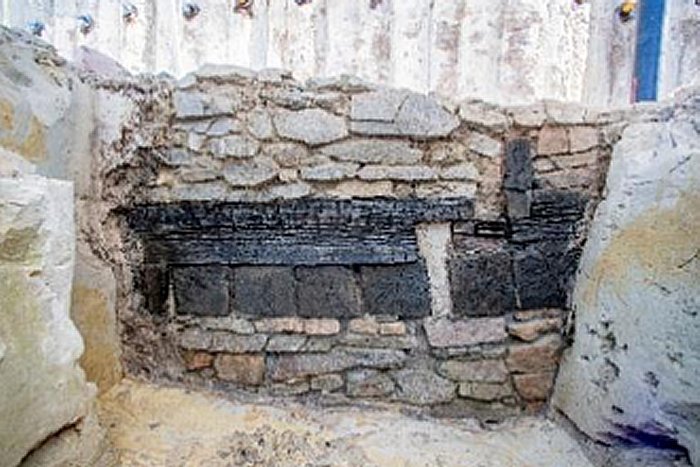
Image source
The next phase will involve laser scanning each beam. Visible tool marks on the wood provide valuable insights into ancient woodworking techniques.
On the riverside, directly in front of the previously described large structure built of dry-stone walls with an elaborate beam framework, a wooden platform stood. Boats may have docked there, using the platform to load and unload. The intended purpose of both the platform and the structure under excavation remains uncertain.
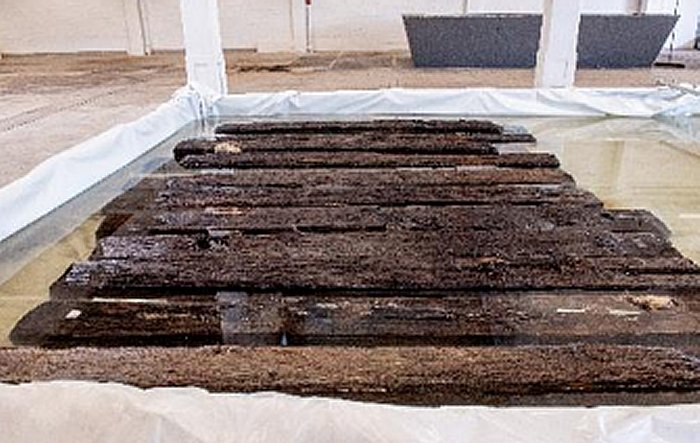
Image source
According to experts working at the site, the ancient builders demonstrated significant expertise, overcoming damp ground conditions and transporting timber and stone via the Main River. They constructed precise walls on-site, ensuring the structure was visible from the river. This visibility served both practical needs and signaled to arrivals that an important, protected center was ahead.
Although the structure's purpose remains unknown, its construction demonstrates the builders' skill, use of quality materials, and careful planning.
See also: More Archaeology News
Despite the uncertainty about its function, the structure was clearly significant 2,500 years ago.
This is an impressive discovery. The description perfectly captures the technical advances of ancient and Medieval engineers who were able to use natural waterways – in this case, the River Main – to transport powerful building materials.
Written by Conny Waters - AncientPages.com Staff Writer