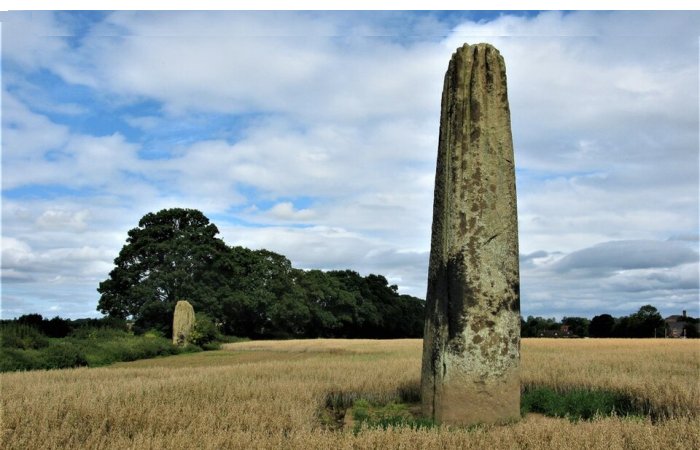



Conny Waters - AncientPages.com - Scientists have long discussed whether ice-age glaciers or an enormous human effort moved giant megaliths known as Devil’s Arrow stones from Brimham Rocks, North Yorkshire, England.
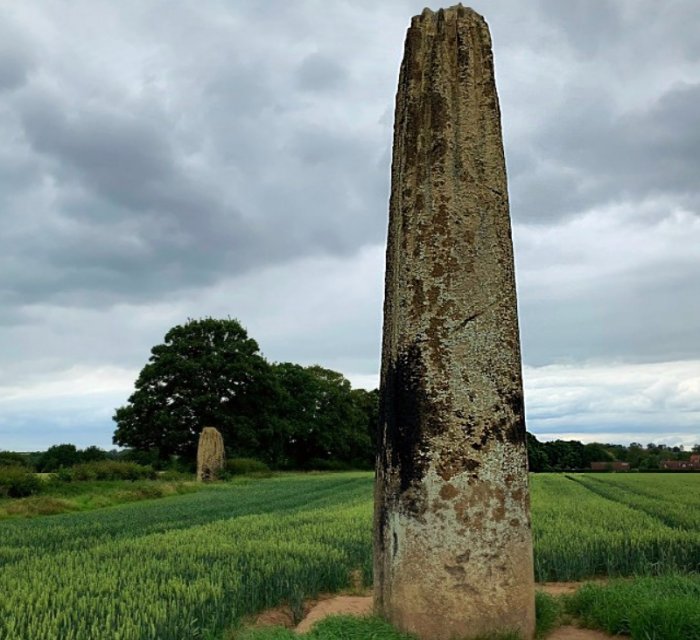
The three surviving pillars near Boroughbridge form the tallest standing stone row in Britain. Image source
Recent research sheds new light on the 'Devil's Arrow', one of Britain’s most unusual megalithic complexes erected between 5,000 and 3,500 years ago.
Researchers at the University of York and Curtin University in Australia found that people intentionally brought huge stone blocks, and to do this, they had to move each block. The team analyzed minerals in the rock and used isotopic "fingerprinting" to match the stones to Brimham Rocks, 11 miles (18km) west.
Thus, the team determined that Neolithic builders sought a specific, distant landscape rather than nearby stone sources, which they decided to bypass.
At almost seven meters (23ft) tall, the three surviving pillars near Boroughbridge form the tallest standing stone row in Britain and are taller than the stones at Stonehenge. The southern stone is the second-tallest megalith in the country after the Rudston Monolith, while the central stone ranks third tallest. Early records suggest the stones once numbered at least five, though only three remain today.
This study has revealed the origin of this megalithic complex; however, it is still unknown why they were placed exactly there and for what purpose.
Dr Jim Leary, from the University of York’s Department of Archaeology, said that megalithic architecture is among the most visually striking features of the Neolithic landscape across Britain and Ireland, from vast ceremonial complexes like Avebury and Stonehenge, to individual standing stones.
“Sites in southern England and Scotland receive considerable attention, but monuments like the Devil's Arrows have remained comparatively understudied despite their significance,” he commented.
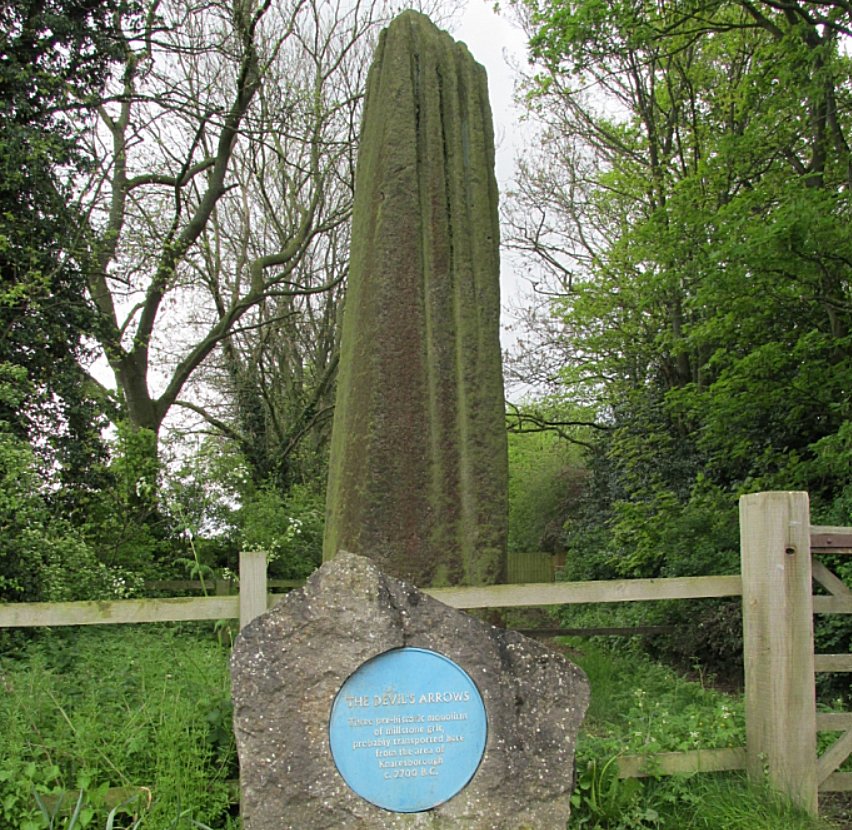
‘Devil’s Arrows’. (the southern stone); historic site, blue plaque, Boroughbridge. Image credit: Mike Kirby - CC BY-SA 2.0
"We have now proved that Neolithic communities moved several 25-tonne stones 18km across Yorkshire, transforming a familiar site into an epic quest to create a sacred landscape.”
This study also confirmed that both 19th-century theories and local legends are true regarding a missing (fourth) stone ("hiding in plain sight") in the nearby Yorkshire village of Aldborough. This megalith - one of the Devil’s Arrows - was moved and shaped into an 18-foot (5.5-meter) cross, commemorating a battle fought in 1322.
According to records by Tudor antiquarian John Leland, an English poet, priest, and antiquary who served as King Henry VIII's librarian, this stone stood in the mid-16th century, but decades later it was said to be missing.
In 1687, locals are recorded as breaking up a fallen stone, using part of it to construct Peg Bridge over the River Tutt and taking the top segment to Aldborough.
In the 19th century, antiquarian J.R. Walbran suggested that another fallen monolith was reused to create the Battle Cross, a 5.5-meter monument built in the 15th century to honor the 1322 Battle of Boroughbridge.
Today, we know the medieval cross still standing in Aldborough is actually a carved piece of a long-lost Arrow.
“The Devil’s Arrows have inspired stories and sparked curiosity for generations. Local legend tells of the Devil standing on How Hill and hurling giant stone arrows towards Boroughbridge, only for them to fall short and land where they stand today,” said Justin Scully, General Manager for Fountains Abbey & Studley Royal and Brimham Rocks.
“While the folklore remains a much-loved part of their story, it’s wonderful to discover that the real journey of these stones is every bit as extraordinary.”
Written by Conny Waters - AncientPages.com Staff Writer