


Jan Bartek - AncientPages.com - Periods of prosperity can contain the roots of future collapse. In ancient Troy, ambition led to environmental strain long before modern industry. While today we associate environmental destruction with oil rigs, coal plants, or plastic waste, ancient societies also pushed their ecosystems to the limit.
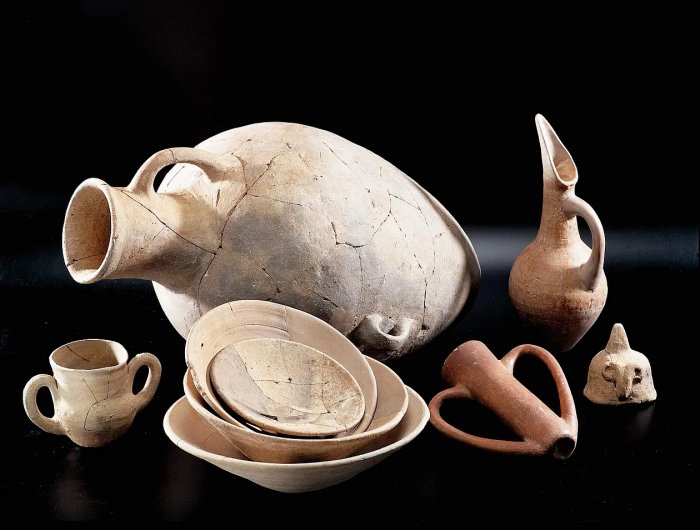
Pottery vessels are the most patient witnesses to life and economic activity in the past. Credit: DB Neumann, Eberhard Karls Universität Tübingen
Early Bronze Age Troy exemplifies how economic achievement can come with high ecological costs. This is not only a story of innovation and success, but also a cautionary example of overreach and the hidden consequences of unchecked growth.
Between 2500 and 2300 BC, Troy became a center of power and innovation in northwestern Anatolia, centuries before its legend in Homer’s Iliad. Excavations with the University of Tübingen’s Troy Project reveal that intentional decisions in production, planning, and organization transformed a small Bronze Age village into a dynamic community with early urban characteristics. Troy’s stone buildings, organized streets, and distinct residential areas reflected this transition.
Mass production was central to this transformation. Inspired by Mesopotamian models, the potter’s wheel revolutionized Troy’s ceramics, allowing for faster, more uniform, and large-scale production. Wheel-thrown pottery became prevalent, characterized by deep grooves and simplified finishes that emphasized efficiency over artistry.
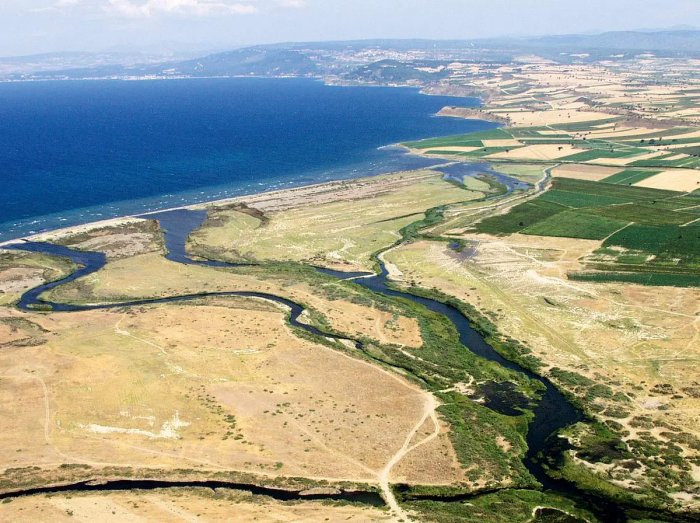
The Greeks landed on these beaches to fight for the kidnapped Helen – at least that is what researchers believe to be probable, although they cannot be entirely certain. Credit: Troja Projekt / University of Tübingen
As production increased, the workforce became more structured and specialized. Craftsmanship moved from homes to workshops, and labor became more segmented. Trade expanded beyond the Troad, extending Troy’s influence. To manage this complexity, standardized weights and administrative seals were introduced as tools for coordination and control in a more commercialized society.
However, progress came with significant costs. The innovations that drove Troy’s growth also introduced challenges that became increasingly difficult to manage.
Extraction And Economic Growth
Troy’s prosperity relied on intensive resource extraction. Monumental construction required large quantities of limestone from local quarries. Clay was removed from former fertile riverbanks for kilns and brick production. Forests were cleared for timber and firewood, supporting a continuously operating ceramic industry. Agriculture also intensified. While earlier generations rotated crops and allowed fields to rest, Troy’s farmers prioritized maximum yields through continuous cultivation. Emmer and einkorn, ancient wheat varieties suited to poor soils but low in yield and protein, became dominant. These grains were hardy and easy to store, but offered limited nutritional value.
As farmland expanded onto steep, fragile slopes, erosion increased. Archaeobotanical evidence shows that formerly forested hills became barren. Livestock further strained the environment, as intensive grazing by sheep and goats removed vegetation and compacted soil. This led to reduced water retention, loss of topsoil, and declining biodiversity. Over time, the ecological balance supporting Troy’s prosperity deteriorated.
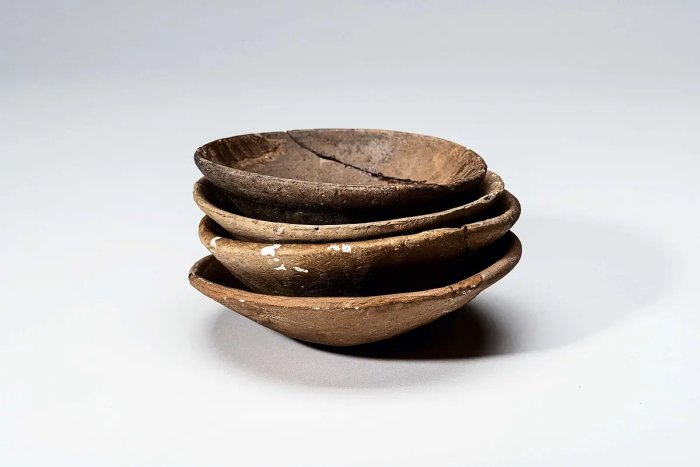
Plain plates prove the emergence of mass production. Credit: Hakan Öge / Troja Projekt Universität Tübingen Troja
By around 2300 BC, the system began to break down. A major fire damaged the settlement, possibly due to revolt or conflict. Monumental structures were abandoned in favor of smaller dwellings and modest farmsteads, and the center of power weakened. This collapse likely resulted from multiple factors, including political tensions, external threats, and social unrest. However, environmental pressures were also significant. Soil exhaustion, deforestation, and erosion likely caused water and resource shortages, and possibly famine. Each factor undermined Troy’s stability.
Afterward, adaptation became the priority. Farmers diversified crops, shifting from high-yield monoculture to more varied and resilient approaches. This reduced risk, allowed partial soil recovery, and helped stabilize communities. Troy endured, adjusting and maintaining a new balance for another millennium, though it remained affected by the crisis it had contributed to.
Wisdom From Worn Earth
Troy’s history is more than an archaeological curiosity; it serves as a reflection of broader patterns. Like many societies, its economic ambitions exceeded ecological limits. Warning signs such as declining yields, deforestation, and soil erosion were evident, yet the pursuit of continuous growth persisted.
See also: More Archaeology News
The parallels with today are clear. Resource depletion, short-term priorities, and environmental neglect continue to define the global economy (image 4). While technology has advanced, the underlying mindset remains unchanged.
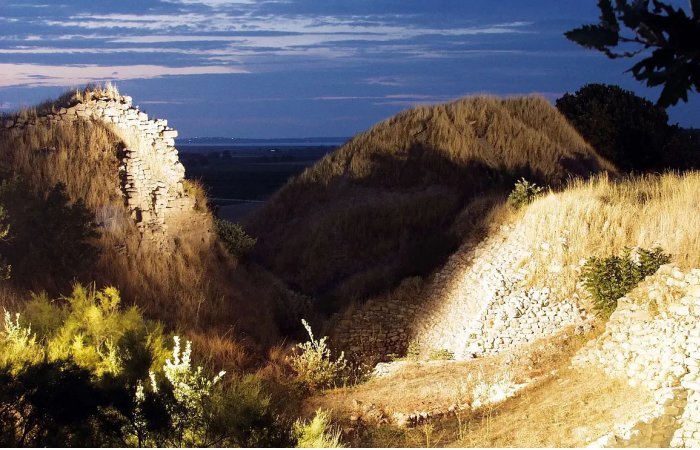
Credit: Hakan Öge / Troja Projekt Universität Tübingen Troja
We continue to consume, discard, and expand. However, Troy also demonstrates the potential for adaptation and resilience after periods of excess. It shows that sustainability is not a modern concept but a fundamental necessity. Troy illustrates that no society is exempt from the consequences of ecological overreach. Signs of imbalance are always present, though often overlooked. It is our responsibility to recognize and address them.
Source: Eberhard Karls Universität Tübingen
Written by Jan Bartek - AncientPages.com Staff Writer