



Conny Waters - AncientPages.com - New research by Dr Christopher Moore, a Research Fellow and former PhD student at the University of Kent, revealed evidence indicating that stone from Henry VIII’s long-lost Sandown Castle was reused in the Victorian extension at Constable’s Gate, Dover Castle.
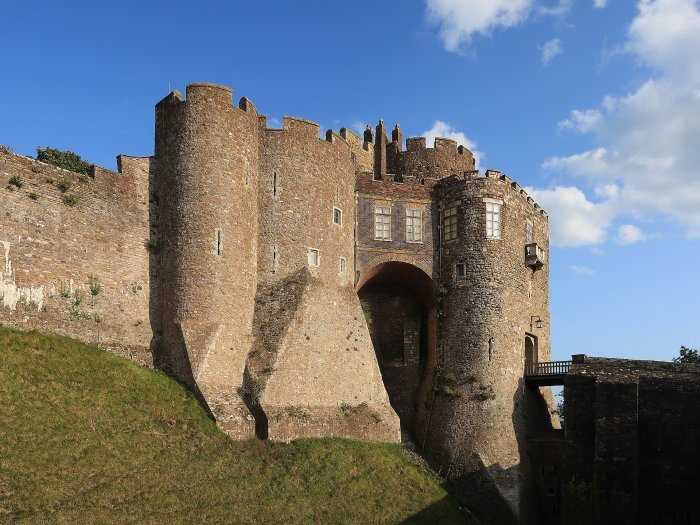
Dover Castle, Kent, UK. Constable's Gate. Image credit: Michael Coppins - CC BY-SA 4.0
This discovery is important because it shows an apparent connection between Sandown Castle and stone material that was more than 300 years later used in the construction of Dover Castle.
Dr Moore examined archive records with architectural evidence to find that there was a link between the 1883-84 extension to Sandown Castle, one of Henry VIII’s 16th-century coastal forts and Dover Castle.
Dover Castle is recorded in history as one of England’s lost Tudor fortresses.
“This sheds light on how Dover Castle’s 19th-century works incorporated masonry from an earlier Tudor fortress,” said Dr Moore. “Sandown Castle is best known as a casualty of coastal erosion, but the documentary trail and the surviving fabric show that parts of it lived on at Dover Castle and at other sites across East Kent,” Dr Moore commented.
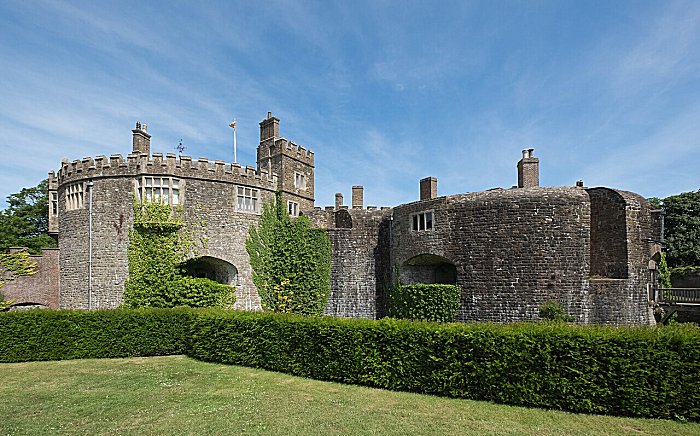
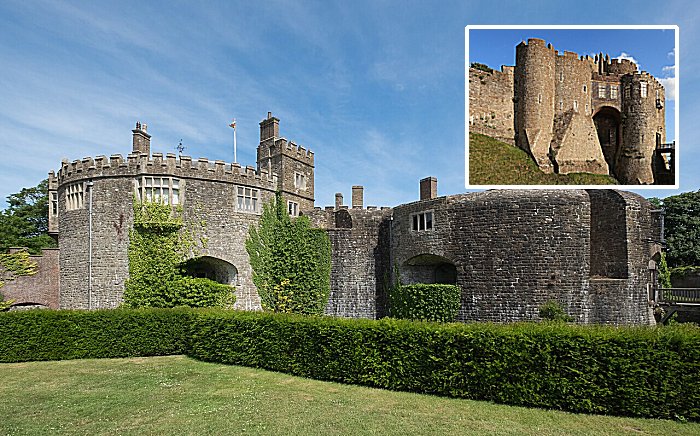
Walmer Castle, Kent. This castle, built by Henry VIII between 1539 and 1540, is a listed building in England. Image credit: - CC BY-SA 4.0
Sandown Castle was one of three ‘castles of the Downs’ and was built in 1539-40. It was an artillery fort constructed by Henry VIII in Sandown, Kent, between 1539 and 1540. Its goal was to protect against invasion by France and the Holy Roman Empire and to defend the strategically important Downs anchorage off the English coast.
Nearby Walmer Castle still stands, but Sandown was damaged by coastal erosion, which weakened it, and was finally abandoned during the 19th century and taken down.
The archive records (an 1883 report) revealed that Dr Moore’s archival research uncovered an 1883 report stating that materials from Sandown were sent to Dover to help build an extension at Constable’s Gate. This extension, built in 1883 and 1884 as living quarters for the Castle’s commanding officer, supports the idea that stone from Sandown Castle was reused in the construction.
The stone material from Sandown Castle was also reused in other constructions, including Eastry Union Chapel, Walmer Castle and Deal’s second pier abutment.
See also: More Archaeology News
Dr Moore believes that recent discovery creates a unique opportunity to connect directly with a lost piece of Tudor England and learn more about the dismantled Sandown Castle that is still part of English heritage.
Dr Moore's research was supported by the University of Kent in cooperation with English Heritage.
Written by Conny Waters - AncientPages.com Staff Writer