

Jan Bartek - AncientPages.com - Archaeologists have reopened the largely forgotten Grønhaug burial mound on Karmøy, on Norway’s western coast, and have already discovered remains beneath the Viking grave.

Grønhaug is situated on Karmøy among several large burial mounds from various periods, including the Bronze Age.
Marie Ødegaard, an archaeologist at the University of Stavanger's Museum of Archaeology, is leading the excavation with Håkon Reiersen, also from the university.
The mound contains the remains of a Viking ship, which may have been about 15 meters long. Archaeologist Haakon Schetelig first investigated the site in 1902.
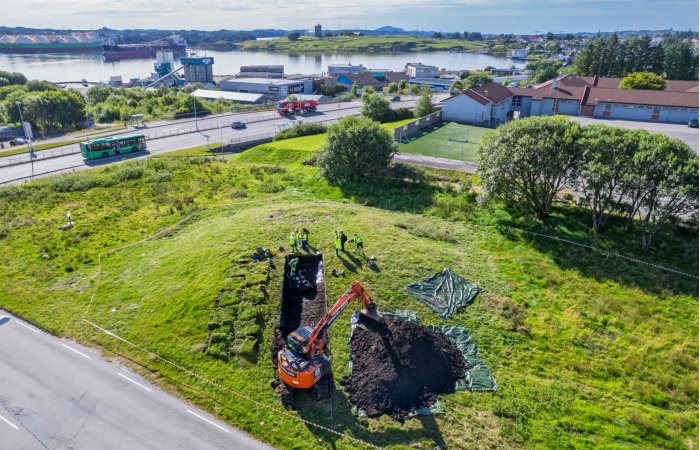
This is what the excavation of Grønhaug looks like from the air. Credit: Øyvind Nesvåg/Rogaland County Municipality
He confirmed that a ship was buried here. Parts of the ship’s bottom and hull are likely still preserved in the mound. During the 1902 excavation, archaeologists removed loose planking from around the well-preserved oar holes and brought these pieces to Bergen, Ødegaard explains.
"Most of it was probably left in place because the wood was soft," she says.
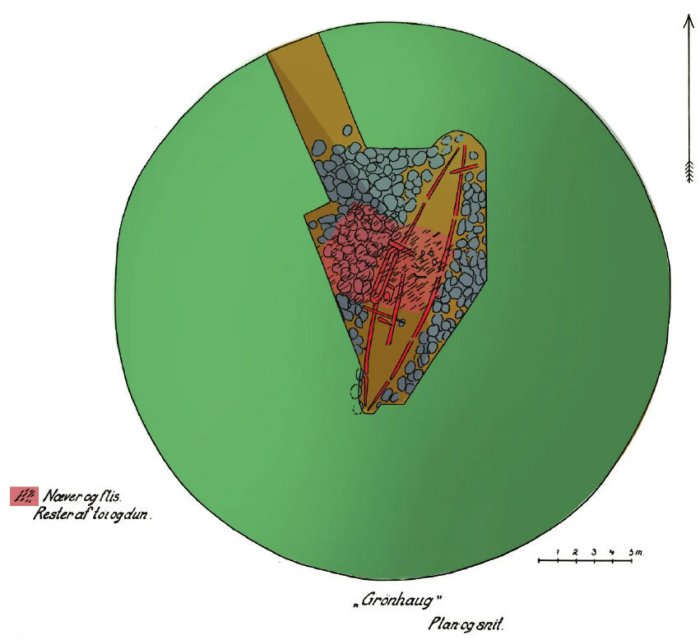
Haakon Schetelig's mapping of the trench and the ship from 1902. The archaeologists have opened roughly the same trench into the mound. Credit: University Museum of Bergen / CC BY
The mound has not been opened since then, according to the Norwegian Directorate for Cultural Heritage, which commissioned the excavation in collaboration with Rogaland County Municipality.
Discovery: Two Metal Rivets
This excavation supports ongoing efforts to recommend more Viking sites for the World Heritage List.
Archaeologists have opened a trench in the mound to assess its condition and evaluate the preservation of objects inside.
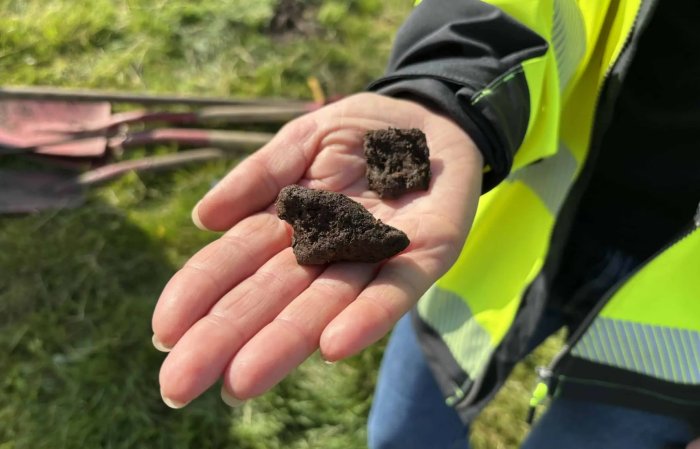
Remains of rivets from the ship. Credit: Jan Magnus Weiberg-Aurdal, Norwegian Directorate for Cultural Heritage
The trench largely follows the one Haakon Schetelig opened in 1902, with a minor extension. This is a limited excavation, so the entire mound remains closed.
"We have found one or two rivets, probably from the ship," says Ødegaard.
Little Left Of The Viking Ship
The ship is severely deteriorated, with only minimal remains.
"But we have found timber from the grave that Schetelig discarded when he excavated here," Ødegaard tells Science Norway.
According to the archaeologist, this timber is likely not from the ship, as it appears to be pine.
Viking ships were usually built from oak, although parts such as a superstructure could have been made from pine.
"It may have been part of a roof or other objects aboard the ship," she says.
However, these wooden pieces were well preserved, which contributed to the decision to investigate the mound.
The Grave Has Been Looted
A key question is whether objects and artifacts inside the mound are deteriorating rapidly. However, preliminary investigations indicate that preservation conditions are very good, Ødegaard explains.
The grave has also been looted, a common occurrence in ship burials, as seen with the Oseberg ship burial.
Archaeologists have recently examined a layer of birch bark found inside the mound.
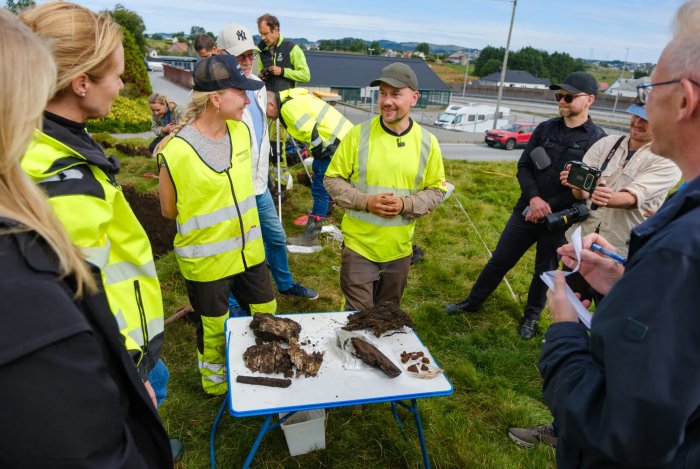
Archaeologists from the Museum of Archaeology at the University of Stavanger display birch bark and pieces of wood recovered during the excavation. Credit: Øyvind Nesvåg / Rogaland County Municipality
"Previously, it was thought that the birch bark was connected to the looting that took place at the end of the 10th century. One possibility was that it had been laid down so people could walk through the mound without getting their feet wet. Another was that it had some ritual purpose, perhaps to avoid disturbing those believed to dwell within the mound," says Ødegaard.
In other words, these rituals may have been intended to avoid disturbing spirits believed to inhabit the burial mounds.
"Now we're starting to become less certain about what this actually is, and it may instead have been part of the mound's construction," she says.
This further demonstrates the excellent preservation conditions. The excavation also yielded some unexpected findings, Ødegaard says.
Did The Vikings Use Or Cultivate Blueberries?
A key question remains: what lies beneath Grønhaug?
Was the mound constructed as a Viking grave, or does it conceal something else?
Several other burial mounds in the area are much older than the Viking Age and date back to the Bronze Age.
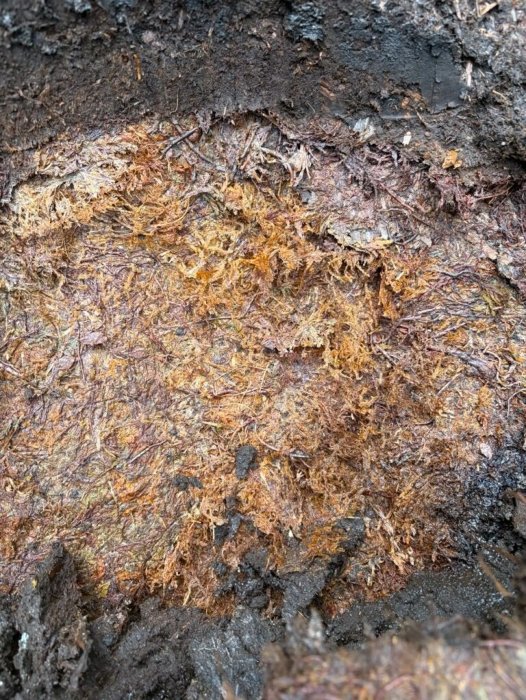
Here you can see heather and blueberry plants inside the mound – straight from the Viking Age. Credit: Marie Ødegaard
Archaeologists found similar evidence at Grønhaug, where remains of a Bronze Age grave were discovered beneath the mound.
Ødegaard explains that the team excavated down to the ground surface from the Viking Age, which was exposed when the ship burial was constructed.
"It was so well preserved that I could see blueberry plants and heather that were growing there when they built the mound in the Viking Age," she says.
"The plants even still had leaves on them," she says.
This indicates the mound was constructed over existing vegetation during the summer months.
Evidence Of A Viking Grave Built On A Bronze Age Burial?
"We have now excavated through the mound, and we can confirm that there is probably a Bronze Age mound underneath it," says Ødegaard.
Archaeologists have uncovered a man-made stone cairn beneath the Viking grave, covered by layers of soil and turf. As excavation has only recently begun, additional samples are needed to establish a more reliable timeline.
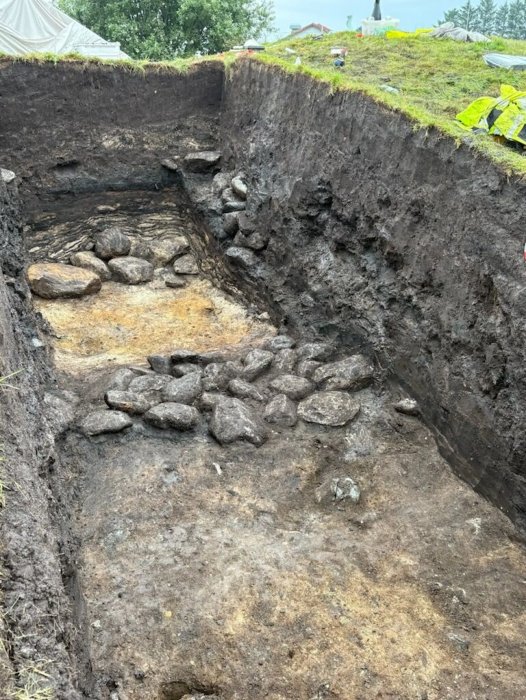
Here you can clearly see into the trench that the archaeologists have excavated. At the far end, you can see large stones that are the core of the Bronze Age mound, while the outer stones are part of the curb. This is a ring of stones around the mound. Credit: Marie Ødegaard / University of Stavanger
Stones were also arranged around the base of this mound, forming what is known as a curb.
The older mound appears to have served as a platform for the Viking grave.
"Part of the further analysis will involve dating the mound underneath more precisely," says Ødegaard.
The dating of the Grønhaug ship has been debated. Earlier studies suggested the ship dated to around 780, with the burial occurring slightly more than a decade later.
This would place the grave just before the Viking Age.
However, recent dendrochronological and radiocarbon analyses indicate the ship dates to around 864, with the burial mound possibly a few years older.
See also: More Archaeology News
This places it well within the Viking Age. The Oseberg Viking ship, for example, dates from the year 820.
The dating has been the subject of considerable debate, according to Ødegaard.
"It's probably become more precise in recent years," she says. "There is still some discussion, and we hope that this investigation will allow us to establish even more precise dating."
Source: Science in Norway
Written by Jan Bartek - AncientPages.com Staff Writer