
Walls Of Lugo: Finest Example Of Late Roman Fortifications – Stands The Test Of Time
A. Sutherland - AncientPages.com - The Roman city walls in Lugo, Spain, are considered the only Roman structure that experienced the powerful empire's domination, yet it is still in perfect condition.
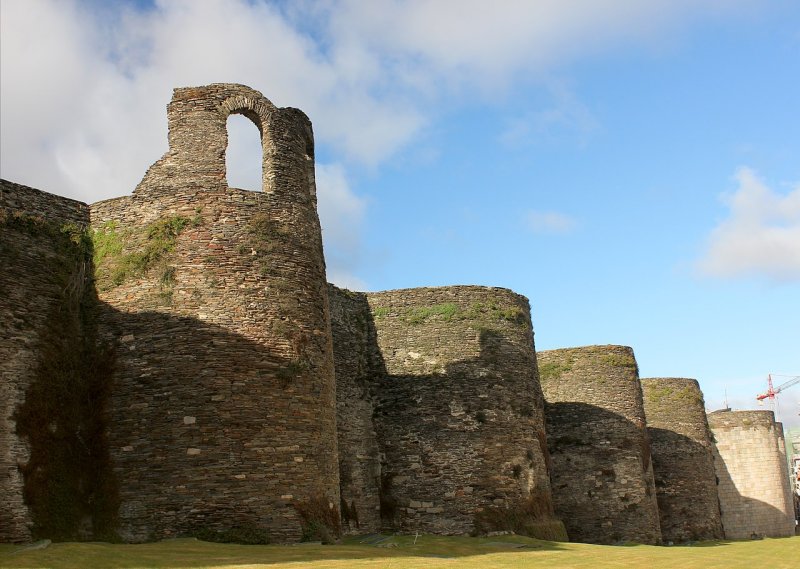
Roman wall of Lugo - Image credit: Xosema - CC BY-SA 4.0
The Lugo structure – dated to the end of the 3rd century - was once part of a defensive complex that included walls, a moat, and an intervallum.
According to UNESCO, the Roman walls of Lugo are 'the finest surviving example of late Roman military fortifications.' We have described on Ancient Pages.com several ancient Roman walls and structures. Still, the Lugo is something extraordinary because the construction of this foundation has survived intact for eighteen centuries.
The structure will stand the test of time even much longer.
The Lugo City Walls are another architectural, archaeological, and constructive accomplishment of Roman engineering, dating from the 3rd and 4th centuries AD.
The Lugo walls - dated from the end of the 3rd century - cover ca. 34.4 hectares, with an impressive perimeter of about 2,120 meters. Its walls are 4.2 meters, and its height ranges from 8 to 12 meters. It was built to defend the Roman city of Lucus Augusti against the barbarian threat.

Roman walls, Lugo, Spain. Image credit: ResearchGate
The ancient Romans' building materials included mortar made from earth, loose stones, and pebbles cemented with water.
The ancient Roman builders' massive and still spectacular work has 71 sections (60 circular and 11 quadrangular) and two-story towers.
The walls still contain 85 external towers, and access to Lugo's interior area is possible through ten gates, five of which were continuously opened from 1853.
Construction of the walls started in 265 AD and was finally completed in 310 AD.
During this period, much of Roman Hispania was threatened by foreign invasion. It is believed, however, that the wall was built to defend the city from revolts by local tribes rather than foreign invaders.
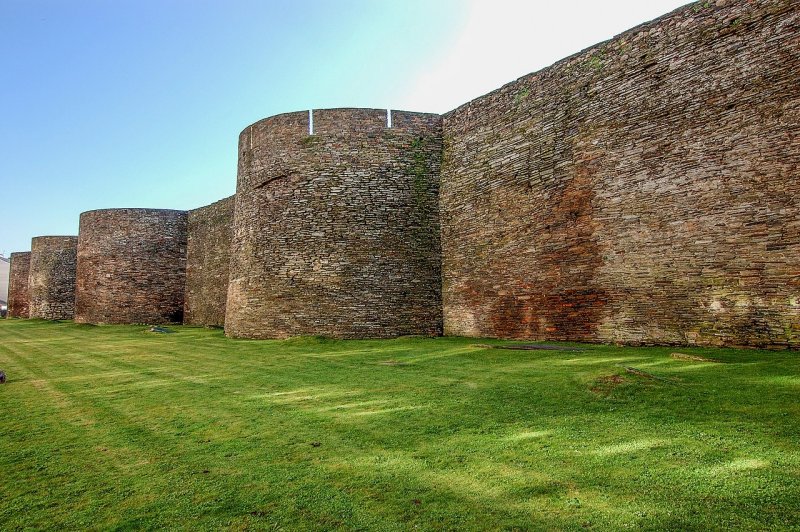
Lugo, Galicia, Spain. Image credit: - Flickr
Despite the imposing nature of the Roman Wall, it was damaged on many occasions. In the fifth century, a large group of Germanic peoples (Germanic Suevi) from the Elbe River region in Germany and the Czech Republic invaded Lugo town.
When the Moors invaded Spain, Lugo was ravaged in 714 but was recaptured by Alfonso I of Asturias in 755. Then, in 457, it was invaded by the Visigoths, who captured and settled the town.
Over 200 years later, the Normans again attacked the town in 968, which was restored in the following century.
The Roman city walls in Lugo have a long, dramatic history. They are the finest surviving examples of late Roman military fortifications.
The Walls of Lugo remains an impressive landmark of the Roman-Galician city and its long history that prevails around it.
Written by – A. Sutherland - AncientPages.com Senior Staff Writer
Updated on January 25, 2024
Copyright © AncientPages.com All rights reserved. This material may not be published, broadcast, rewritten or redistributed in whole or part without the express written permission of AncientPages.com
Expand for referencesMore From Ancient Pages
-
 Aegir – Jotun Lord Of The Stormy Seas Revered And Feared By Norsemen
-
 Hunter-Gatherers, Neolithic Farmers Followed “Danube Route” To Central Europe Expanded, Coexisted And Gradually Mixed
-
 Oldest Human Made Architectural Plans Detail Mysterious Desert Megastructures
-
 Ancient Maya City And Pyramids Discovered In Mexican Jungle
-
 Why Are Medieval Manuscripts Full Of Doodles Of Snail Fights?
-
 Ancient Magical Bowls Inscribed With Spells And Other Rare Artifacts Seized In Jerusalem Raid
-
 The Govan Stones – Treasures From The Viking Era In Britain
-
 North America’s New Snake Species Deepen Our Understanding Of Reptile Social Behavior And Development
-
 Ancient Egyptian Toys And Games In Focus
-
 Gigantic Viking Age Burial Ground With Artifacts And 50-Meter-Long Shipwreck Unearthed In Tvååker, Halland, Sweden
-
 Hundreds Of Ancient Sealed Wine Jars Found In Mysterious Tomb Of Meret-Neith In Abydos
-
 Evidence Of Increased Violence When The First Mesopotamian Cities Were Built
-
 Bronze Age ‘Washingborough Boat’ Will Reveal Boat Building Techniques Of Ancient People
-
 1,800-Year-Old Legio VI Ferrata Military Camp Uncovered In Israel
-
 Irminsul – Mysterious Sacred Symbol Of The Saxons – Is It Linked To Yggdrasil And God Odin?
-
 Stunning Images Of Shackleton’s Lost Ship Endurance Discovered Off The Coast Of Antarctica
-
 On This Day In History: Siege of Jerusalem: Titus And His Legions Breach The Middle Wall Of The City – On June 5, 70 CE
-
 Controversial Atacama Skeleton Is Not An Alien – DNA Study Reveals
-
 Advanced Ancient Knowledge Of Chemistry – From Chrome Plating To Nanotubes
-
 Ship-Shaped Burial Of Tjelvar – Legendary First Man Who Brought Fire To Gotland

