


A. Sutherland - AncientPages.com - The Kanishka Casket (known as the Kanishka reliquary) is a beautiful Buddhist treasure of gilded copper. The relic dates back to the first year of the reign of the Kushan emperor Kanishka, in 127 AD.
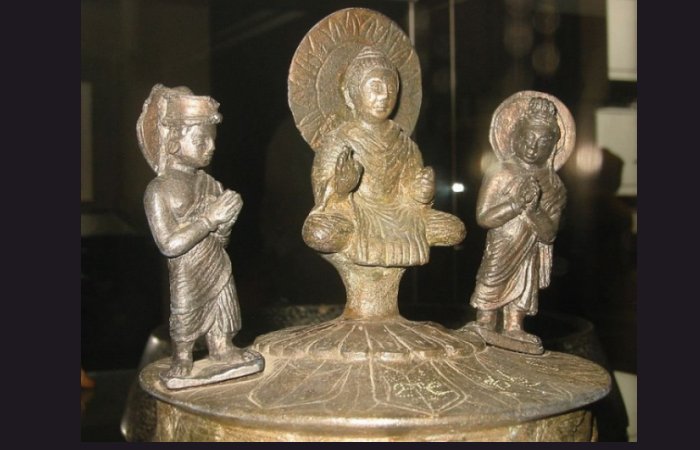
Kanishka Casket - Detail of the Indra, Buddha, Brahman trilogy. Image source
It was discovered in a deposit chamber beneath the massive Kanishka stupa during British archaeological excavations in 1908 - 1909 at Shah-ji-Dheri on the outskirts of Peshawar, Pakistan. Chinese Buddhist pilgrims described this gigantic structure in the 7th century as the tallest stupa in India. It was indeed an enormous structure.
The stupa is believed to have influenced the construction of later stupas throughout ancient Turkistan. These wooden towers, topped with metal chatras (chhatra, meaning "umbrella"), made such buildings act as lightning rods.


This is a preview of our premium article available only to members of Ancient Pages.
Become a member to read more - Click here
If you are already a member and have logged in to your account, you can access the article here

See also:
Spectacular 2,500 Years Old Shwedagon Pagoda In Myanmar – World’s Oldest Pagoda
Magnificent Pagodas In Indein Village And Undiscovered Secrets In The Myanmar Jungle