
Goblins: Antisocial, Grotesque, Ugly And Vengeful Fairy Creatures In Ancient Beliefs
A. Sutherland - AncientPages.com - In ancient legends of European cultures, there are numerous references to antisocial and ugly creatures called – goblins. However, they can also be found in the folklore of people living outside the European continent.
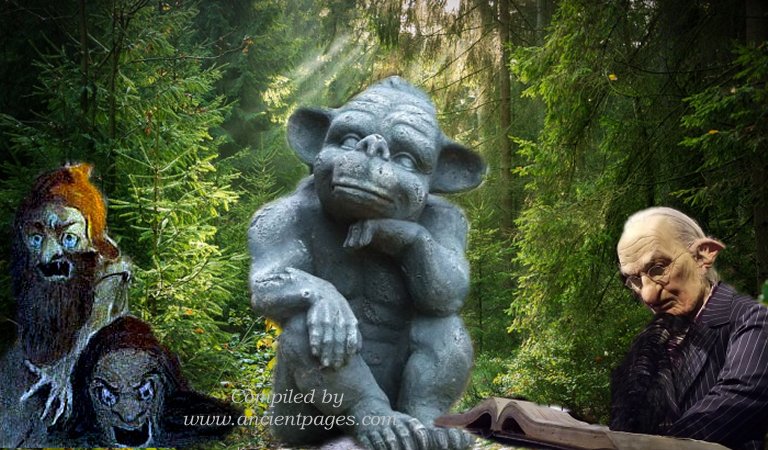
Generally, all tales describe them as ugly, strange, grotesque fairy creatures capable of mischievous and often evil behavior. They are associated with troubles.
Goblin Has Many Names
The name 'goblin' may derive from the Greek 'kobalos,' which means 'villain' (or 'rogue'). Its Latin name is 'cobalus' while its French name is 'gobelin,' and in German tales, this creature is 'cobalt.' Today, we know it under its English name: 'goblin,' and this name characterizes evil and malicious spirits.
Tradition has it that they originate from a particular tribe of gnomes ruled by Ghob, and according to ancient tradition, other gnomes called them – 'ghob-lings.'
Appearance, Their Place Of Living What Is Their Occupation
Goblins are creatures having human characteristics, but their look is unappealing.
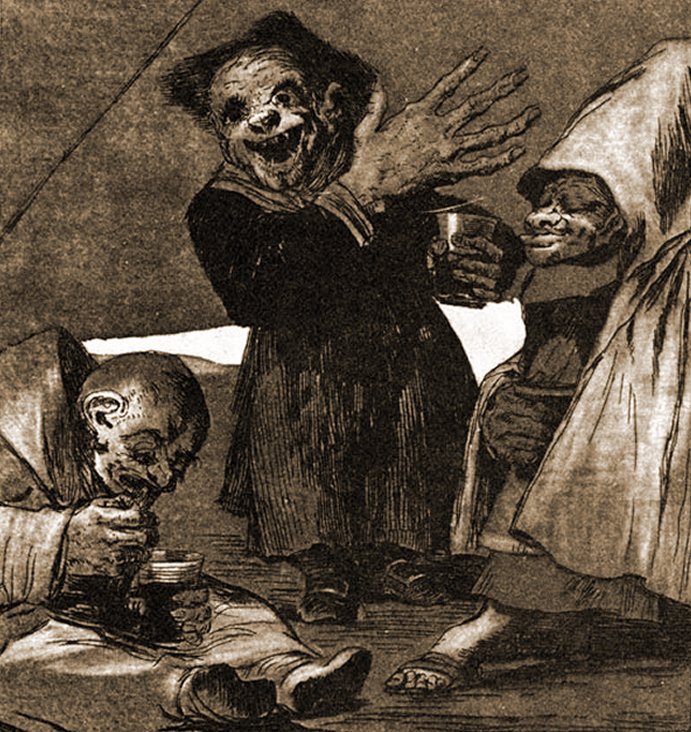
Goblins, called duendes in Spain, Portugal and South America. Image credit: Francisco Goya (1799) Public Domain
They are small (dwarfish) and grotesque, about the size of a fairy tale dwarf; however, giant goblins, whose height can reach two meters, are mentioned in the mythology of the Germanic peoples. Goblins have enormous ears and noses, dark skin, and yellow, filthy teeth.
Goblins prefer to dwell in caves, rock crevices, and roots of ancient trees in isolated places and hardly accessible mountain regions. They smash pots, pull sleeping people out of bed, pull pajamas off, and make noises while moving furniture at night. They can even enter houses or disturb people by knocking on doors and walls and immediately disappear.
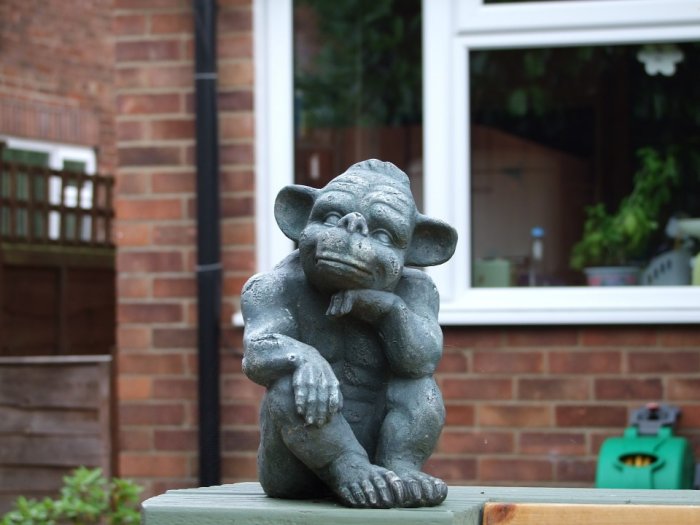
Statue of a goblin. Credit: Public domain
Unfamiliar with the people's concept of ethics and morality, the goblins do bad things just for fun.
Goblins usually do not stay in one place for too long. They try to find a place to live where the humans cannot spot them. Legends say they stay home hiding during the day and go out roaming at night once all the humans are in bed. Goblins like to cause trouble, and the nighttime gives the creatures a perfect opportunity to wreak havoc for humanity without getting busted.
Goblins are said to be lazy, tiny creatures that enjoy doing nothing, and in case of danger, they prefer to escape as soon as possible and hide. In addition to playing tricks, some goblins are shapeshifters, taking on animal form but avoiding taking a human form.
They are said to be capable of casting spells on a person, creating disturbing nightmares to trouble people, or even stealing away their children and, occasionally, women.
The children are sometimes replaced with goblin babies or changelings.
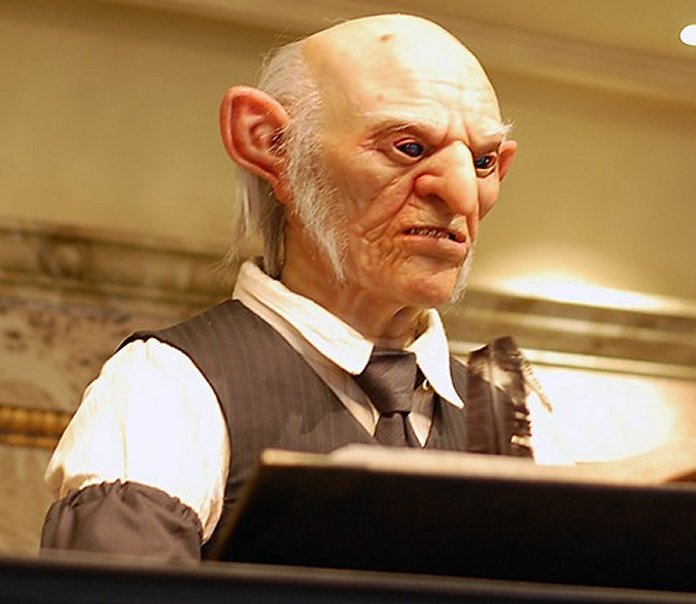
A model of Goblin from the Harry Potter series. Credit: Wikipedia, CC BY 2.0
In the famous Harry Potter series by J.K. Rowling, goblins have been featured in literature and several fantasy movies and portrayed as small, greedy, and cunning creatures that run Gringotts Bank in Diagon Alley.
Goblin Has A Cousin - Hobgoblin
The goblin's literary relative is the hobgoblin, a creature whose character is slightly more pleasant. A popular hobgoblin is Puck, also known as Robin Goodfellow. The idea of hobgoblins is associated with the advent of Christianity. It was necessary to separate the evil from good. While the hobgoblins are perceived positively, the goblins are blamed for everything wrong.
Goblins gave rise to the image of gremlins that later appeared in modern folklore.
In some regions of Borneo, people consider these creatures are the souls of the dead. The Dyaks tribe of Borneo believes their forests are full of hostile goblins that are evil spirits. These dangerous shapeshifters lurk in deep, dark woods, ready to assume weird shapes whenever possible.
Ancient beliefs of the Dyaks have survived until today, and they warn about walking the forest alone. The goblins can steal a person's soul and leave them unaware of the loss.
Written by – A. Sutherland - AncientPages.com Senior Staff Writer
Updated on August 21, 2022
Copyright © AncientPages.com All rights reserved. This material may not be published, broadcast, rewritten or redistributed in whole or part without the express written permission of AncientPages.com
More From Ancient Pages
-
 New Evidence Of Human Habitation At Panga ya Saidi Cave, Kenya That Dates Back 78,000 Years
-
 Vast Trade Of Ancient Obsidian Artifacts, Not Just Conquest, Made The Aztecs Powerful
-
 Earliest Modern Human Fossil Outside Africa Unearthed At Misliya Cave, Israel
-
 DNA Study Of Ice Age Survivors Reveals A Surprise About The Gravettian Culture
-
 Cocoa, Caffeinated ‘Black Drink’ Widely Used In Native American Societies
-
 Large, High-Elevation Cities Along Asia’s Silk Roads Exposed By High-Res Lidar
-
 Knowledge Of Divine Alien Beings And High-Tech In Ancient Egypt Described In Sacred Books And Papyrus – The God Who Spoke About Time Dilation – Part 1
-
 Mysterious Undeciphered Ripley Scroll And Its Connection To The Philosopher’s Stone
-
 Maori God Pourangahua And His Flying Bird Traversing The Ancient Skies
-
 Varahamihira: Indian Sage And One Of The Greatest Minds Of All Time
-
 Why Did Winter Baths Become So Popular?
-
 Ancient Road Used By The Teutonic Knights Discovered In A Lake In Poland
-
 2,000 Years Ago Mysterious Foreigner With Unique Ancestry Traveled To Cambridgeshire – Who Was He?
-
 Archaeological Evidence Of Human Presence In America 250,000 Years Ago?
-
 What Does The Mexican Codex Map Represent?
-
 Secret Dwelling Place Of Reptilian And Dragon-Like Creatures In Europe
-
 Michabo (Michabou) – Algonquins’ Great Spirit With Power Over The Earth
-
 How Early Farmers In Scandinavia Overcame Climate Change
-
 Museum Classifies Roman Emperor Elagabalus As Trans – But Modern Labels Oversimplify Ancient Gender Identities
-
 Thor: Brave And Mighty Thunder God In Norse Mythology

