
Remarkable Ancient Windcatchers: Air Conditioning Systems Built Since Antiquity
A. Sutherland - AncientPages.com - Windcatchers are very old wind towers can be still found across the Middle East. The structures were created by ancient engineers to create natural ventilation in buildings.
Windcatchers have various designs, such as the uni-directional, bi-directional, and multi-directional. The original windcatchers in Iran, however, are normally multi-directional with two to eight openings at the top to catch the breeze from any direction.
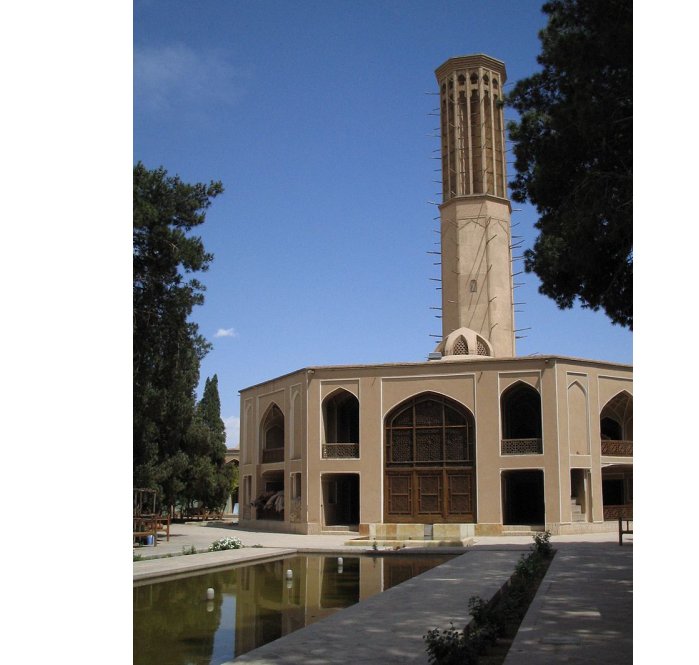
The windcatcher of Dowlatabad in Yazd, Iran—one of the tallest existing windcatchers. Image credit: Fabienkhan
As we have previously wrote in one of our articles, ancient Persian engineers mastered the technique of storing ice in the middle of summer in the desert. In order to accomplish this, they constructed ancient structures, called yakhchals that should not be confused with pyramids or ziggurats.
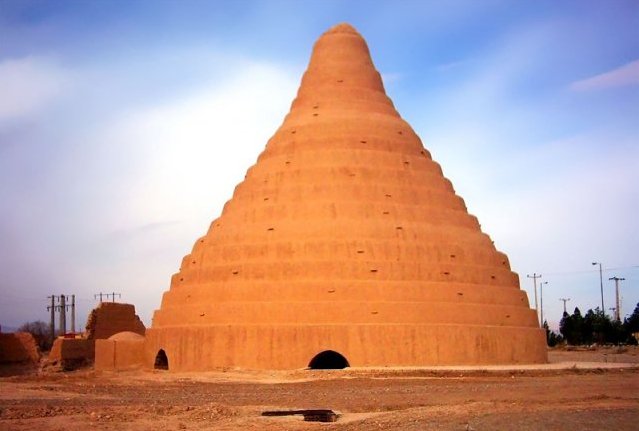
Yakhchals were ingenious ancient ‘refrigerators’ in the hot desert.
The yakhchals are in fact ancient “refrigerators” used to store ice and other food items.
The ancient engineers of the Middle East were highly skilled and also built windcatchers that we can still admire today. The ancient windcatchers appear throughout the Middle East.
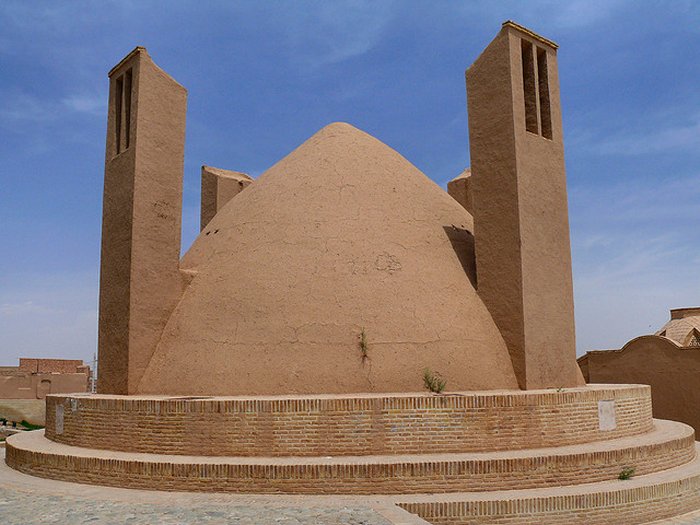
Image Credit Flickr User Dynamosquito
We find them in Iran, Afghanistan and Pakistan and they have all traditional Persian-influenced architecture. The windcatchers are also known in traditional Egyptian architecture in Ancient Egypt as demonstrated in Windcatchers on the Pharonic house of Neb- Ammun, Egypt, 19th Dynasty, c.1300 BC, British Museum.
It was revived in Neoislamic architecture as the works of Hassan Fathy. In Egypt the windcatchers are known as "Malqaf".
See also:
10 Remarkable Advanced Ancient Technologies Ahead Of Their Times
Proof Of Superior Ancient Technology – Found In All Four Corners Of The World
Yakhchals: Ingenious Ancient ‘Refrigerators’ Could Store Ice In The Hot Desert
More Advanced Ancient Technology
The reason for constructing these ancient wind towers is related to the climate in the region. Towns centered on desert oases tend to be packed very closely together with high walls and ceilings, maximizing shade at ground level. The heat of direct sunlight is minimized with small windows that face away from the sun.
Serving as ventilation systems they have given the people of the Middle East air conditioning for thousands of years.
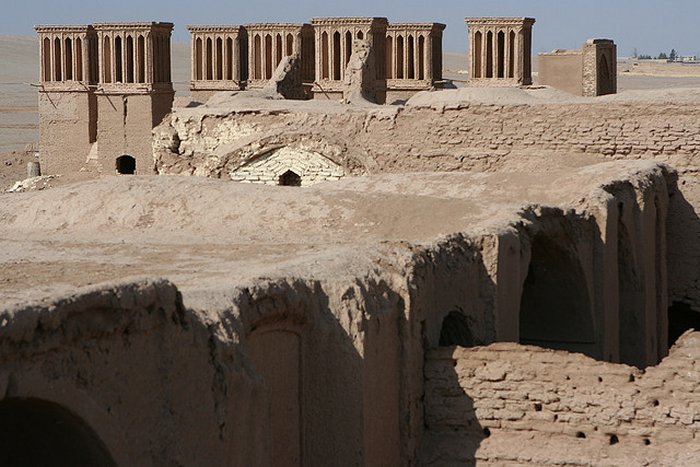
Image Credit Flickr User Ninara
They function in one of three ways. Some direct the airflow downwards and use direct wind entry. Others direct airflow up either using a temperature gradient assisted either by the sun or the wind.
Despite their very old origin, windcatchers may even provide a solution for some very modern architectural problems.
The ancient windcatcher approach has been utilized in Western architecture, such as in the visitor center at Zion National Park, Utah, where it functions without the addition of mechanical devices in order to regulate temperature.
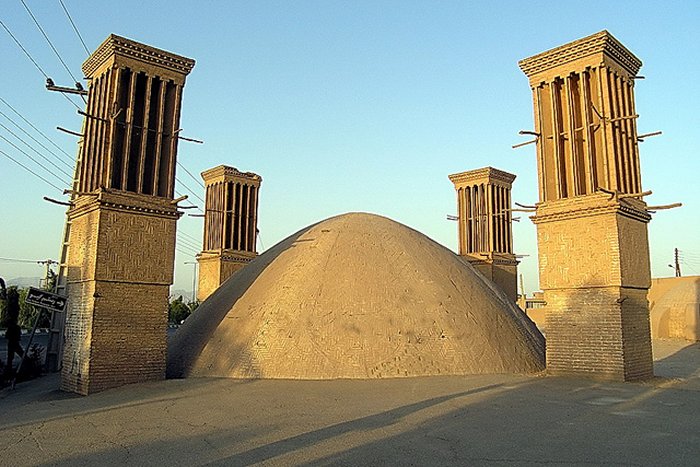
Image Credit Flickr User Pilar Torres
The construction design of windcatchers vary much but they all perform a similar key function: channeling prevailing winds trapped in vents above the roofs of buildings down to cool and ventilate the rooms located below.
They have been built since antiquity but their ingenious design can still contribute with ideas, necessary in our modern society.
Written by – A. Sutherland - AncientPages.com Senior Staff Writer
Copyright © AncientPages.com All rights reserved. This material may not be published, broadcast, rewritten or redistributed in whole or part without the express written permission of AncientPages.com
More From Ancient Pages
-
 Explorers Of Lost City Of The Monkey God Contract Unusual Flesh-Eating Disease
-
 Amrita: Potion Of Immortality Consumed By Gods To Make Them Strong And Immortal
-
 Incredibly Well-Preserved Viking Age Ski Discovered Under Melting Ice
-
 Never-Before-Seen 3,000-Year-Old Paintings Of Egyptian Goddess Amentet Discovered Inside Coffin Of A Mummy
-
 Oldest case of leukemia found on 7,000-Year-old skeleton
-
 Incredible Find – 3,000-Year-Old Canoe Found In Wisconsin’s Lake Mendota
-
 Etruscan Urn With Skillfully Adorned Medusa Relief Discovered In The Palazzone Necropolis, Perugia, Italy
-
 Lost Ancient Dragon City Of The Xiongnu Empire Discovered In Mongolia
-
 Unexplained Behavior In People Found After Being Lost In National Parks – Strange Encounters With Dangerous Humanoids And The Little People
-
 Popular Tyrant Peisistratos Tricked The Athenians To Seize Power And People Loved Him
-
 DNA Study Sheds New Light On Ancient Britain’s Language, Ancestry, Kinship, Milk
-
 Discovery Of Stone Age Textiles Sheds New Light On The History Of Clothes Making
-
 Herne The Hunter – The Horned God And Lord Of The Forest In British Mythology
-
 Advanced Method That Can Solve Puzzle Of Rock Engravings Studied In Timna Park
-
 World’s Oldest Hand And Footprints Discovered On The Tibetan Plateau Are 226,000-Year-Old!
-
 On This Day In History: 4000 Defenders Of Pilėnai Commit Mass Suicide When Attacked By Teutonic Knights – On Feb 25, 1336
-
 Lost Medieval Home Of The Lords Of The Isles – Reconstructed Virtually
-
 Spectacular Giant Bronze Age Hall Found Near Berlin, Germany May Be Connected To Legendary King Hinz
-
 Mahabharata Is Much Older Than Previously Thought – Archaeological Discovery Reveals
-
 A 2000-Year-Old Jewish Settlement Near Bet Shemesh – Unearthed

