


A. Sutherland - AncientPages.com - Sir Aurel Stein (1862 – 1943), British archaeologist and explorer famous for his archaeological discoveries in Central Asia, was fascinated by the history of the Silk Road.
For many years, Stein conducted scientific and archaeological excavations in various Asian countries, and a large part of the exhibits at the British Museum and British Library come from Stein's exploration.
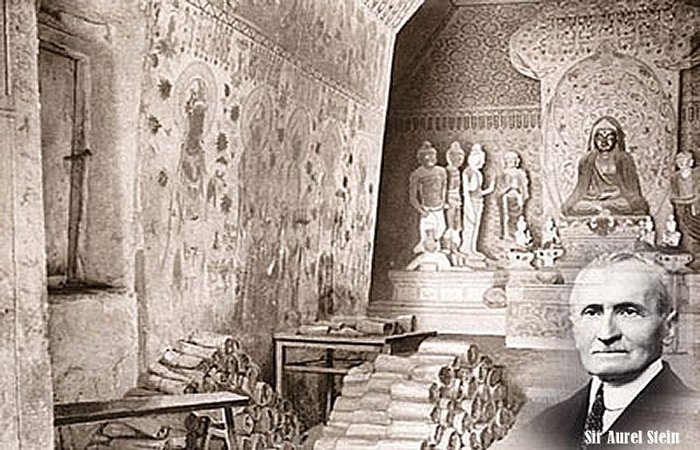
In March 1907, during his second expedition to Central Asia, Stein visited Dunhuang, an important city on the Silk Road, and learned about the Mogao Caves.
Using a small bribe, he convinced Wang Yuanlu, a Taoist monk, to sell him 12 boxes of manuscripts, painted on silk. In June 1907, Stein smuggled them out of Dunhuang, and in August 1908, took them from China.
In May of 1900, Stein began his first trip to western China and the Taklamakan Desert. This trip lasted nearly two years. He discovered beautiful Buddhist sculptures, paintings, and Sanskrit texts. At Niya - an archaeological site about 115 km (71 mi) on the southern edge of the Tarim Basin in modern-day Xinjiang, China, Stein found many priceless artifacts.


This is a preview of our premium article available only to members of Ancient Pages.
Become a member to read more - Click here
If you are already a member and have logged in to your account, you can access the article here


See also:
Robert Fortune’s Dangerous Mission To Obtain Tea From The Chinese
Lady Fu Hao: Brave Warrior Skilled Strategist And China’s First Female General
Magnificent Pagodas In Indein Village And Undiscovered Secrets In The Myanmar Jungle

