
Medieval Rich People Unknowingly Poisoned Themselves With Lead And Other Hazardous Heavy Metals
AncientPages.com - A new study suggests that medieval people were exposed to hazardous heavy metals like lead, which was frequently used to glaze pottery. The poor, who could not afford such items, avoided the high levels of exposure.
Being rich in the Middle Ages, had its advantages, but being able to afford expensive and beautiful crockery was not one of them.
"One of the worst side effects of lead is that it leads to lower intelligence in children. After a few generations [of lead consumption] it could become really bad," says co-author Associate Professor Kaare Lund Rasmussen, from the Department of Physics and Chemistry at the University of Southern Denmark.
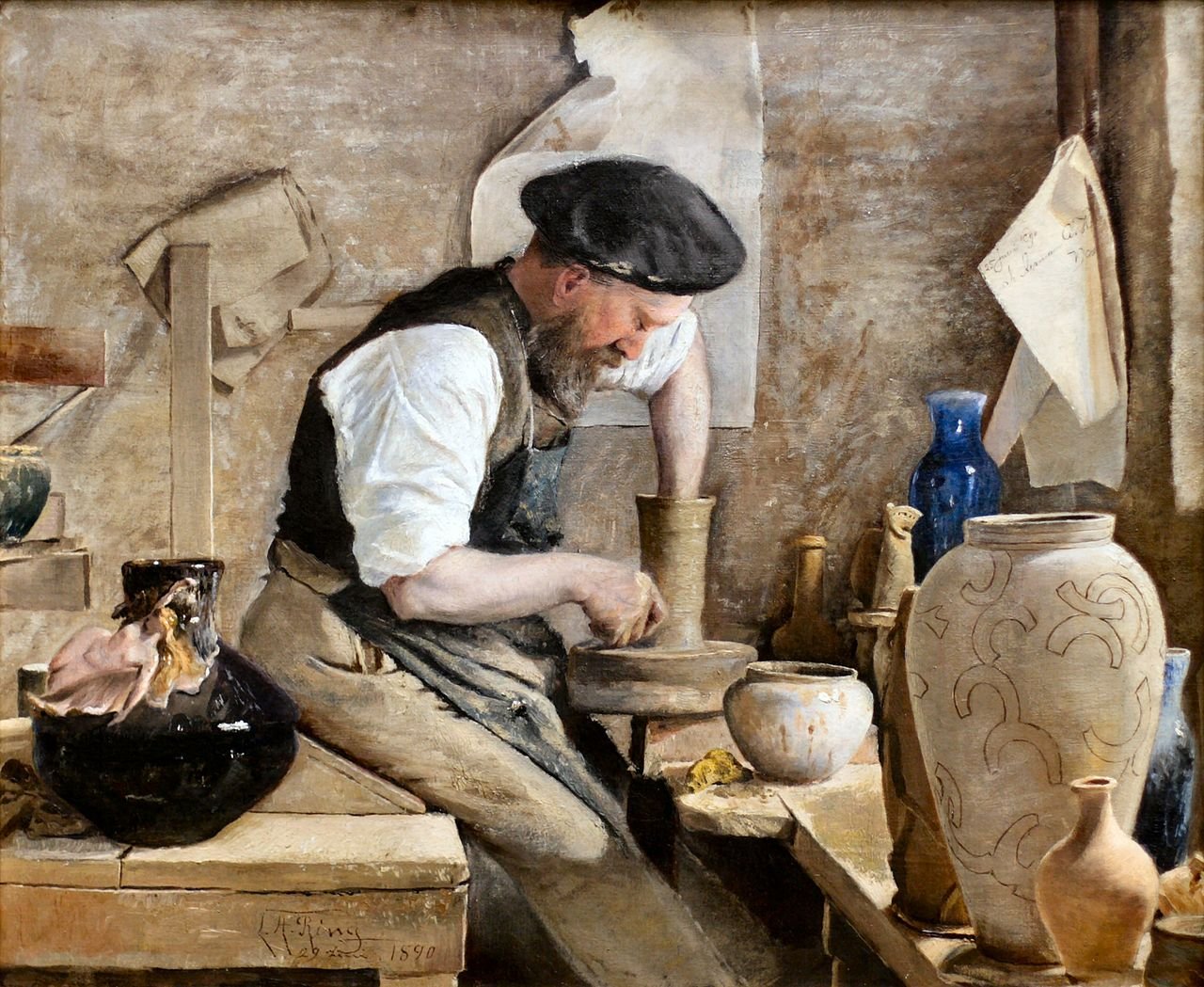
Ancient pottery. Næstved,Sydsjælland
Archaeologist Mikael Manøe Bjerregaard from Odense City Museums in Denmark is full of praise for the new research.
"Although we’ll never have the names of these medieval people, we can still say a lot about their standard of living. It’s fascinating that we can get that close," says Bjerregaard, who was not involved in the study.
The researchers examined the lead content of 283 skeletons from six cemeteries in Denmark and Germany, dating back to the Middle Ages between 1000 and 1536 CE, and represent both urban and rural communities.
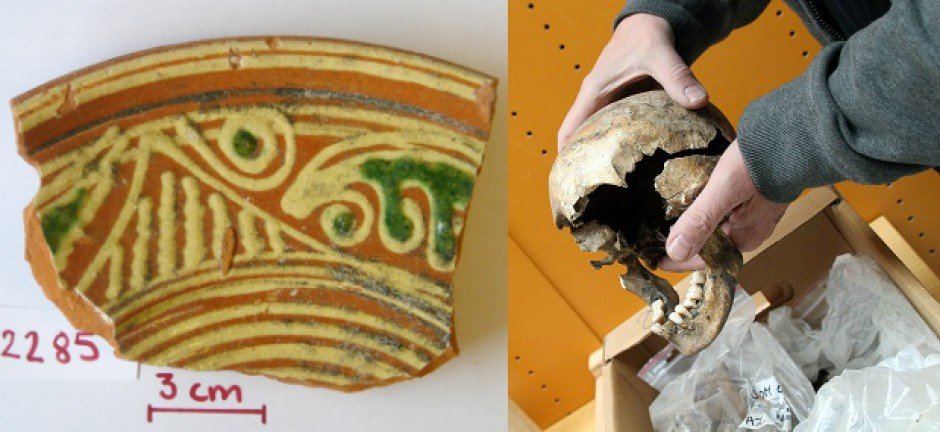
These expensive ceramics were a status symbol for the wealthy urbanites in the Middle Ages, but they also exposed them to dangerous lead poisoning. (Photo (left): Kaare Lund Rasmussen. Photo (right): Birgitte Svennevig)
The researchers compared the lead content in skeletons from the city with those from the country, and saw that city dwellers had significantly higher levels of lead that those living in the country.
The cause, says Bjerregaard , was expensive ceramics decorated with a lead oxide glazing.
"These ceramics were used much less in the countryside, so it’s an urban phenomenon as wealthier people would’ve had greater access to these ceramics. It’s the top of society that would’ve had them, and they would’ve been relatively rare in the countryside," he says.
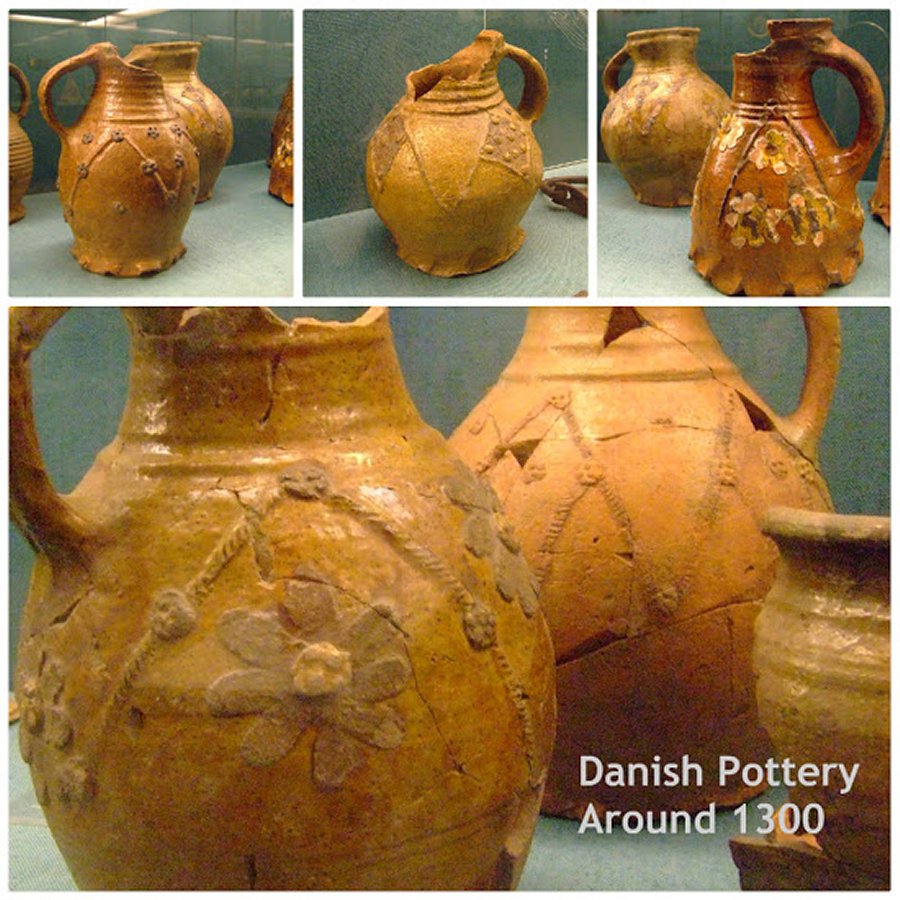
Danish pottery. Credits: Nationalmuseet, Denmark
Ceramics were glazed with lead oxide to prevent the baked clay from absorbing foods and liquids, which otherwise made them a nightmare to clean.
The lead oxide glaze would coat the inside of the bowl, protecting the clay beneath. And it had an added advantage of being transparent, so a variety of colours could be added for decorative affect.
"However, it has side effects: if you use it for acidic or salty foods then the lead in the surface can be dissolved and leak into the food,” says Rasmussen.
Bjerregaard is not surprised that wealthy people in urban areas were exposed to lead. He believes the findings provide an important perspective that archaeology has not dealt with much before--the health hazards associated with the glazed ceramics.
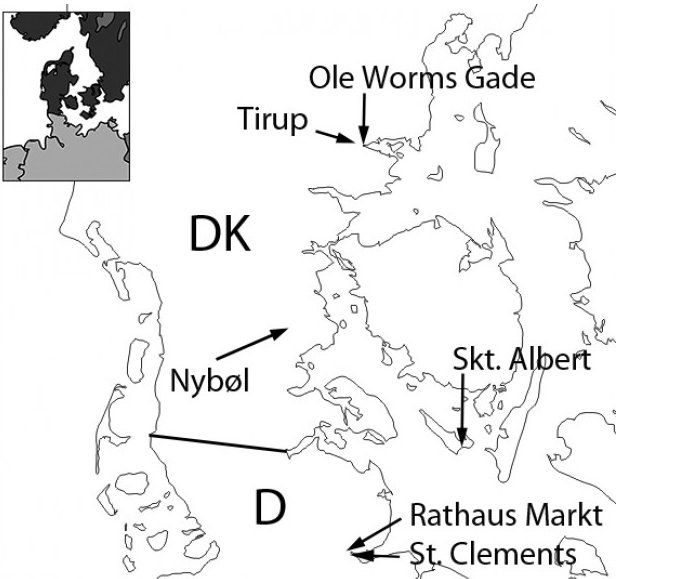
The map shows the locations of the cemeteries in Denmark and Germany that were used in the study. (Figure: Journal of Archaeological Science: Reports)
"It's partly something that could have been deduced, because there are many crafts that worked with lead. For example lead glazed windows and roofs, which were urban phenomena. But it's exciting that we now have concrete chemical evidence of it," said Bjerregaard.
A combination of chemical analysis and archaeological techniques allowed Rasmussen and colleagues to get this close to medieval culture. By the same method, they also found out that townspeople were exposed to more mercury than their contemporaries in the countryside.
"Traditionally in archaeology we’ve been limited to what we could physically observe, such as broken legs which had healed, blows to the head, and a few diseases that sat on the bones. We couldn’t get any closer than that, but now we can," says Bjerregaard.
The new study is published in the Journal of Archaeological Science: Reports.
AncientPages.com
Expand for referencesMore From Ancient Pages
-
 The Mixtec – Mysterious Very Advanced Culture Of The Foremost Goldsmiths Of Mesoamerica
-
 On This Day In History: Napoleon Bonaparte Dies In Exile – On May 5, 1821
-
 Ancient Maya Saltworks: Salt Was A Commodity Or Money In Classic Maya Economy
-
 Humans Lived In The Qal-e Kord Caves 400,000 Years Ago – Oldest Settlement In Iran Found?
-
 Researchers Sequenced 137 Human Genomes From The Middle East
-
 Adventurous Viking Woman Who Challenged Social Norms And Whose Fate Was Foretold By A Völva
-
 Viking Treasures Discovered In Chamber Grave In Denmark
-
 Alexander The Great Was Crowned Pharaoh And Declared Son Of God Amun
-
 Neanderthals’ History Retrieved From Cave Sediments In Siberia And Spain – New Method
-
 Proof Of Superior Ancient Technology – Found In All Four Corners Of The World
-
 Rise And Fall Of City-States In Ancient Mexico And Peru Influenced By Climate Change
-
 Mystery Of The Lost Cahuenga Pass Treasure: Baffling Unexpected Deaths Caused By A Curse Or Natural Causes?
-
 Ancient People Possessed Far Greater Knowledge Of Astronomy Than Previously Believed – Researchers Say
-
 King Tutankhamun’s Large Golden Coffin Was Moved For Restoration
-
 Valkyries Sigrdriva And Brynhildr: Brave Warriors Who Were Punished By God Odin In Norse And Germanic Mythology
-
 Moon: What Was Its Role In Beliefs Of Ancient People?
-
 Unusual Discovery Of A Viking Age Phallic Stone In Tystberga, Sweden
-
 1,000 Bog Bodies From Across Scandinavia Reveal More Ancient Secrets – Here’s What Scientists Found
-
 Lost Golden City Of Pharaoh Amenhotep III Discovered In Luxor
-
 Cyprus’s Copper Deposits Created One Of The Most Important Trade Hubs Of The Bronze Age

