AncientPages.com - The 'Inghirami Tomb' is one of the best-known late Etruscan tomb complexes.
It was discovered by two Inghirami brothers, who visited the Ulimeto necropolis just outside Volterra, Italy back in 1861. Beneath a grassy mound, they discovered a subterranean structure - a tomb.
The tomb consists of a circular chamber roughly hewn in the bedrock, without any decorations. There is also an entrance corridor, which was cut into the tufa. It represents a characteristic Volterran tomb dated to the 4th-1st century BC.
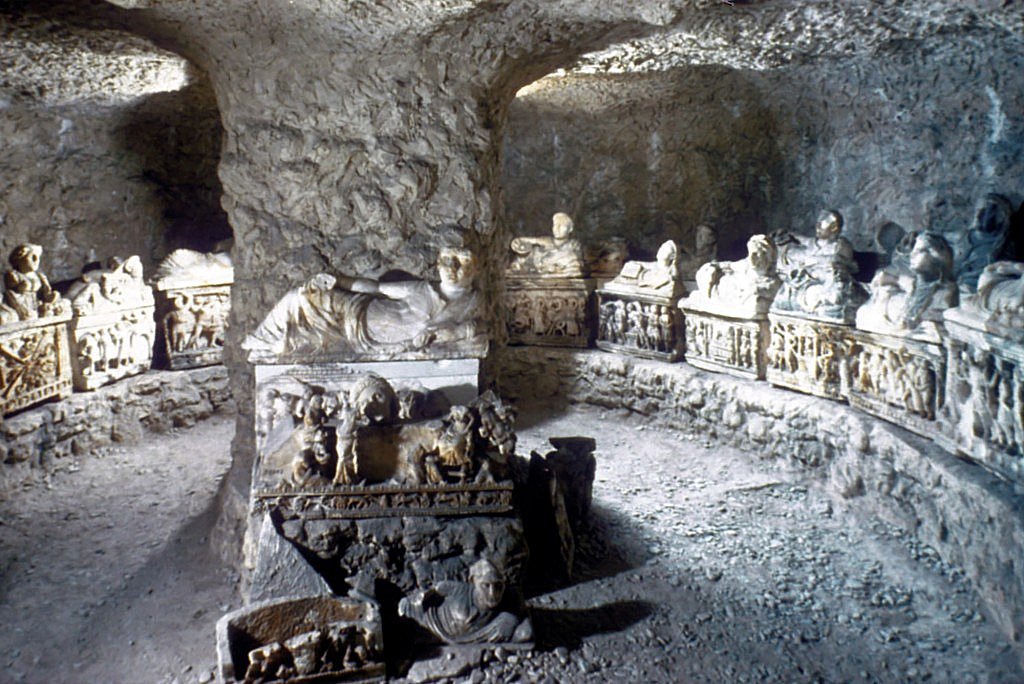
The Inghirami tomb at Volterra. Photo: www.romansociety.org
In the chamber, there are fifty-three urns and round central pillars supporting the ceiling, all made from local alabaster stone. When discovered, the tomb chamber was entirely filled up with some sixty chests, from five-six generations, placed in two rows on the bench and in front of the central pillar.
Relief decorations and the reclining lid figures representing the deceased create an illusion of a banquet hall. However, these sculptural decorations were not intended to be public manifestations.
The original tomb is closed for the public.
AncientPages.com
Sources:
J. MacIntosh Turfa, The Etruscan World
L. Banti, Etruscan Cities and Their Culture