
Londinium: Ancient Roman Outpost That Became Powerful City Of London
A. Sutherland - AncientPages.com - The Romans established Londinium on the current site of the City of London around 43 AD.
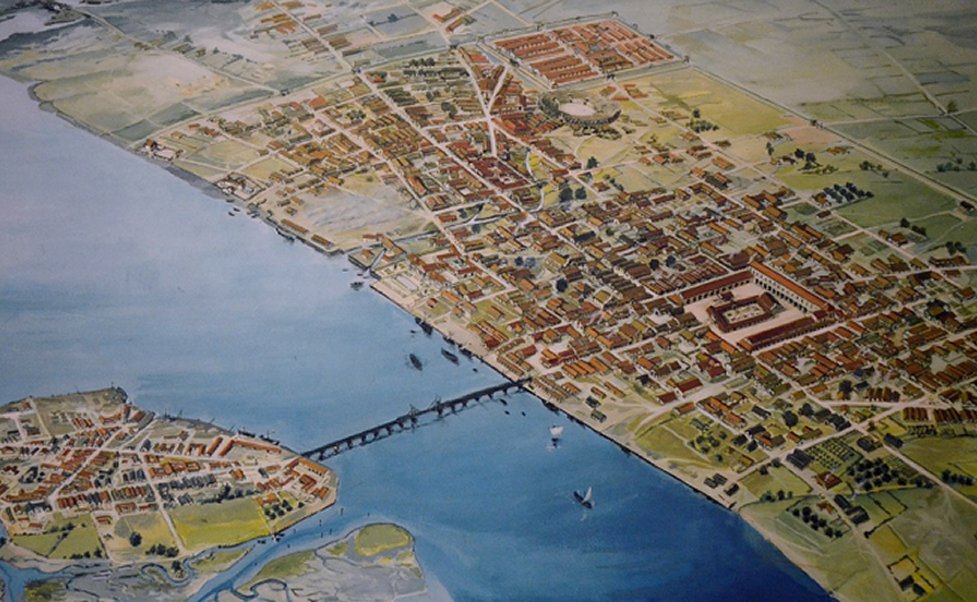
Reconstruction drawing of Londinium c. 120 AD. Image credit: Carole Raddato - CC BY-SA 2.0
The first definite mention of the city refers to the year 60 in the writings of Tacitus, the Roman historian, and senator, who wrote of a celebrated center of commerce filled with traders.
Londinium was equipped with massive defenses: several forts were built along with the immense London Wall, remains of which are still recognizable in the city.
By the reign of Hadrian, Britannia was a fully developed province of the Roman Empire. One of the Roman outposts was Londinium, which eventually became one of the world's most famous modern cities - London.
Initially, Londinium was just a small military outpost occupying a relatively small area of 1.4 km2 (0.5 sq mi), but the city grew rapidly. By the turn of the century, Londinium had grown to about 60,000 people,
Its access to the River Thames and the North Sea also contributed to the city's importance and turned it into a thriving and influential provincial capital and major port.
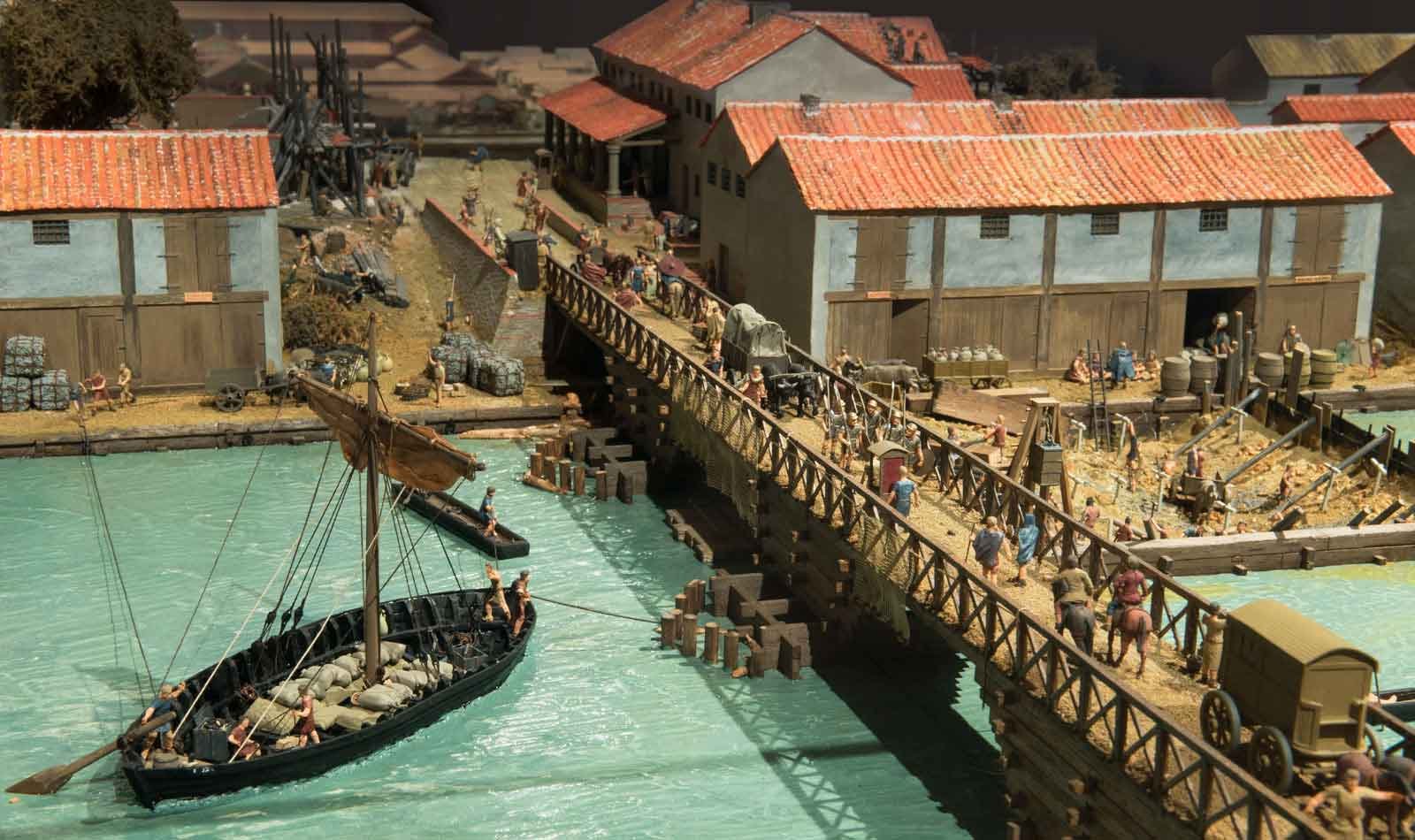 Londinium Bridge. This model shows how the Romans built the first bridge across the River Thames, where London Bridge now stands. Credits: Museum of London
Londinium was not only the center of commerce but also the seat of government. By the 2nd century AD., Londinium was a large Roman city with tens of thousands of inhabitants. Richer and noble people's homes had wall paintings and mosaic floors; many lived in villas and palaces.
They had to their disposal temples, large forums, and baths. Ordinary people lived in tiny houses with front doors and workshops behind. Soldiers lived in the fort, outside the central part of the town.
The city was equipped with massive defenses: several forts were built along with the immense London Wall, remains of which are still recognizable in the city. The Romans also built heavy fortifications for the town, constructing several forts and the massive London Wall, approximately 14.5 feet thick and at least 20 feet high.
Parts of this construction are still visible across the city today. Londinium's well-built roads linked it with several other, smaller towns and continued to the borders of Britannia. The countryside's landscape, dotted with well-developed farms, surrounded Londinium.
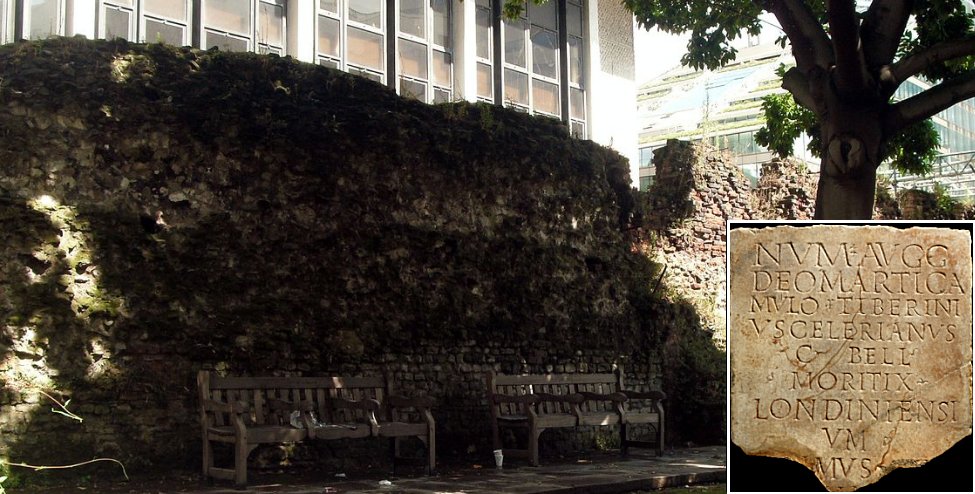 Left: The Roman wall at St Alphege Gardens; Credits: - CC0; Right:The first written record to use the word 'Londoners'. Image credit: - CC BY-SA 4.0
Around 350, a series of 22 solid, semi-circular towers were additionally constructed, and these functioned as bases for ballistae (an ancient form of crossbow used to propel a spear). During the Roman times, several similar town and city walls were constructed by the Romans in England and Wales, and their remains survived until now.
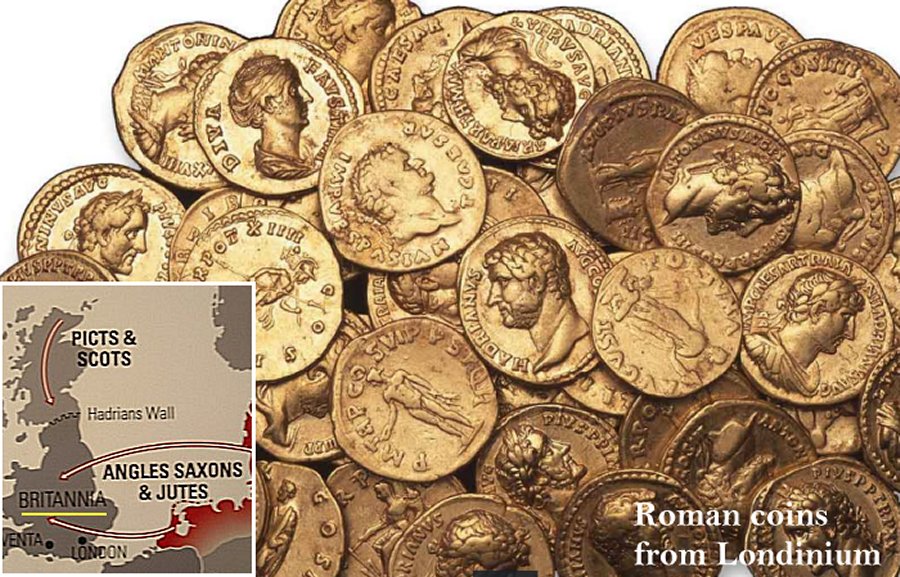
Londinium had been a Roman foundation, and for almost four centuries, it had its importance; later, the great city began to wither and trade, which was so crucial for the town, broke down. The Irish, Scottish, and Saxons from Germany all came to plunder the wealth of Roman Britain. The Roman legions began to withdraw from Britain in 383 AD to secure the Empire's borders in other places of Europe.
According to many researchers, Londinium had always been much more Roman than British, and in the 5th century, still many wealthy Roman families lived in Londinium.
Archaeological excavations revealed their remains in the form of largely hidden hoards of Roman coins and diverse household remains. In 410 AD, Emperor Honorius finally refused to send support to the British Romans. All Roman troops had been withdrawn, leaving the cities of Britain and the remaining Romano-British for themselves.
The Roman Empire's conquest of Britain finally ended, and a new time known as the Dark Ages began.
Written by – A. Sutherland AncientPages.com Staff Writer
Updated on July 22, 2022
Copyright © AncientPages.com All rights reserved. This material may not be published, broadcast, rewritten or redistributed in whole or part without the express written permission of AncientPages.com
Expand for referencesMore From Ancient Pages
-
 2,000-Year-Old Tumulus Of Unknown Culture Discovered In Siberia – Who Were These People?
-
 Shieldmaiden Hervör’s Dangerous Quest For The Cursed Tyrfing Sword
-
 Mysterious And Feared Underground World That No One Can Visit And Return To Tell About – Cherokee Reveal A Secret
-
 Sumerians Built A Huge ‘Anti-Drought Machine’ To Save Ancient City Of Girsu From Destruction
-
 Beads Show European Trade In African Interior Used Indigenous Routes
-
 Coin Hoard Paints A Fascinating Picture Of Life Of Highland Clan Chief And His Household
-
 They Spoke The Language Of The Gods – Secret Symbols, Unknown Books And Manuscripts – Part 2
-
 2,500-Year-Old Tibetan Medical Text Describes A Coronavirus-Like Outbreak In Surprisingly Accurate Details
-
 82 Mysterious 3,000-Year-Old Pits Discovered In Sweden – Bronze Age Cooking Pits And Ancient Ceremonial Center?
-
 The Hittites, Mysterious People Of A Thousand Gods – Collapse Of The Hittite Empire
-
 Mysterious Medieval Cemetery In Wales With People Buried In Unusual Positions Puzzles Archaeologists
-
 Paleolithic Humans May Have Understood The Properties Of Rocks For Making Stone Tools
-
 2,300-Year-Old Roman Lead Weight In Assos Is The Largest Ever Discovered
-
 Giant 2,000-Year-Old Cat Geoglyph Discovered At Nazca In Peru
-
 Headless remains related to Huns or Sarmatians puzzle archaeologists in Kazakhstan
-
 Pytheas’s Voyage To The Arctic In 325 B.C. And Account Of Thule, The Strange Land Beyond
-
 Who Is Buried In The Extremely Well-Preserved 2,600-Year-Old Celtic Chamber Tomb Found Near Riedlingen, Germany?
-
 Iron Age Site Of Khok Phutsa Excavated In Thailand
-
 Medieval Wooden Stave Churches In Norway Are Older Than Previously Believed
-
 On This Day In History: National Foundation Day Celebrated In Japan – On Feb 11, 660 AD

